
Cutting Metals
The Complete Guide to Flame, Arc, Plasma, and Laser Cutting Processes

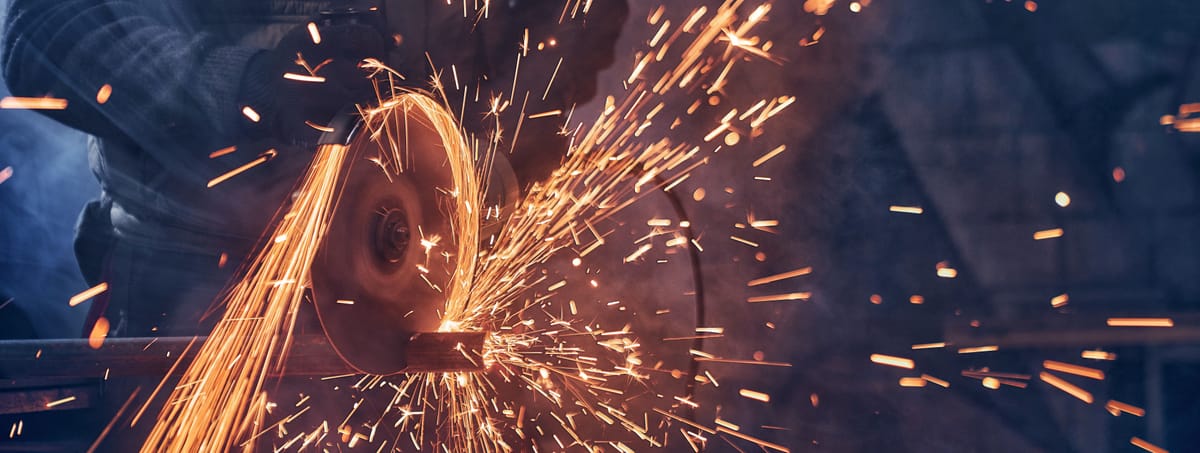
The Cut That Changed Everything
Marcus stared at the 14-inch steel billet and wondered if the job was even possible.
His fabrication shop had just won the contract of a lifetime — a structural retrofit for a marine vessel that required precision cutting through carbon steel, stainless steel, cast iron, and aluminum alloys. The problem? Marcus had one oxyacetylene torch, a general understanding of "how fire cuts metal," and a deadline that left zero room for scrap.
Within three weeks, Marcus had ruined material worth more than his first car. Cuts that wandered. Kerfs too wide for tolerance. Cast iron that refused to cooperate. Stainless steel that turned into a slow, melting disaster under his standard torch setup.
What Marcus didn't know — and what most fabricators discover the hard way — is that cutting metal is not one process. It's an ecosystem of processes, each governed by its own physics, chemistry, and economics. Choosing the wrong one doesn't just waste material. It wastes time, money, and credibility.
This guide exists so you never make Marcus's mistakes. Whether you're lighting your first cutting torch or evaluating a multi-million-unit laser cutting system, every process, parameter, and data table you need is right here.
How Metals Are Actually Cut: The Four Pillars
Before you pick up a torch, flip a switch, or program a CNC path, you need to understand a fundamental truth: all thermal metal cutting operates on one of two principles — oxidation or melting.
- Oxidation-based cutting uses a chemical reaction between oxygen and heated metal to disintegrate the workpiece. The heat is the igniter; the oxygen is the fuel. This is how flame cutting works on steel.
- Melt-based cutting uses concentrated energy (electrical arc, plasma jet, or laser beam) to melt or vaporize the metal, then blows the molten material out of the kerf with a high-velocity gas stream.
Every cutting process in this guide — flame, arc, plasma, and laser — is a variation on these two themes. Understanding which principle dominates each process tells you why certain metals cooperate with certain torches and why others fight back.
| Cutting Process | Primary Mechanism | Best For | Thickness Range |
|---|---|---|---|
| Oxyacetylene Flame | Oxidation (chemical) | Low-carbon steel, wrought iron | Up to 24 inches |
| Oxyhydrogen Flame | Oxidation (chemical) | Thick steel plate | Up to 24 inches |
| Arc Cutting | Melting (electrical) | Cast iron, stainless, nonferrous metals | Variable |
| Plasma Arc (PAC) | Melting (ionized gas) | Sheet steel, stainless, aluminum | Up to 1 inch (economical to ½ inch) |
| CO₂ Laser | Melting/vaporization (photon energy) | Ferrous and nonferrous sheet | Up to 25 mm (1 inch) |
| Nd:YAG Laser | Melting/vaporization (photon energy) | Thin sheet, precision work | Up to ~3.5 mm |
Flame Cutting: The Original Metal Separator
The Science Behind the Spark
When iron or steel is heated to a high temperature, it develops a powerful affinity for oxygen. It combines readily with oxygen to form various iron oxides, and this reaction causes the metal to disintegrate and burn with remarkable speed.
This is the principle that makes flame cutting possible. A cutting torch doesn't "melt through" steel the way most people imagine. It oxidizes the metal — it literally burns it away in a controlled chemical reaction.
Here's the sequence:
- Preheat: A torch tip delivers a flame (oxyacetylene, oxyhydrogen, or another fuel-gas/oxygen combination) to raise the metal to white-hot temperature
- Oxygen jet: An auxiliary jet of pure oxygen hits the red-hot metal
- Oxidation cascade: The oxygen combines with the heated iron, generating tremendous additional heat that sustains a self-feeding reaction
- Kerf formation: The oxidized metal (slag) is blown out of the cut path, leaving a kerf resembling a saw cut
Key Insight: The cutting torch doesn't need to melt steel. It only needs to raise the surface temperature high enough for the oxygen to ignite a chemical reaction. That's why flame cutting is so energy-efficient on carbon steel — the metal's own oxidation provides most of the cutting energy.
The Cutting Torch: Anatomy and Operation
The ordinary cutting torch consists of a heating jet and an auxiliary oxygen jet. The heating jet can use any combination of gases that produces sufficient heat:
- Oxyacetylene — the most common
- Oxyhydrogen — produces a longer flame, capable of cutting thicker material
- Oxypropane, oxynatural gas — alternative fuel options
Some cutting torches feature multiple preheating flame ports surrounding the central oxygen port. This design ensures a preheating flame precedes the oxygen regardless of the torch's direction of travel — a critical advantage for mechanically guided operations.
The rate of cutting depends on three variables:
- Thickness of the steel
- Size of the torch tip
- Oxygen pressure
Adjustment and Use: Getting the Cut Right
When cutting steel plate, the sequence is precise and unforgiving:
- The preheating flame contacts the edge of the plate
- The edge is raised to white-hot temperature
- The oxygen valve is opened
- Pure oxygen contacts the heated metal
- Rapid oxidation begins — the metal burns and the cut progresses
This is where beginners fail. They open the oxygen too early (before the metal reaches ignition temperature) or too late (wasting fuel gas and overheating the surrounding material). The timing of that oxygen valve is everything.
What Can You Flame Cut — and What Can't You?
This is the question that cost Marcus his first batch of material. Not every metal responds to flame cutting the same way, and some metals actively resist it.
Low-Carbon Steel and Wrought Iron
Verdict: Excellent. These materials cut readily and cleanly. The iron content oxidizes efficiently, the slag flows freely from the kerf, and the result is a clean, narrow cut. This is the bread-and-butter application for flame cutting.
High-Carbon Steel
Verdict: Requires preheating. The higher the carbon content, the more preheating you need before the oxygen jet can sustain a clean cut.
| Steel Type | Preheat Required |
|---|---|
| Mild/low-carbon steel | Standard (white heat at cut edge) |
| Ordinary tool steel | Black heat |
| Alloy tool steels | Low red heat |
| Very high carbon content | Higher red heat |
Why? Carbon in steel changes the oxidation dynamics. More carbon means the metal needs more energy input before the oxygen reaction becomes self-sustaining.
Stainless Steel
Verdict: Requires flux injection.
Here's the problem: the same elements that make stainless steel "stainless" — primarily chromium — produce oxides that obstruct the flame cutting process. With conventional oxyacetylene equipment, cutting stainless steel degrades into a painfully slow melting-away process rather than a clean oxidation cut.
The solution: flux-injection cutting.
A suitable flux powder is injected directly into the cutting oxygen stream before it enters the torch. This flux reacts with and removes the obstructing chromium oxides, allowing the cut to proceed at speeds practically identical to mild steel cutting.
- Portable flux feeding units use vibrator-type dispensers with rheostat control for precise flow regulation
- The method works for both machine cutting and hand-controlled torches
- Operating procedure and speed are essentially the same as for mild steel
Cast Iron
Verdict: Practicable but expensive.
Cast iron can be cut with the oxyacetylene torch, but it cannot be cut as readily as steel. The ease of cutting depends largely on the physical character of the iron — counterintuitively, very soft cast iron is more difficult to cut than harder varieties.
Why is cast iron harder to cut? Two reasons:
- Carbon in graphite form hinders the oxidation reaction. The chemical action that makes steel cutting so efficient is partially blocked.
- The process is partly a melting operation. The slag from a cast-iron cut contains considerable melted cast iron, whereas slag from a steel cut is practically free from metal particles.
The cost penalty is real. Cast iron requires a larger preheating flame and significantly higher oxygen consumption than the equivalent thickness of steel.
Pro tip for cast iron cutting: Feed a steel rod (approximately ¼ inch diameter) into the top of the cut, beneath the torch tip. This rod generates a large amount of hot slag that flows over the cut and raises the temperature of the cast iron, increasing speed and decreasing cost. Special torch tips designed for the larger heat and oxygen demands are recommended.
Brass and Bronze
Verdict: Indirect cutting only. These metals cannot be directly flame-cut because they don't oxidize in the same self-sustaining way as iron and steel. However, brass and bronze plates can be cut by interposing them between steel plates — using the steel's oxidation reaction to carry the cut through the nonferrous metal.
Thickness Limits: How Deep Can the Flame Go?
The maximum cutting thickness depends on the gas combination and the oxygen pressure, which can reach as high as 150 lbf/in².
| Flame Type | Maximum Practical Thickness | Why |
|---|---|---|
| Oxyacetylene | 12–14 inches | Shorter flame length limits penetration depth |
| Oxyhydrogen | Up to 24 inches | Longer flame penetrates the full depth of the cut, keeping all oxide molten |
The oxyhydrogen advantage is purely geometric. Its longer flame can reach the bottom of a deep kerf, keeping the entire column of oxidized material molten so it flows out cleanly. The oxyacetylene flame, being shorter, struggles to maintain full-depth heating in very thick material.
Critical factors for thick-section cutting:
- Mechanically guided torches cut thick material far more satisfactorily than hand-held torches, because the flame stays straight and doesn't wobble
- Kerf width increases with thickness — light material may produce a 1/16-inch kerf, while heavy stock can produce 1/4 to 3/8-inch kerf widths
- Cut accuracy decreases with increasing thickness
Mechanically Guided Torches and CNC Cutting
When precision matters — or when cutting openings in plates, blocks, or parts to a definite outline — torches are guided mechanically or by numerical control.
Three main categories:
- Pantograph-guided torches — trace outlines from a pattern or drawing, ideal for complex shapes
- Straight-line guides — designed specifically for linear cuts
- Circular cutting rigs — purpose-built for cutting round openings
The move from hand-guided to mechanically-guided cutting is one of the most impactful upgrades any fabrication shop can make. It transforms flame cutting from a craft skill into a repeatable manufacturing process.
Cutting Steel Castings: The Blowhole Problem
Steel castings present a unique hazard that even experienced operators sometimes learn about the hard way.
The danger: blowholes.
When the cutting flame strikes a blowhole (a gas pocket trapped in the casting during solidification), molten oxide splashes into the cavity and diverts the flame. The result is an erratic, uncontrolled cut that can ruin the workpiece.
How to detect blowholes during cutting: Excessive sparks indicate the flame has penetrated a blowhole.
The recovery procedure:
- Immediately move the torch back along the cut
- Direct the flame at an angle to strike the metal beneath the blowhole
- Burn away the metal below and beyond the cavity if possible
- Resume cutting in the normal position once past the blowhole
This procedure requires real-time judgment and experience. It's one reason why skilled flame-cutting operators remain valuable even in an age of CNC automation.
Arc Cutting: When Oxidation Won't Cooperate
Why Arc Cutting Exists
Here's a fact that defines the entire arc cutting process: not all metals oxidize willingly.
Steel cuts beautifully with a flame because the oxygen-iron reaction is thermodynamically favorable and self-sustaining. But cast iron, stainless steels, manganese steels, and nonferrous materials resist oxidation. They don't burn in an oxygen stream — they just sit there and slowly melt.
For these reluctant materials, arc cutting offers an alternative: forget about chemistry. Use brute electrical energy to melt through.
The Fundamental Difference
| Parameter | Flame Cutting (Steel) | Arc Cutting |
|---|---|---|
| Primary mechanism | Chemical oxidation | Electrical melting |
| Energy source | Chemical reaction (Fe + O₂) | Electric arc |
| Works on stainless steel? | Only with flux injection | Yes, directly |
| Works on cast iron? | Slowly, partly melting | Yes, at higher temperatures |
| Works on nonferrous metals? | Very limited | Yes |
| Cut quality | Clean kerf (on steel) | Rougher, may need cleanup |
The trade-off is straightforward: Arc cutting is more versatile but produces rougher cuts. Flame cutting is cleaner but chemically limited to ferrous metals that oxidize efficiently.
Cast Iron: The Chemistry Problem
In steel, the oxygen combines readily with iron to form iron oxide — a clean chemical reaction. In cast iron, this action is hindered by carbon in graphite form.
The practical implications:
- Cast iron cannot be cut as readily as steel
- Higher temperatures are necessary (near the melting point, versus bright red heat for steel)
- Cutting speed is significantly slower
- The process is more of a melting operation than an oxidation reaction
Plasma Arc Cutting: Speed, Precision, and Versatility
What Makes Plasma Different
If flame cutting is chemistry and arc cutting is brute-force melting, plasma arc cutting (PAC) is controlled, high-energy physics.
The plasma arc process uses DC straight polarity with a transferred arc to melt through the workpiece. But the key innovation is the restricting nozzle orifice — it compresses the plasma jet to extremely high velocity, so the ionized gas doesn't just melt the metal, it blows the molten material out of the kerf as fast as it forms.
The result: Plasma cutting is dramatically faster than oxyacetylene torch cutting on steel less than ½ inch thick.
The Process Variables
Six factors control plasma cut quality:
- Gas type and pressure
- Gas flow pattern
- Current level
- Nozzle orifice size and shape
- Nozzle-to-work distance
- Cutting speed
Plasma Cut Quality: The Trade-Offs
Plasma cutting produces kerfs with some variation in width and bevel angle, which affects part precision. Some molten metal may recast itself on the cut edges and can be difficult to remove.
The noise and fume problem: Mechanized plasma arc cutting is often performed with the workpiece submerged in water. This underwater cutting method virtually eliminates oxidation of cut surfaces while dramatically reducing noise and fumes.
Precision Plasma Arc Cutting
A more advanced development uses a magnetic field in the cutter head to stabilize the plasma arc through Lorentz forces. These forces cause the arc to spin faster and tighter on the electrode tip, and the magnetic field confines the spinning plasma to produce a narrower kerf without sacrificing cutting speed.
Performance highlights:
- Results comparable to laser cutting for many applications
- With CNC control, suitable for production of small batches of blanks for stamping
- Clean, burr-free edges on galvanized and aluminized steel
- Some slag may cling to edges of mild steel parts
- Economic thickness range: Up to 12.5 mm (approximately ½ inch) is the sweet spot
Laser Cutting: The Precision Frontier
How a Laser Cuts Metal
The energy in a laser beam is absorbed by the surface of the impinged material. That energy converts to heat, raising the surface temperature to the melting or vaporization point. A concentric gas jet expels the molten metal and vapor from the cut zone. Moving this molten-walled hole along a programmed path produces a cut.
The defining equation of laser cutting:
\text{Process Depth} \propto \frac{\text{Power}}{\text{Speed}}
This relationship is elegantly simple: doubling power doubles penetration depth. Halving speed doubles penetration depth. Every laser cutting decision ultimately traces back to this power-speed-depth triangle.
The Two Industrial Laser Types
| Parameter | CO₂ Laser | Nd:YAG Laser |
|---|---|---|
| Wavelength | 10.6 µm | 1.06 µm |
| Operating Modes | CW, Pulsed, Superpulsed | Pulsed, CW, Q-switched |
| Power Range | 100–25,000 W | 10–3,000 W |
| Primary Cutting Applications | Sheet metal, thick ferrous/nonferrous | Thin sheet, precision cutting |
| Maximum Steel Thickness | 25 mm (1 inch) | ~3.5 mm |
| Beam Delivery | Mirrors (rigid path) | Fiber optics (flexible path) |
| Metal Absorption | Lower (compensated by high power density) | Higher (1.06 µm absorbed better by metals) |
| Focused Spot Size | 10× larger than Nd:YAG (same focal length) | Smallest achievable spot |
Why wavelength matters: Metals reflect laser light at increasing percentages with increasing wavelength. The CO₂ laser's 10.6 µm wavelength is reflected more than the Nd:YAG's 1.06 µm wavelength. However, CO₂ lasers compensate with sheer power density — at intensities above 10⁶ W/cm², effective absorptivity in metals approaches that of nonmetals.
Common Industrial Laser Configurations
| Laser Type | Wavelength (µm) | Operating Mode | Power Range (W) | Applications |
|---|---|---|---|---|
| Nd:YAG | 1.06 | Pulsed | 10–2,000 | Cutting, Welding, Drilling, Marking, Micromachining |
| Nd:YAG | 1.06 | Continuous | 500–3,000 | Cutting, Welding, Surface Treatment |
| Nd:YAG | 1.06 | Q-switched | 5–150 | Drilling, Marking, Micromachining |
| CO₂ | 10.6 | Pulsed | 5–3,000 | Cutting, Welding, Drilling, Marking |
| CO₂ | 10.6 | Superpulsed | 1,000–5,000 | Cutting |
| CO₂ | 10.6 | Continuous | 100–25,000 | Cutting, Welding, Surface Treatment |
Beam Focusing: Where Precision Lives
The diameter of a focused laser beam spot is determined by multiplying the beam divergence value by the focal length of the lens, or by the relationship of wavelength to unfocused beam diameter.
Critical relationships:
d = f \cdot \theta = \frac{4 \cdot F \cdot \lambda}{\pi \cdot D}
Where:
- d = focused spot diameter
- f = focal length
- \theta = beam divergence
- F = focal length
- \lambda = wavelength
- D = unfocused beam diameter
H = \frac{4P}{\pi d^2}
Where:
- H = power density (W/cm²)
- P = power at workpiece
Z = \pm \frac{\pi d^2}{4\lambda}
Where:
- Z = depth of focus
Power density varies with the square of the spot area. A small change in focused spot size can influence power density by a factor of 4. This is why maintaining precise beam focus is absolutely critical in laser cutting operations.
Beam Quality: The M² Factor
The beam-quality factor M² measures the ratio between the spot diameter of a given laser and that of a theoretically perfect beam. Beam quality is expressed as "times diffraction" and is always greater than 1.
| Laser Type | Power Level | Typical M² |
|---|---|---|
| CO₂ | 1 kW | 1.5 |
| Nd:YAG | 500 W | 12.0 |
Lower M² means tighter focus, higher power density, and cleaner cuts. The CO₂ laser's dramatically better beam quality at the kilowatt level is one reason it dominates industrial sheet metal cutting.
Beam Assistance Techniques: The Oxygen Advantage
In cutting ferrous alloys, a jet of oxygen concentric with the laser beam is directed against the heated surface. The heat of the molten puddle causes the oxygen to combine with the metal — exactly like flame cutting, but at laser precision.
This melt ablation process serves two functions:
- The exothermic oxidation reaction adds energy to the cut, increasing effective cutting power
- The gas pressure ejects molten metal from the kerf
Critical control variables:
- Gas pressure
- Shape of the gas stream
- Nozzle orifice-to-surface spacing
For stainless steel and highly alloyed steels: Pulsed CO₂ laser beams combined with high-pressure gas jets and nonoxidizing gas assistance minimize or eliminate clinging dross.
Kerf nesting advantage: The narrow laser kerf allows cut patterns to be nested as close as one beam diameter apart, enabling sharply contoured and profiled cuts even in narrow-angle locations.
Kerf Width Data
Kerf width is a function of beam quality, focus, focus position, gas pressure, gas nozzle-to-surface spacing, and processing rate.
| Material | Thickness (mm) | Thickness (in.) | Kerf Width (mm) | Kerf Width (in.) |
|---|---|---|---|---|
| Carbon Steel | 1.5 | 0.06 | 0.05 | 0.002 |
| Carbon Steel | 2.25 | 0.09 | 0.12 | 0.005 |
| Carbon Steel | 3.12 | 0.12 | 0.2 | 0.008 |
| Carbon Steel | 6.25 | 0.25 | 0.3 | 0.012 |
| Aluminum | 2.25 | 0.09 | 0.25 | 0.01 |
| Plastics | < 4.0 | < 0.16 | 2 × beam diameter | — |
The trend is clear: Kerf width increases with material thickness, but even at 6.25 mm steel, the laser kerf (0.3 mm) is a fraction of what flame cutting produces (1.6–9.5 mm depending on thickness).
Cut Edge Quality: Surface Roughness
Cutting with a continuous-wave (CW) CO₂ laser produces different surface roughness values depending on the material.
| Material | Thickness (mm) | Thickness (in.) | Surface Roughness (µm) | Surface Roughness (µin) |
|---|---|---|---|---|
| Stainless Steel | 1 | 0.04 | 30 | 1,200 |
| Stainless Steel | 2 | 0.08 | 35 | 1,400 |
| Stainless Steel | 3 | 0.12 | 50 | 2,000 |
| Cold-Rolled Steel | 1 | 0.04 | 8 | 320 |
| Cold-Rolled Steel | 2 | 0.08 | 10 | 400 |
| Cold-Rolled Steel | 3 | 0.12 | 15 | 600 |
| Mild Steel | 1 | 0.04 | 30 | 1,200 |
| Mild Steel | 2 | 0.08 | 30 | 1,200 |
| Mild Steel | 3 | 0.12 | 35 | 1,400 |
Cold-rolled steel produces dramatically better surface finish than mild or stainless steel — as low as 8 µm (320 µin) at 1 mm thickness compared to 30 µm (1,200 µin) for mild steel at the same thickness.
Heat-Affected Zones in Laser Cutting
Control of beam focus, focus position, assist gas conditions, and processing rates produces differences in hardness that are barely discernible in steels up to 2 mm thick. Small hardness increases to a depth of 0.1–0.2 mm are common.
CW vs. Pulsed: The HAZ Advantage
| Mild Steel Thickness (mm) | Thickness (in.) | CW HAZ (mm) | CW HAZ (in.) | Pulsed HAZ (mm) | Pulsed HAZ (in.) |
|---|---|---|---|---|---|
| 4 | 0.157 | 0.50 | 0.020 | 0.15 | 0.006 |
| 3 | 0.118 | 0.37 | 0.015 | 0.15 | 0.006 |
| 2 | 0.078 | 0.10 | 0.004 | 0.12 | 0.005 |
| 1 | 0.039 | 0.75 | 0.030 | 0.07 | 0.003 |
Pulsed CO₂ laser cutting reduces the HAZ by 50–80% compared to continuous-wave operation. At 4 mm thickness, the pulsed HAZ is just 0.15 mm versus 0.50 mm for CW — a 70% reduction.
Engineering Decision: If your downstream process is sensitive to hardness changes (subsequent forming, fatigue-critical applications, or welded assemblies), pulsed laser cutting may justify its additional complexity.
Laser Cutting Speeds: The Performance Data
Important reality check: Cutting rates reported in specifications are typically developed under ideal laboratory conditions with technician-operated equipment. Rates achieved on the production floor using semiskilled operators to cut complicated shapes may vary dramatically from published data.
CO₂ and Nd:YAG Cutting Speeds for Nonferrous Metals
| Material | CO₂ (1500 W) Thickness (mm) | CO₂ Speed (m/min) | CO₂ Speed (ft/min) | Nd:YAG Thickness (mm) | Nd:YAG Speed (m/min) | Nd:YAG Power (W) |
|---|---|---|---|---|---|---|
| Copper | 1 | 2.25 | 7.4 | — | — | — |
| Copper | 2 | 0.75 | 2.5 | — | — | — |
| Copper | 3 | 0.35 | 1.15 | — | — | — |
| Aluminum | 1 | 8.0 | 26.2 | 1.5 | 2.5 | 1,000 |
| Aluminum | 2 | 4.0 | 13.1 | 2.5 | 1.0 | 1,000 |
| Aluminum | 3 | 1.5 | 4.9 | 3.5 | 0.5 | 1,000 |
| Titanium | 1 | 6.0 | 19.7 | 0.4 | 1.0 | 150 |
| Titanium | 2 | 3.0 | 9.8 | — | — | — |
| Tungsten | — | — | — | 0.08 | 0.03 | 250 |
| Brass | 1 | 3.0 | 9.8 | — | — | — |
| Brass | 2 | 1.5 | 4.9 | — | — | — |
| Hastelloy | 2.5 | 2.8 | 9.2 | — | — | — |
| Hastelloy X | — | — | — | 0.08 | 0.5 | 150 |
| Inconel 718 | 4 | 1.1 | 3.6 | — | — | — |
Key observations from the data:
- Aluminum cuts fastest among nonferrous metals on the CO₂ laser — 8 m/min at 1 mm, nearly 4× faster than brass at the same thickness
- Copper is the slowest — its high thermal conductivity rapidly dissipates heat away from the cutting zone
- Thickness has a dramatic effect — tripling aluminum thickness from 1 mm to 3 mm reduces CO₂ cutting speed by more than 80%
- Nd:YAG lasers excel at thin, precision work — titanium at 0.4 mm can be cut at 1 m/min with only 150 W
Laser Cutting of Nonmetals
For completeness — and because many fabrication shops handle mixed materials — here are CO₂ laser cutting rates for common nonmetals:
| Material | Thickness (mm) | Speed (m/min) | Speed (ft/min) | Power (W) |
|---|---|---|---|---|
| Polythene | 1 | 11 | 36 | 500 |
| Polypropylene | 1 | 17 | 56 | 500 |
| Polystyrene | 1 | 19 | 62 | 500 |
| Nylon | 1 | 20 | 66 | 500 |
| ABS | 1 | 21 | 69 | 500 |
| Polycarbonate | 1 | 21 | 69 | 500 |
| PVC | 1 | 28 | 92 | 500 |
| Fiberglass | 1.6 | 5.2 | 17 | 450 |
| Glass | 1 | 1.5 | 4.9 | 500 |
| Alumina | 1 | 1.4 | 4.6 | 500 |
| Hardwood | 10 | 2.6 | 8.5 | 500 |
| Plywood | 12 | 4.8 | 15.7 | 1,000 |
| Cardboard | 4.6 | 9.0 | 29.5 | 350 |
Nonmetal cutting notes:
- Thermoplastics (polythene, polypropylene, nylon, ABS, polycarbonate) are cut by melting and gas jet expulsion
- Thermosets (epoxies, phenolics) are cut by combustion or chemical degradation — and they cut faster than thermoplastics due to the direct phase change to vapor
- Composites are generally easy to cut but may not produce the highest-quality edges. High-pressure fluid (water) jets have proven more effective than lasers for many composite materials
- Narrow kerf is especially important in nonmetal cutting for compactly nested parts, such as in fabric cutting
- Most nonmetal cutting applications use compressed air as the assist gas — widely available and inexpensive
Laser Beam/Material Interaction: The Physics You Need
Understanding why certain materials cut differently requires understanding beam absorption physics.
Room Temperature Absorption
- CO₂ laser light (10.6 µm) is fully absorbed by most organic and inorganic nonmetals at room temperature
- Nd:YAG laser light (1.06 µm) is absorbed to a higher degree in metals than CO₂
- At CO₂ power densities exceeding 10⁶ W/cm², effective absorptivity in metals approaches that of nonmetals
- In steel at 400°C, the absorption rate increases by 50%
Thermal Diffusivity: The Hidden Variable
When a laser beam couples to a workpiece, initial energy conversion to heat is confined to a surface layer just 100–200 Ångströms thick. What happens next depends on thermal diffusivity — how rapidly a material accepts and conducts thermal energy.
- High thermal diffusivity = deeper fusion penetration, less risk of thermal cracking
- Rapid cooling rates (up to 10⁶ °C/s in some metals) produce minimum residual heat effects
- Too-rapid cooling can prevent chemical mixing and produce brittle welds — a concern when laser cutting precedes welding
Practical takeaway: Copper's high thermal conductivity (high diffusivity) explains why it cuts so slowly — the heat spreads away from the cutting zone faster than the laser can concentrate it. Stainless steel's lower conductivity means more heat stays in the cut zone, enabling faster cutting relative to its thickness.
Industrial Laser Systems: The Complete Picture
System Architecture
A laser cutting system comprises several integrated subsystems:
- Laser source — located as close as possible to the workpiece to minimize beam-handling problems
- Power supply and controller — housed in industrial-grade enclosures for factory floor conditions
- Heat exchanger — removes waste heat (lasers are relatively inefficient converters of electrical energy to light)
- Gas supply — for CO₂ lasers, laser gas is supplied from linked tanks or piped from bulk storage
- Beam delivery — mirrors for CO₂ (rigid path), fiber optics for Nd:YAG (flexible path)
- Motion system — up to 5-axis beam motion (X, Y, Z, rotation, tilt) using multiple optical elements
Beam Delivery Options
| Laser Type | Beam Delivery | Advantage | Limitation |
|---|---|---|---|
| CO₂ | Mirror systems | High beam quality maintained | Rigid path, complex alignment |
| Nd:YAG | Fiber optics | Flexible routing, multiaxis capability | Some beam quality loss |
For on-line applications requiring multiaxis beam motion, the Nd:YAG laser's ability to couple through fiber optics provides a significant practical advantage.
The Complete Process Comparison: Choosing Your Cutting Method
This is the decision matrix that would have saved Marcus weeks of wasted material and effort.
By Material Type
| Material | Best Process | Alternative | Avoid |
|---|---|---|---|
| Low-carbon steel (thin) | Plasma or Laser | Oxyacetylene | — |
| Low-carbon steel (thick) | Oxyacetylene | Oxyhydrogen | Laser (>25 mm) |
| High-carbon steel | Oxyacetylene (preheated) | Laser (if <25 mm) | Standard flame (no preheat) |
| Stainless steel | Laser (pulsed) | Plasma | Standard oxyacetylene |
| Stainless steel (thick) | Flux-injection flame | Plasma | Standard flame |
| Cast iron | Arc cutting | Oxyacetylene (with steel rod) | Standard flame (slow/expensive) |
| Aluminum (thin) | Laser | Plasma | Flame |
| Copper | CO₂ Laser (slow) | — | Most other processes |
| Titanium | Laser | Plasma (inert atmosphere) | Flame |
| Brass/Bronze | Laser | Flame (between steel plates) | Direct flame |
| Manganese steel | Arc cutting | Plasma | Flame |
By Quality Requirement
| Requirement | Best Process | Kerf Width | HAZ | Surface Finish |
|---|---|---|---|---|
| Tightest tolerance | Precision Plasma or Laser | 0.05–0.3 mm | 0.07–0.5 mm | 8–50 µm |
| Production speed (thin) | Laser or Plasma | Narrow | Minimal | Good |
| Thick section (>12 in.) | Oxyhydrogen | Wide (¼–⅜ in.) | Significant | Rough |
| Versatile (all metals) | Plasma | Moderate | Moderate | Moderate |
| Lowest equipment cost | Oxyacetylene | Moderate | Moderate | Moderate |
By Economic Factors
| Factor | Flame | Arc | Plasma | Laser |
|---|---|---|---|---|
| Equipment cost | Low | Low-Medium | Medium | High |
| Operating cost (steel) | Low | Medium | Medium | Medium-High |
| Operating cost (stainless) | Medium (flux) | Medium | Low | Medium |
| Skill required | Medium-High | Medium | Low-Medium | Low (CNC) |
| Automation potential | Medium | Low | High | Very High |
| Material waste (kerf) | High | Medium | Low | Very Low |
AWS Letter Designations for Cutting Processes
For specification writing, engineering drawings, and professional communication, here are the ANSI/AWS standard letter designations for cutting processes:
| Designation | Process |
|---|---|
| AC | Arc cutting |
| AAC | Air carbon arc cutting |
| AOC | Oxygen arc cutting |
| CAC | Carbon arc cutting |
| EBC | Electron beam cutting |
| LBC | Laser beam cutting |
| LBC-A | Laser beam cutting — air |
| LBC-EV | Laser beam cutting — evaporative |
| LBC-IG | Laser beam cutting — inert gas |
| LBC-O | Laser beam cutting — oxygen |
| LOC | Oxygen lance cutting |
| MAC | Metal arc cutting |
| OC | Oxygen cutting |
| OFC | Oxyfuel gas cutting |
| OFC-A | Oxyacetylene cutting |
| OFC-H | Oxyhydrogen cutting |
| OFC-N | Oxynatural gas cutting |
| OFC-P | Oxypropane cutting |
| PAC | Plasma arc cutting |
Marcus's Transformation: From Chaos to Control
Six months after his disastrous first attempt, Marcus's shop looked completely different. Not because he bought expensive equipment — though he eventually did add a CNC plasma system — but because he understood the science behind every cut.
His stainless steel jobs now used flux-injection flame cutting, running at practically the same speed as mild steel. His cast iron work incorporated the steel-rod feeding technique, cutting costs by nearly 40%. The aluminum and titanium work went to a local laser cutting service until volume justified bringing the capability in-house.
The real transformation wasn't in his tools. It was in his decision-making.
When a new job came in, Marcus no longer defaulted to "fire up the torch." He asked three questions:
- What material am I cutting? — This determines which processes are even viable
- What quality does the application demand? — This narrows the viable processes to the best ones
- What's the economic breakpoint? — This identifies whether the job justifies the optimal process or requires a compromise
Those three questions — material, quality, economics — are the same framework you should use for every cutting decision you make.
Your Next Steps
If you're just getting started: Pick one process. Master it on mild steel. Understand the variables — tip size, gas pressure, travel speed, standoff distance. Then deliberately attempt the same process on a material it's not ideal for. The failures will teach you why process selection matters more than process execution.
If you're an experienced operator: Challenge your defaults. If you've been flame-cutting stainless with flux injection, run the numbers on plasma or laser outsourcing. If you've been sending laser work out, calculate the breakeven volume for bringing it in-house. The technology landscape has shifted — make sure your process choices haven't calcified.
If you're specifying cuts for manufacturing: Use the AWS letter designations. Include the process on your drawings. Specify the acceptable kerf width, HAZ, and surface roughness. The data tables in this guide give you the numbers to write specifications that are precise, achievable, and verifiable.
What's the one cutting challenge that's been costing you the most time, money, or frustration? Identify it, match it against the process comparison tables above, and run the analysis. The answer is almost certainly in the data — you just need to ask the right question.


