
The Complete HVAC Engineering Mastery Guide
How One Engineer Transformed Chaos into Climate Control Perfection

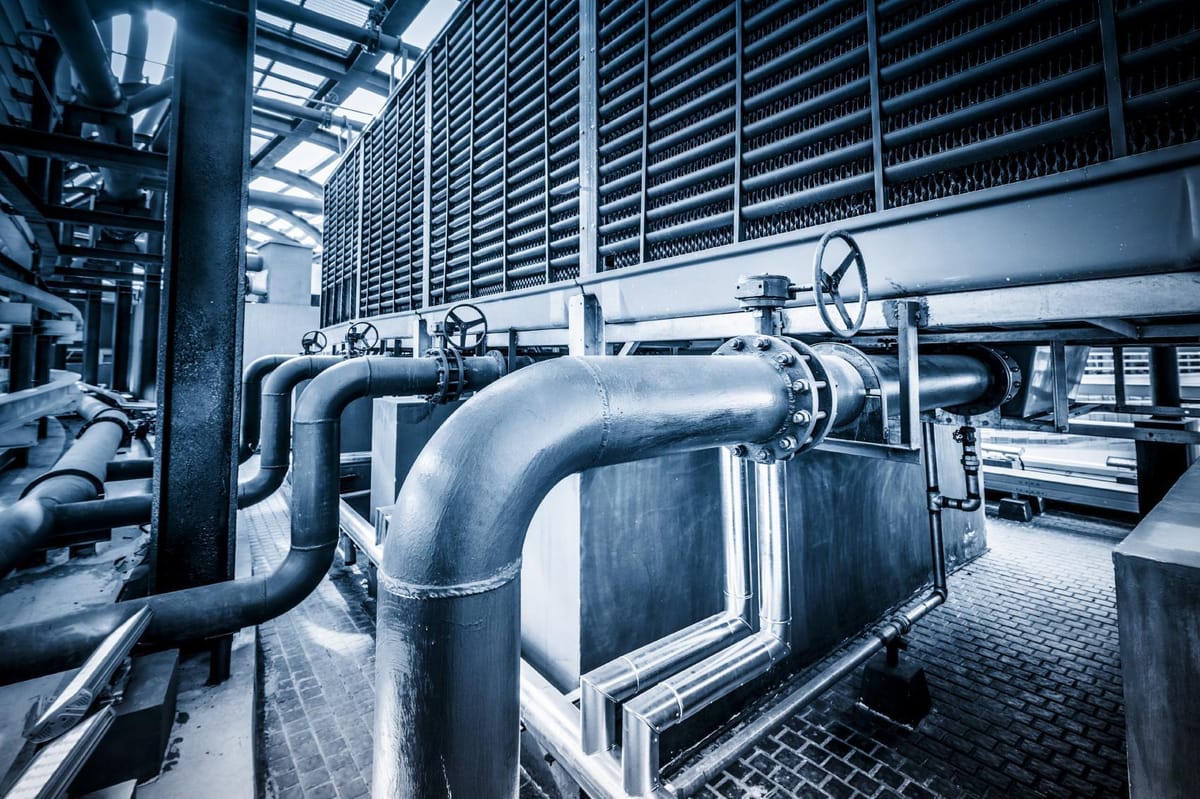
A practitioner's deep-dive into every critical discipline of Heating, Ventilation, and Air Conditioning — told through the journey of an engineer who learned it all the hard way so you don't have to.
Marco Reyes stood in the boiler room of the Grandview Medical Center on a Tuesday morning in February, watching his breath crystallize in front of his face.
Inside a hospital.
Three floors above him, patients shivered under extra blankets. Nurses wore fleece jackets over scrubs. The facility director had called Marco's firm — Reyes Mechanical Services — at 5:47 AM with two words no HVAC contractor wants to hear from a hospital administrator: "It's freezing."
Marco was twenty-eight years old. Six months earlier, his father, Eduardo Reyes, had retired from the company he'd built over thirty years. Eduardo was a legend in the trade — the kind of old-school engineer who could diagnose a boiler problem by the sound it made from across a parking lot. He'd handed Marco the keys, the contracts, and a filing cabinet stuffed with dog-eared reference books.
Marco had a mechanical engineering degree. He'd passed his PE exam. He knew the theory.
But standing in that boiler room, staring at a system that served 200,000 square feet of critical healthcare space, theory wasn't enough.
What Marco needed was mastery. Not the kind that comes from textbooks alone, but the deep, practical fluency that transforms a competent engineer into someone buildings — and the people inside them — can depend on.
This is the story of how he got there. And every lesson he learned is one you can apply to your own practice, starting today.
Part One: The Language of the Trade — Symbols, Units, and the Conversions That Save Projects
The Status Quo: Confident but Unaware
Marco's first mistake at Grandview wasn't technical. It was linguistic.
When he pulled the original mechanical drawings from the building archive, he found a set from 1987 — produced in Imperial units — and a renovation set from 2003 in SI (metric). The control system had been retrofitted by a European manufacturer whose documentation was entirely metric. The boilers were American-made, rated in BTU/hr. The cooling tower specs referenced kilowatts.
He was staring at a Tower of Babel built from pipes and ductwork.
The Inciting Incident: A Costly Conversion Error
Marco's junior technician, Danny, had been tasked with verifying the boiler output against the building's heat loss. Danny punched numbers into a calculator and reported that the boiler was oversized by 40%.
It wasn't. Danny had confused kilowatt hours with kilocalories per hour, a mistake that would have led them to de-rate the boiler — exactly the wrong move during a heating crisis.
That near-miss taught Marco his first critical lesson: the foundation of HVAC engineering isn't thermodynamics or fluid mechanics. It's fluency in the language of measurement.
The Transformation: Building Your Conversion Fluency
You probably already know that 1 kW = 3,412 BTU/hr. But do you carry the full conversion toolkit in your working memory? Here's what Marco learned to keep at his fingertips:
Essential Heat Flow Conversions
| From | To | Multiply By |
|---|---|---|
| 1 BTU/hr | Watts | 0.293 |
| 1 kW | BTU/hr | 3,412 |
| 1 kW | kcal/hr | 860 |
| 1 Ton Refrigeration | BTU/hr | 12,000 |
| 1 Ton Refrigeration | kW | 3.516 |
| 1 BTU/ft²·hr·°F | W/m²·K | 5.68 |
| 1 ft²·hr·°F/BTU | m²·K/W | 0.18 |
Pressure Conversions That Matter Daily
| From | To | Multiply By |
|---|---|---|
| 1 atmosphere | kN/m² | 101.3 |
| 1 atmosphere | lb/in² (psi) | 14.7 |
| 1 atmosphere | inches water (at 62°F) | 407.1 |
| 1 atmosphere | mm mercury | 760 |
| 1 psi | N/m² (Pa) | 6,895 |
| 1 psi | inches water | 27.71 |
| 1 bar | kN/m² | 100 |
| 1 bar | psi | 14.52 |
| 1 inch water | N/m² | 249 |
| 1 Pa | N/m² | 1 |
Volume Flow and Velocity
| From | To | Multiply By |
|---|---|---|
| 1 ft/min | m/s | 0.00508 |
| 1 m/s | ft/min | 196.85 |
| 1 m³/s | ft³/min (CFM) | 2,118.9 |
| 1 CFM | litres/second | 0.47 |
| 1 litre/second | gallons/minute | 13.2 |
| 1 kg/s (water) | gallons/minute | 13.20 |
Temperature
The conversion you know:
°C = (°F - 32) × 5/9
°F = (°C × 9/5) + 32
K = °C + 273.15
°R = °F + 459.67
SI Prefixes You Use Without Thinking
| Prefix | Symbol | Multiplier |
|---|---|---|
| Tera | T | × 10¹² |
| Giga | G | × 10⁹ |
| Mega | M | × 10⁶ |
| Kilo | k | × 10³ |
| Milli | m | × 10⁻³ |
| Micro | μ | × 10⁻⁶ |
| Nano | n | × 10⁻⁹ |
The takeaway for you: Print these tables. Laminate them. Keep them in your truck, your desk drawer, and your hard hat. The ten seconds you save on a mental conversion might prevent the ten-thousand-dollar mistake that comes from getting one wrong.
Part Two: Standards and Materials — The Skeleton That Holds Everything Together
The Struggle: Every Spec Sheet Tells a Story
Three weeks after the Grandview crisis (which Marco resolved by discovering a failed zone valve, not a boiler problem), he landed a new contract: the mechanical design for a 50-unit residential building.
The architect handed him a set of specifications that read like a foreign language:
"All copper tube to BS EN 1057. Steel pipe to BS EN 10255. Valves to BS EN 12266-1."
Marco's father would have known every one of those standards by heart. Marco had to look them up. And in doing so, he discovered something his university education had glossed over: standards aren't bureaucratic red tape. They're the accumulated wisdom of thousands of engineers encoded into enforceable minimum requirements.
Pipe Material Standards: Your Quick Reference
Steel Pipe
| Standard | Description | Application |
|---|---|---|
| BS EN 10255 | Non-alloy steel tubes for welding/threading | General HVAC piping |
| BS 3601 | Steel pipe and tubes for pressure purposes | Medium/high pressure systems |
| BS EN 10216 | Seamless steel tubes for pressure purposes | High pressure hot water, steam |
Key property: Steel pipe is measured by nominal bore (NB) — the approximate internal diameter. A 50mm NB steel pipe has an outside diameter of approximately 60.3mm.
Copper Tube
| Standard | Description | Application |
|---|---|---|
| BS EN 1057 | Copper tubes for water and gas | Domestic hot/cold water |
| BS 2871 Part 1 | Copper tubes (Table X, Y, Z) | Various pressure ratings |
Key property: Copper tube is measured by outside diameter (OD). A 22mm copper tube has an OD of 22mm and a wall thickness that varies by table (X = thin, Y = medium, Z = thick).
Plastic Pipe
| Standard | Description | Application |
|---|---|---|
| BS 3505/3506 | uPVC pressure pipe | Cold water distribution |
| BS 5254 | Polypropylene waste pipe | Above-ground drainage |
Insulation Standards
| Standard | Description |
|---|---|
| BS 5422 | Method for specifying thermal insulating materials on pipes, ductwork, and equipment |
| BS 5970 | Code of practice for thermal insulation of pipework and equipment |
The takeaway for you: When you specify materials, don't just write "copper pipe." Write "copper tube to BS EN 1057, Table Y, 22mm OD." Specificity in your specifications prevents substitution on site, reduces call-backs, and demonstrates the professional competence that wins repeat clients.
Part Three: Combustion — Where Heat Begins
The Scene: A Boiler That Wouldn't Stop Smoking
Marco's residential building project required a gas-fired boiler plant. Simple enough — until the commissioning engineer reported that the flue gases were running at 18% CO₂ and the Ringelmann smoke reading was hitting a 3 on the scale.
For anyone who hasn't memorized the Ringelmann Scale: a reading of 3 means the smoke is 60% opaque. That's visible from half a kilometre away and guaranteed to generate complaints — or worse, enforcement action.
Understanding Combustion Fundamentals
Every hydrocarbon fuel burns according to the same basic chemistry. The critical variable is excess air — the amount of air supplied beyond the theoretical minimum needed for complete combustion.
Excess Air Requirements for Good Combustion
| Fuel Type | Excess Air (%) |
|---|---|
| Anthracite | 40-70 |
| Bituminous Coal | 30-60 |
| Natural Gas | 10-25 |
| Light Oil (Gas Oil) | 15-25 |
| Heavy Oil (Fuel Oil) | 15-30 |
Too little excess air → incomplete combustion → carbon monoxide production → danger and wasted fuel.
Too much excess air → excessive heat carried away in flue gases → wasted energy → higher operating costs.
Boiler Heat Losses: The Five Thieves
Marco learned to think of boiler inefficiency as five distinct "thieves" stealing heat from the system:
Thief #1: Sensible Heat in Dry Flue Gases
L₁ = W × Cₚ × (t₁ - tₐ) kJ per kg of fuel
Where W = mass of dry flue gas per kg of fuel, Cₚ = specific heat of flue gas, t₁ = flue gas temperature, tₐ = ambient air temperature.
Thief #2: Free Moisture in Fuel
L₂ = w × (H - h) kJ per kg of fuel
Where w = mass of moisture per kg of fuel, H = enthalpy of steam at flue gas temperature, h = enthalpy of water at ambient.
Thief #3: Incomplete Combustion
L₃ = 24,000 × [CO / (CO₂ + CO)] × C kJ per kg of fuel
This is the thief that was robbing Marco's boiler. High CO in the flue gases meant incomplete combustion — fuel literally going up the chimney unburned.
Thief #4: Carbon in Ash
L₄ = Wₑ × 33,950 kJ per kg of fuel
Where Wₑ = mass of carbon in ash per kg of fuel.
Thief #5: Radiation and Convection from Boiler Surface
Typically 1-3% for modern boilers. Older, uninsulated boilers can lose 5% or more.
Chimney Design: Getting the Flue Right
The theoretical draught (natural ventilation pressure) in a chimney follows this relationship:
h = H × [(1/T₁) - (1/T₂)] × 3,460
Where:
- h = draught in mm water gauge
- H = chimney height in metres
- T₁ = absolute temperature outside (K)
- T₂ = absolute temperature inside chimney (K)
Chimney Velocity Guidelines
| Application | Maximum Velocity |
|---|---|
| Small furnaces | 2 m/s (7 ft/s) |
| Large furnaces | 10-15 m/s |
Combustion Air Requirements
Every boiler room needs fresh air openings. The empirical rule:
1,600 mm² free area per 1 kW of boiler rating
Marco's boiler room at the residential building had been designed with intake louvres sized for the original boiler. When the building owner upgraded to a higher-capacity unit without enlarging the air intakes, the boiler starved for oxygen — causing the incomplete combustion and smoking that the commissioning engineer flagged.
Fuel Storage: The Data That Shapes Your Plant Room
| Fuel | Density (kg/m³) | Specific Volume (m³ per 1,000 kg) |
|---|---|---|
| Anthracite | 720-850 | 1.2-1.4 |
| Bituminous Coal | 690-800 | 1.2-1.5 |
| Kerosene | 790 | 1.3 |
| Gas Oil | 835 | 1.2 |
| Fuel Oil | 930 | 1.1 |
Calorific Values of Common Fuels
| Fuel | Gross CV (MJ/kg) | Net CV (MJ/kg) |
|---|---|---|
| Anthracite | 34.0 | 33.0 |
| Bituminous Coal | 27-33 | 26-32 |
| Coke | 28.0 | 28.0 |
| Gas Oil | 45.5 | 42.5 |
| Heavy Fuel Oil | 43.3 | 40.5 |
| Natural Gas | 38.6 MJ/m³ | 34.8 MJ/m³ |
| LPG (Propane) | 50.0 | 46.3 |
The takeaway for you: When a boiler smokes, don't immediately suspect the burner. Check the air supply first. The cheapest fix in HVAC is often the one nobody thought to check — the intake louvre that's been painted shut or blocked by stored materials.
Part Four: Heat and Thermal Properties — The Physics That Governs Everything
The Aha Moment: Heat Doesn't Care About Your Feelings
It was during the Grandview hospital job that Marco had his first genuine engineering epiphany. He was calculating the thermal expansion of a 30-metre run of steel pipe carrying hot water at 82°C, and the number shocked him.
A 30-metre run of steel expanding from 10°C to 82°C grows by approximately 25.9 mm — over an inch. Ignore that expansion and you get buckled pipes, failed joints, and water damage that costs more than the entire mechanical installation.
Thermal Expansion: The Three Laws
Linear Expansion:
L₂ = L₁ × (1 + e × Δt)
Surface Expansion:
A₂ = A₁ × (1 + 2e × Δt)
Volumetric Expansion:
V₂ = V₁ × (1 + 3e × Δt)
Where:
- e = coefficient of linear expansion (m/m·K)
- Δt = temperature difference (K)
Coefficients of Linear Expansion
| Material | Coefficient (× 10⁻⁶ per K) |
|---|---|
| Steel (mild) | 12 |
| Copper | 16.7 |
| Brass | 18.7 |
| Aluminium | 23 |
| Cast Iron | 10 |
| Stainless Steel | 17.3 |
| PVC | 54 |
| Polypropylene | 110 |
| Concrete | 10-14 |
| Glass | 8.5 |
Notice that PVC expands almost five times as much as steel, and polypropylene nearly ten times. This is why plastic piping systems require significantly more expansion compensation than metallic systems — and why Marco learned to always specify expansion loops or compensators for any plastic pipe run exceeding 6 metres.
Heat Transfer: The Three Mechanisms
Every heat calculation you'll ever perform depends on understanding three fundamental mechanisms:
1. Conduction — heat transfer through a solid material
H = (k × A × Δt) / x (Watts)
Where:
- k = thermal conductivity (W/m·K)
- A = cross-sectional area (m²)
- Δt = temperature difference (K)
- x = thickness of material (m)
2. Convection — heat transfer between a surface and a moving fluid
H = α × A × Δt (Watts)
Where α = convective heat transfer coefficient (W/m²·K)
Typical convective coefficients:
| Condition | α (W/m²·K) |
|---|---|
| Natural convection (still air) | 5-25 |
| Forced convection (air, moderate velocity) | 10-200 |
| Forced convection (water) | 50-10,000 |
| Boiling water | 2,500-25,000 |
| Condensing steam | 5,000-100,000 |
3. Radiation — heat transfer via electromagnetic waves
H = C × A × [(T₁/100)⁴ - (T₂/100)⁴] (Watts)
Where C = radiation constant of the surface material (W/m²)
Radiation Constants for Common Building Materials
| Material | C (W/m²) |
|---|---|
| Black body (theoretical maximum) | 5.72 |
| Brick | 5.16 |
| Glass | 5.13 |
| Cotton/fabric | 4.23 |
| Oil paint | 4.30 |
| Wood | 4.17 |
| Polished copper | 1.19 |
| Polished wrought iron | 1.55 |
This is why polished aluminium foil works as insulation. Not because it stops conduction (it doesn't — metal is a conductor), but because its extremely low emissivity dramatically reduces radiative heat transfer. A polished aluminium surface has a radiation constant of approximately 0.23 W/m² — roughly 4% of a black body. That's why you see reflective foil insulation in attic spaces and behind radiators.
Thermal Conductivity: The Material Property That Defines Insulation
| Material | k (W/m·K) |
|---|---|
| Copper | 385 |
| Aluminium | 230 |
| Steel (mild) | 50 |
| Concrete (dense) | 1.4 |
| Brick (common) | 0.6-0.8 |
| Glass | 1.05 |
| Water | 0.58 |
| Wood (softwood) | 0.13 |
| Plasterboard | 0.16 |
| Mineral wool | 0.035-0.040 |
| Expanded polystyrene | 0.033-0.040 |
| Polyurethane foam | 0.023-0.028 |
| Still air | 0.025 |
Notice something remarkable: still air (0.025 W/m·K) is a better insulator than most commercial insulation materials. The entire purpose of insulation is to trap air in small pockets and prevent it from moving. That's all insulation does — immobilize air.
The Gas Laws: What Every HVAC Engineer Uses Daily
The General Gas Equation:
PV = mRT
Where:
- P = absolute pressure (N/m²)
- V = volume (m³)
- m = mass (kg)
- R = specific gas constant (J/kg·K)
- T = absolute temperature (K)
For air: R = 287 J/kg·K
Specific Heat Capacities:
| Property | Air | Water |
|---|---|---|
| Cₚ (at constant pressure) | 1,005 J/kg·K | 4,187 J/kg·K |
| Cᵥ (at constant volume) | 718 J/kg·K | — |
| Ratio Cₚ/Cᵥ (γ) | 1.4 | — |
The takeaway for you: Before you ever size a pipe, select a pump, or design a duct, you're doing heat transfer calculations. And every heat transfer calculation rests on these material properties. Know them the way a surgeon knows anatomy — not as memorized facts, but as intuitive understanding of how energy moves through the built environment.
Part Five: Properties of Steam and Air — The Working Fluids of Your Career
The Struggle: When Steam Tables Save Your Skin
Marco's next challenge came unexpectedly. A client with a 1960s-era manufacturing plant wanted to convert their steam heating system to hot water. Simple concept, massive implications — because steam and hot water behave fundamentally differently, and every pipe, valve, and heat exchanger in the system was sized for steam's unique properties.
To design the conversion, Marco needed to understand both fluids intimately.
Steam Properties: The Data You Reach For
Saturated Steam at Key Pressures
| Gauge Pressure | Absolute Pressure (kN/m²) | Temp (°C) | Specific Volume (m³/kg) | Latent Heat (kJ/kg) |
|---|---|---|---|---|
| 0 (atmospheric) | 101.3 | 100 | 1.673 | 2,257 |
| 70 kN/m² | 171.3 | 115.2 | 1.031 | 2,217 |
| 170 kN/m² | 271.3 | 130.0 | 0.668 | 2,174 |
| 350 kN/m² | 451.3 | 148.0 | 0.414 | 2,120 |
| 700 kN/m² | 801.3 | 170.4 | 0.240 | 2,048 |
| 1,400 kN/m² | 1,501.3 | 198.3 | 0.132 | 1,947 |
Key insight: As pressure increases, latent heat decreases. At very high pressures, there's less energy available in the phase change from water to steam, which affects the sizing of every steam heat exchanger in your system.
Air Properties: The Psychrometric Foundation
Standard Air Properties (at 20°C, atmospheric pressure)
| Property | Value |
|---|---|
| Density | 1.2 kg/m³ |
| Specific heat (Cₚ) | 1.005 kJ/kg·K |
| Dynamic viscosity | 1.82 × 10⁻⁵ Pa·s |
| Thermal conductivity | 0.0257 W/m·K |
| Prandtl number | 0.71 |
The Psychrometric Relationships
Understanding air conditioning requires fluency in psychrometrics — the study of air-water vapour mixtures.
Moisture Content (Humidity Ratio):
g = 0.622 × [Pₛ / (Pₐ - Pₛ)] kg/kg dry air
Where:
- Pₛ = partial pressure of water vapour (N/m²)
- Pₐ = atmospheric pressure (N/m²)
Relative Humidity:
φ = (Pₛ / Pₛₛ) × 100%
Where Pₛₛ = saturation pressure at the given temperature.
Specific Enthalpy of Moist Air:
h = Cₚₐ × t + g × (hfg + Cₚw × t) kJ/kg dry air
Where:
- Cₚₐ = specific heat of dry air (1.005 kJ/kg·K)
- t = dry bulb temperature (°C)
- g = moisture content (kg/kg)
- hfg = latent heat of vaporisation at 0°C (2,501 kJ/kg)
- Cₚw = specific heat of water vapour (1.89 kJ/kg·K)
Wet Bulb Temperature — the temperature a thermometer reads when its bulb is wrapped in a wet wick and exposed to an air stream. It represents the lowest temperature achievable through evaporative cooling alone.
Dew Point Temperature — the temperature at which air becomes saturated (100% RH) and condensation begins. Critical for duct design, cold water pipe insulation, and preventing mould growth.
The Psychrometric Chart: Your Most Powerful Visual Tool
The psychrometric chart plots these relationships graphically. Every air conditioning process can be represented as a line or curve on this chart:
| Process | Chart Representation |
|---|---|
| Sensible heating | Horizontal line moving right |
| Sensible cooling | Horizontal line moving left |
| Humidification | Line moving upward |
| Dehumidification | Line moving downward |
| Heating + humidification | Line moving right and up |
| Cooling + dehumidification | Line moving left and down to saturation curve |
| Evaporative cooling | Line following constant wet bulb |
| Mixing of two air streams | Straight line between two state points |
The takeaway for you: If you're designing air conditioning and you can't trace every process on a psychrometric chart, stop. Go back to fundamentals. The chart isn't an academic exercise — it's the design tool that determines your coil selections, your air quantities, and whether your building will have condensation problems or not.
Part Six: Heat Losses — The Calculation That Starts Every Heating Design
The Scene: A Building That Refused to Warm Up
Four months into running the company, Marco took a call from a school headmaster. The school had been retrofitted with new windows and wall insulation the previous summer. The heating system hadn't been touched. And now, in January, some rooms were 26°C while others couldn't reach 18°C.
The problem was immediately obvious to Marco: the insulation retrofit had changed the building's heat loss profile, but nobody had rebalanced the heating system to match.
Rooms that had been the biggest heat losers (with old single-glazed windows) now had the lowest heat losses — but they were still receiving the same amount of heat. Meanwhile, internal rooms with high occupancy (and therefore high ventilation requirements) weren't getting enough.
The Heat Loss Equation
The total heat loss of a room consists of two components:
Q_total = Q_fabric + Q_ventilation
Fabric (transmission) heat loss:
Q_fabric = Σ (U × A × Δt) (Watts)
Where:
- U = thermal transmittance (W/m²·K)
- A = area of building element (m²)
- Δt = temperature difference inside to outside (K)
Ventilation (infiltration) heat loss:
Q_ventilation = 0.34 × V × N × Δt (Watts)
Where:
- V = room volume (m³)
- N = number of air changes per hour
- 0.34 = volumetric specific heat of air (W/m³·K)
Design Indoor Temperatures
| Room Type | Design Temperature (°C) |
|---|---|
| Living rooms | 21 |
| Bedrooms | 18 |
| Bathrooms | 22 |
| Kitchens | 16 |
| Offices | 20 |
| Classrooms | 20 |
| Hospitals — wards | 18 |
| Operating theatres | 24 |
| Churches | 18 |
| Factories — sedentary work | 18 |
| Factories — light work | 16 |
| Factories — heavy work | 13 |
| Shops/retail | 18 |
| Restaurants | 18 |
| Swimming pools | 27 |
| Corridors/circulation | 16 |
| Stores/warehouses | 15-16 |
| Changing rooms | 22 |
Design Infiltration Rates (Air Changes Per Hour)
| Room Type | Air Changes/hr |
|---|---|
| Bedrooms | 1 |
| Living rooms | 1 |
| Offices | 1 |
| Classrooms | 2 |
| Bathrooms | 2 |
| Hospital wards | 2 |
| Operating theatres | 3 |
| Entrance halls | 2 |
| Churches | 1 |
| Restaurants | 1 |
| Shops | 1 |
| Factories | 1 to 1.5 |
| Laboratories | 1 |
| Swimming pools | 1 |
High-Rise Correction Factors
For buildings above 4 stories, wind exposure increases infiltration significantly:
| Floor Level | Addition to Infiltration Rate | U-value Exposure Category |
|---|---|---|
| Ground, 1st | None | Normal |
| 2nd to 4th | +25% | Normal |
| 5th to 11th | +50% | Normal |
| Above 11th | +100% | Severe |
Thermal Transmittance (U-values): The Numbers That Shape Your Design
U-values represent the rate of heat transfer through a building element per unit area per degree of temperature difference. Lower is better.
Typical U-values for Building Elements
| Element | U-value (W/m²·K) |
|---|---|
| Single glazing | 5.6 |
| Double glazing (air filled) | 2.8 |
| Double glazing (low-e, argon) | 1.2-1.6 |
| Triple glazing | 0.8-1.0 |
| Solid brick wall (220mm) | 2.1 |
| Cavity wall (uninsulated) | 1.5 |
| Cavity wall (insulated) | 0.3-0.5 |
| Concrete floor (ground level) | 0.7-1.0 |
| Timber flat roof (insulated) | 0.2-0.3 |
| Metal clad roof (insulated) | 0.3-0.4 |
Thermal Conductivities for Heat Loss Calculations
| Material | k (W/m·K) |
|---|---|
| Brickwork (outer leaf) | 0.84 |
| Brickwork (inner leaf) | 0.62 |
| Dense concrete block | 1.13 |
| Lightweight concrete block | 0.19 |
| Mineral wool insulation | 0.038 |
| Expanded polystyrene | 0.035 |
| Polyurethane board | 0.025 |
| Plaster (dense) | 0.50 |
| Plasterboard | 0.16 |
| Timber | 0.13 |
| Carpet + underlay | 0.06 |
| Air cavity (unventilated) | — (resistance ≈ 0.18 m²·K/W) |
The Combined Coefficient: Roofs With Separate Ceilings
When you have a ceiling with an air space and a roof above, use:
U_E = (U_R × U_C) / (U_R + (U_C × r))
Where:
- U_E = combined transmittance (W/m²·K) based on ceiling area
- U_R = transmittance of roof
- U_C = transmittance of ceiling
- r = ratio of roof area to ceiling area
The Preston Formula: What Happens When It's Colder (or Warmer) Than Design?
Engineers frequently need to estimate room temperatures when outdoor conditions differ from design assumptions. The Preston formula provides this:
t₄ = (t₁² - t₂² + t₃²)^(1/12)
Where:
- t₁ = design inside temperature (K)
- t₂ = design outside temperature (K)
- t₃ = actual outside temperature (K)
- t₄ = estimated actual inside temperature (K)
Example: System designed for 20°C inside at 0°C outside. If actual outside temperature drops to -5°C: estimated inside temperature ≈ 17.8°C.
The takeaway for you: Heat loss calculations aren't a one-time exercise. Every time the building envelope changes — new windows, added insulation, a new extension — the heat loss profile changes. And if you don't rebalance the heating system, you create the exact problem Marco's school had: some rooms too hot, others too cold, and an occupant who blames the heating contractor.
Part Seven: Cooling Loads — The Summer Side of the Equation
The Inciting Incident: When the Sun Becomes Your Enemy
Summer arrived, and with it came Marco's first air conditioning design project: a four-story office building with a full glass curtain wall on the south and west facades.
The architect loved the aesthetics. Marco saw a solar heat gain nightmare.
Cooling Load Components
Unlike heating loads (which are essentially steady-state), cooling loads are dynamic — they change hour by hour with the sun's position.
Sensible Heat Gains:
- Transmission through walls and roof — affected by U-value, temperature difference, AND thermal mass (time lag)
- Solar radiation through glass — the dominant load in many commercial buildings
- Occupant heat emission — approximately 90W sensible heat per person (office work)
- Lighting — typically 10-20 W/m² for offices
- Equipment — computers, printers, copiers: 15-25 W/m² for typical offices
- Infiltration — outdoor air entering through cracks and openings
Latent Heat Gains:
- Occupant moisture — approximately 50W latent heat per person (office work)
- Infiltration moisture — outdoor humid air
- Process moisture — kitchens, laundries, swimming pools
Solar Radiation Intensity (Latitude 45°)
| Solar Time | South (W/m²) | West (W/m²) | East (W/m²) | Horizontal (W/m²) |
|---|---|---|---|---|
| 6:00 | — | — | 312 | 82 |
| 8:00 | 69 | — | 691 | 492 |
| 10:00 | 309 | — | 455 | 791 |
| 12:00 | 404 | — | — | 890 |
| 14:00 | 309 | 455 | — | 791 |
| 16:00 | 69 | 691 | — | 492 |
| 18:00 | — | 312 | — | 82 |
Peak solar load on a west-facing glass wall occurs at 4:00 PM — 691 W/m². On Marco's building, with 500 m² of west-facing glass, that's 345 kW of solar heat gain through the glass alone. That's roughly 100 tons of refrigeration just to counteract the sun hitting one facade.
Solar Shading Effectiveness
| Shading Type | Proportion of Solar Radiation Transmitted |
|---|---|
| No shading | 0.84 (for clear glass) |
| Inside shade, fully drawn | 0.45 |
| Inside shade, half drawn | 0.68 |
| Inside Venetian blind (45°, aluminium) | 0.58 |
| Outside Venetian blind (45°, aluminium) | 0.22 |
| Canvas awning, plain | 0.28 |
| Canvas awning with aluminium bands | 0.22 |
The critical insight: External shading is 2-3 times more effective than internal shading. Once solar radiation passes through the glass, it's already inside the building as heat. Internal blinds merely redirect it — they don't stop it. External shading intercepts the radiation before it enters.
Wall Time Lag
| Wall Construction | Time Lag (hours) |
|---|---|
| 50mm timber | 1.5 |
| 75mm concrete + 25mm insulation | 2 |
| 150mm concrete | 3 |
| 100mm lightweight block | 2.5-3 |
| 560mm brick | 10 |
Why this matters: A heavy masonry wall delays the peak solar heat gain by up to 10 hours. Solar energy hitting the outside at noon doesn't reach the inside until 10 PM — when the building is likely unoccupied. This is the principle behind thermal mass as a passive cooling strategy.
Radiation Factor (F): How Much Solar Energy Gets Through the Wall
| U-value of Wall (W/m²·K) | Radiation Factor (F) |
|---|---|
| 0.25 | 0.01 |
| 0.5 | 0.02 |
| 1.0 | 0.04 |
| 2.0 | 0.08 |
| 3.0 | 0.12 |
| 5.0 | 0.20 |
The takeaway for you: Marco convinced the architect to add external solar shading to the south and west facades — brise-soleil louvres that reduced the solar cooling load by 60%. The additional construction cost was recovered in the first three years through smaller mechanical equipment and lower energy bills. Design the shading first, then size the cooling. You'll be amazed at how much mechanical plant you can eliminate with good architecture.
Part Eight: Heating Systems — The Heart of Building Services
The Transformation: From Boiler to Radiator, Every Link in the Chain
After six months of reactive service work, Marco was ready for his first complete heating design from scratch. The project: a new 40-bed care home. The residents would be elderly, vulnerable to cold, and utterly dependent on the reliability of the system Marco designed.
That responsibility sharpened his focus like nothing else could.
Hot Water Heating Classification
| Type | Abbreviation | Flow Temp (°C) | Temp Drop (°C) |
|---|---|---|---|
| Low Pressure Hot Water | LPHW | 50-90 | 10-15 |
| LPHW Gravity | LPHW | 90 | 20 |
| Medium Pressure Hot Water | MPHW | 90-120 | 15-35 |
| High Pressure Hot Water | HPHW | 120-200 | 27-85 |
For the care home, Marco selected LPHW with pumped circulation — the standard choice for most building heating in temperate climates. Flow temperature of 82°C, return at 71°C, giving an 11K temperature drop.
The Six-Step Design Procedure
Step 1: Calculate Heat Losses (covered in Part Six)
Step 2: Size the Boiler
Boiler Output = Total Heat Loss × (1 + Margin)
Typical margin: 10-15% for heating-up allowance
Step 3: Select Room Heaters
R = H × (1 + X)
Where:
- R = rating of heaters required (W)
- H = room heat loss (W)
- X = heating-up margin (0.10 to 0.15)
Step 4: Size the Circulating Pump
Q = H / [4.185 × (t₁ - t₂)] (m³/s for LPHW)
Where:
- Q = volume flow rate
- H = total heat loss (kW)
- t₁ = flow temperature (°C)
- t₂ = return temperature (°C)
Pump head selection guidelines:
| System Type | Pump Head Range | Pipe Friction |
|---|---|---|
| LPHW | 10-60 kN/m² | 80-250 N/m² per metre |
| HPHW | 60-250 kN/m² | 100-300 N/m² per metre |
Step 5: Size the Pipework
P_T = P₁ + P₂
Where:
- P_T = total pressure loss (N/m²)
- P₁ = pipe friction loss (N/m² per m × length)
- P₂ = fitting losses
Typical ratios of fitting loss to pipe loss:
| Installation Type | P₂/P₁ Ratio |
|---|---|
| Building heating installations | 0.40 to 0.50 |
| District heating mains | 0.10 to 0.30 |
| Boiler room headers | 0.70 to 0.90 |
Step 6: Size the Expansion Tank
Water expands approximately 4% when heated from 7°C to 100°C.
Required expansion tank volume = 0.08 × total water content of system
Expansion Tank Sizing Guide
| Boiler Rating (kW) | Tank Size (litres) | Cold Feed (mm NB) | Open Vent (mm NB) |
|---|---|---|---|
| 12 | 54 | 15 | 20 |
| 55 | 86 | 15 | 20 |
| 150 | 191 | 15 | 25 |
| 375 | 327 | 20 | 40 |
| 800 | 709 | 25 | 50 |
| 1,200 | 1,227 | 25 | 50 |
Pipe Systems: The Options
Marco learned that the pipe system layout fundamentally affects both cost and performance:
One-Pipe System: Single pipe loop serving all radiators in series. Water cools progressively — last radiator gets cooler water. Cheap to install, difficult to balance, poor individual room control.
Two-Pipe System: Separate flow and return pipes. Each radiator receives water at the same temperature. Better control, more piping, higher cost.
Reverse Return System: Flow pipe takes the shortest route, return pipe takes the longest — so total circuit length is equal for every radiator. Self-balancing. The best performing system but most pipework.
Recommended Flow Temperatures for LPHW
| Outside Temperature (°C) | Boiler Flow Temperature (°C) |
|---|---|
| 0 | 80 |
| 2 | 70 |
| 4 | 56 |
| 7 | 45 |
| 10 | 37 |
This is the basis of weather compensation — adjusting boiler flow temperature based on outdoor conditions. At milder outdoor temperatures, lower flow temperatures are sufficient and more efficient.
Safety Valve Settings
| System Type | Safety Valve Setting |
|---|---|
| Pumped systems | Outlet pressure of pump + 70 kN/m² |
| Gravity systems | System pressure + 15 kN/m² |
| Minimum setting (to prevent shock leaks) | 240 kN/m² |
Underfloor Heating
Marco specified underfloor heating for the care home's ground floor common areas — ideal for elderly residents because:
- No hot surfaces to cause burns
- Even heat distribution at floor level
- No radiators to obstruct mobility aids
Key design parameters:
- Maximum floor surface temperature: 29°C (occupied areas) to 35°C (perimeter/unoccupied zones)
- Typical pipe spacing: 150-300mm centres
- Flow temperature: 40-55°C (lower than radiator systems)
- Pipe material: cross-linked polyethylene (PEX) or polybutylene
Resistance of Fittings: The Data That Sizes Your Pipes
| Fitting | F (Resistance Coefficient) |
|---|---|
| Radiators | 3.0 |
| Boilers | 2.5 |
| Abrupt velocity change | 1.0 |
| Tee — straight way | 1.0 |
| Tee — branch | 1.5 |
| Tee — counter current | 3.0 |
| Cross-over | 0.5 |
The takeaway for you: Marco's care home design won an industry commendation — not for being innovative, but for being thorough. He'd sized every component correctly, specified the right controls, and produced commissioning documentation that meant the system worked perfectly from day one. In heating design, excellence isn't flashy. It's simply doing every step properly.
Part Nine: Steam Systems — The Industrial Workhorse
The Scene: A Factory That Speaks Steam
Eight months in, Marco inherited a maintenance contract for a textile factory that used steam for process heating, space heating, and humidification. The system ran at 700 kN/m² gauge pressure with a network of mains, branches, steam traps, and condensate return lines.
Marco's first visit revealed condensate hammering so violent it shook the pipes visibly. The maintenance log showed three steam trap failures in the past month. The boiler operator was adding chemicals daily to combat scale buildup.
This system was crying for help.
Steam System Essentials
Steam Pipe Sizing Considerations
Steam pipes must be sized for:
- The required steam flow rate
- Acceptable pressure drop
- Reasonable velocity (to prevent erosion and noise)
Maximum recommended steam velocities:
| Application | Velocity |
|---|---|
| Saturated steam (short runs) | 25-30 m/s |
| Saturated steam (long runs) | 15-20 m/s |
| Superheated steam | 30-50 m/s |
Condensate Pipe Capacities (in Watts)
| Pipe Size (mm NB) | Wet Main | Dry Main (1 in 200 gradient) | Vertical Pipes |
|---|---|---|---|
| 15 | 30,000 | 10,000 | 12,000 |
| 20 | 70,000 | 30,000 | 47,000 |
| 25 | 120,000 | 50,000 | 94,000 |
| 32 | 300,000 | 120,000 | 211,000 |
| 40 | 420,000 | 176,000 | 293,000 |
| 50 | 760,000 | 350,000 | 530,000 |
| 65 | 1,900,000 | 800,000 | 1,200,000 |
| 80 | 2,700,000 | 1,200,000 | 1,870,000 |
Steam Traps: The Gatekeepers
Steam traps are the most critical and most frequently neglected components in any steam system. Their job: pass condensate and non-condensable gases, block live steam.
Types of Steam Traps:
| Type | Operating Principle | Best Application |
|---|---|---|
| Thermostatic | Temperature difference between steam and condensate | Radiators, tracing lines |
| Mechanical (float) | Condensate level raises float to open valve | Process equipment, large loads |
| Thermodynamic (disc) | Flash steam dynamics | Mains drainage, high pressure |
| Inverted bucket | Buoyancy of steam vs condensate | General purpose, reliable |
Marco's steam trap audit at the textile factory revealed that 40% of the traps had failed — half of them stuck open, passing live steam directly to the condensate return. A single failed-open trap on a 25mm line at 700 kN/m² wastes roughly 25 kg/hr of steam. With 12 failed-open traps, the factory was wasting over 300 kg/hr of steam — the equivalent of running a small boiler just to feed the losses.
Flash Steam Recovery
When high-pressure condensate is discharged to a lower pressure, some of it "flashes" back into steam. This flash steam contains useful energy.
Percentage of condensate that flashes off:
| Initial Pressure (kN/m² abs.) | Temperature (°C) | Flash to Atmospheric (%) | Flash to 35 kN/m² (%) |
|---|---|---|---|
| 1,500 | 198.3 | 18.9 | 23.2 |
| 800 | 170.4 | 13.4 | 17.9 |
| 500 | 151.8 | 9.8 | 14.4 |
| 400 | 143.6 | 8.3 | 12.9 |
| 260 | 128.7 | 5.4 | 10.2 |
At the textile factory, with condensate returning from 700 kN/m², approximately 13% was flashing to steam at atmospheric pressure — and being vented to atmosphere. Marco recommended a flash steam recovery vessel feeding the boiler feedwater tank, saving approximately 10% on annual fuel costs.
Boiler Feed Water Requirements
| Feed Water Temperature (°C) | Maximum Suction Lift (m) |
|---|---|
| 55 | 3 |
| 65 | 2 |
| 77 | 0.6 |
| 80 | 0 (positive head required) |
| 87.5 | 1.5 (minimum pressure head) |
| 95 | 3.5 (minimum pressure head) |
| 100 | 5.0 (minimum pressure head) |
The takeaway for you: Marco's steam trap survey and flash steam recovery recommendation saved the textile factory an estimated 15% on annual energy costs. The total investment was recovered in eight months. If you maintain any steam system and haven't done a trap survey in the past year, you're almost certainly wasting energy — and your client's money.
Part Ten: Domestic Services — Hot and Cold Water for Every Building
The Struggle: When the Showers Run Cold
Marco's care home project included the domestic hot and cold water systems. Forty beds meant forty en-suite bathrooms, a main kitchen, a laundry, and multiple service areas. The hot water demand peaked at mealtimes and morning shower periods simultaneously.
Get the sizing wrong, and residents get cold showers. Oversize the system, and energy costs balloon.
Cold Water Storage Requirements
| Building Type | Storage Per Occupant (litres) |
|---|---|
| Houses and flats | 135 |
| Hotels | 150 |
| Hospitals (per bed) | 150 |
| Hostels | 90 |
| Schools — boarding | 90 |
| Schools — day | 30 |
| Offices with canteen | 45 |
| Offices without canteen | 35 |
| Factories (no process) | 10 |
| Restaurants (per meal served) | 7 |
Cold Water Storage Per Fitting
| Fitting | Storage (litres) |
|---|---|
| Bath | 900 |
| Shower | 450-900 |
| Basin | 90 |
| Sink | 90 |
| W.C. | 180 |
| Urinal | 180 |
Pipe Sizing for Domestic Water
| Pipe Size (mm NB) | Maximum Draw-Offs Served (Head ≤ 20m) | Maximum Draw-Offs Served (Head > 20m) |
|---|---|---|
| 15 | 1 | 1-2 |
| 20 | 2-4 | 3-9 |
| 25 | 5-8 | 10-19 |
| 32 | 9-24 | 20-49 |
| 40 | 25-49 | 50-79 |
| 50 | 50-99 | 80-153 |
| 65 | 100-200 | 154-300 |
Note: Basins, sinks, and showers count as one draw-off. Baths count as two.
Hot Water Systems
Design Temperatures
| Application | Hot Water Temperature |
|---|---|
| General domestic use | 55-60°C |
| Storage temperature | 60°C minimum (to prevent Legionella) |
| Distribution temperature | 50°C minimum at outlets |
| Maximum delivery temperature (healthcare) | 43°C (thermostatic mixing valve required) |
Legionella Prevention: Non-Negotiable Safety
Legionella pneumophila bacteria thrive in water between 20°C and 45°C, with optimal growth between 35°C and 40°C. The bacteria are killed at temperatures above 60°C.
Critical requirements:
- Store hot water at 60°C or above
- Distribute at 55°C or above
- Cold water to be stored and distributed below 20°C
- Eliminate dead legs (sections of pipe with no flow)
- Regular flushing of infrequently used outlets
- Temperature monitoring at sentinel points
- Annual risk assessment and system review
For Marco's care home — serving an immunocompromised population — Legionella prevention wasn't just best practice. It was a matter of life and death.
Temperature Drop in Bare Pipes
The heat loss from uninsulated hot water pipes determines whether your secondary return system will maintain adequate temperatures:
| Flow Rate (kg/s) | Temp Drop per Metre — 15mm Pipe (K/m) | Temp Drop per Metre — 50mm Pipe (K/m) |
|---|---|---|
| 0.010 | 1.03 | 2.52 |
| 0.020 | 0.52 | 1.26 |
| 0.050 | 0.21 | 0.50 |
| 0.100 | 0.10 | 0.25 |
The takeaway for you: Domestic hot water design is where engineering meets public health. Every temperature setting, every pipe size, every dead leg you eliminate or fail to eliminate has direct implications for the safety of the people using the building. Marco's care home design included thermostatic mixing valves at every outlet, a fully insulated secondary return circuit, and monthly temperature logging at all sentinel points. He over-engineered the Legionella prevention — and he'd do it exactly the same way again.
Part Eleven: Ventilation — Breathing Life into Buildings
The Aha Moment: Air is a Design Material
The care home project was also where Marco had his deepest insight about ventilation. He'd always thought of ventilation as a supporting system — something that supplied fresh air to spaces where people breathed. A pipe with air instead of water.
He was wrong.
Ventilation is the system that determines whether a building feels alive or dead. It controls odours, humidity, temperature stratification, and — critically in a care home — infection transmission. Air is not just a medium. It's a design material with properties you can specify, deliver, and control.
Ventilation Rates: Occupancy Known
| Building Type | Fresh Air Supply (m³/s per person) |
|---|---|
| Assembly halls | 0.014 |
| Offices | 0.016 |
| Factories | 0.02-0.03 |
| Hospitals — general | 0.025 |
| Hospitals — contagious diseases | 0.05 |
| Schools | 0.014 |
| Shops | 0.02 |
| Theatres | 0.014 |
| Areas with heavy smoking | 0.028 |
Ventilation Rates: Occupancy Unknown
| Building Type | Air Changes Per Hour |
|---|---|
| Assembly halls | 5-10 |
| Cinemas | 5-10 |
| Conference rooms | 6-10 |
| Garages | 6 |
| Kitchens | 10-60 |
| Laboratories | 4-15 |
| Laundries | 10-15 |
| Libraries | 3-4 |
| Offices | 3-8 |
| Restaurants | 7-15 |
| Sports halls | 6 |
| Swimming pools | 5-10 |
| Theatres | 5-10 |
| Toilets | 6-10 |
Look at kitchens: 10-60 air changes per hour. The range is enormous because it depends on the type and intensity of cooking. A care home kitchen producing 120 meals per service generates vastly more heat and moisture than a small commercial kitchen — and needs ventilation to match.
Garage Ventilation
Two-thirds of total extract at high level, one-third at low level. This split accounts for both warm exhaust gases (which rise) and carbon monoxide (which, being almost the same density as air, distributes throughout the space but concentrates at breathing height).
Bathroom and W.C. Ventilation
Six air changes per hour or 0.018 m³/s per room. Standby provision of two fans with automatic changeover is recommended to ensure continuous operation during fan failure.
Natural Ventilation: The Stack Effect
The theoretical velocity of air moving through a natural ventilation opening due to temperature difference:
V = 4.43 × √[h × (tᶜ - tₒ) / (273 + tₒ)] (m/s)
Where:
- V = air velocity (m/s)
- h = height of flue/opening (m)
- tᶜ = temperature of warm air column (°C)
- tₒ = temperature of outside air (°C)
Velocity Pressure and Duct Design
p = 0.6 × V² (N/m² for standard air at 1.2 kg/m³)
Where V is the air velocity in m/s.
Filters: Types and Performance
| Filter Type | Air Velocity (m/s) | Resistance (N/m²) | Application |
|---|---|---|---|
| Panel (dry, disposable) | 0.1-1.0 | 25-250 | General comfort |
| Continuous roll (self-cleaning) | 2.5 | 30-175 | Commercial buildings |
| Viscous panel (washable) | 1.5-2.5 | 20-150 | General commercial |
| Electrostatic precipitator | 1.5-2.5 | Negligible | High-grade filtration |
| Absolute (HEPA) | 2.5 | 250-625 | Hospitals, clean rooms |
Dust Loading by Location
| District Type | Dust Load (mg/m³) |
|---|---|
| Rural and suburban | 0.45-1.00 |
| Metropolitan | 1.0-1.8 |
| Industrial | 1.8-3.5 |
Duct Surface Resistance Multipliers
| Surface Material | Multiply Chart Reading By |
|---|---|
| Aluminium | 0.8 |
| Asbestos cement | 0.8 |
| Fibreglass | 0.8 |
| PVC | 0.8 |
| Sheet steel | 1.0 |
| Sheet iron | 1.5 |
| Concrete | 2.0 |
| Brickwork | 4.0 |
| Asphalted cast iron | 6.0 |
Duct Fitting Resistance Coefficients
| Fitting | K Value |
|---|---|
| Sharp 90° bend | 0.7 |
| 90° bend with turning vanes | 0.7 |
| Rounded 90° bend (r/w < 1) | 0.5 |
| Rounded 90° bend (r/w > 1) | 0.25 |
| Sharp 45° bend | 0.5 |
| Rounded 45° bend (r/w < 1) | 0.2 |
| Rounded 45° bend (r/w > 1) | 0.05 |
| Exit to room | 1.0 |
| Entry from room | 0.5 |
| Grille (free area/total area = 1/3) | Varies |
Duct Sizing Methods
Constant Velocity Method: Maintain the same air velocity throughout the system. Simple but leads to high pressure drops in long runs.
Equal Friction Method: Size each duct section for the same friction loss per metre of length. The most common method for comfort systems. Typical design value: 0.8-1.2 N/m² per metre for low-velocity systems, 2-4 N/m² per metre for high-velocity systems.
Static Regain Method: Size each section so that the static pressure regain at each junction offsets the friction loss in the next section. Results in approximately equal static pressure at all outlets. Best for long duct runs with many branches.
The takeaway for you: Ventilation design is where many engineers cut corners — and where cutting corners has the most immediate impact on occupant health and comfort. Every air change per hour you specify isn't just a number on a calculation sheet. It's a breath someone takes. Make it a good one.
Part Twelve: Air Conditioning — The Complete Climate Control System
The Transformation: From Heating Specialist to Complete HVAC Engineer
It was the air conditioning design for a new 10-story mixed-use tower that finally transformed Marco from a heating engineer who also did some cooling, into a complete HVAC professional.
The tower contained:
- Ground and first floors: retail
- Floors 2-4: offices
- Floors 5-8: residential apartments
- Floor 9: gym and spa
- Floor 10: restaurant and sky lounge
Each occupancy type had different temperature, humidity, and air quality requirements. The design needed to serve them all from coordinated central plant while allowing individual zone control.
This was the project that tested everything Marco had learned.
Air Conditioning Design Procedure
Step 1: Cooling load calculation (sensible + latent)
Step 2: Selection of air treatment process (using psychrometric chart)
Step 3: Determination of air quantities
Step 4: Layout and sizing of ducts
Step 5: Determination of refrigeration capacity
Step 6: Selection and sizing of air handling units
Step 7: Design of chilled water and condenser water systems
Step 8: Controls specification
The Vapour Compression Cycle
Every mechanical cooling system works on the same principle: a refrigerant absorbs heat as it evaporates (in the evaporator coil) and rejects heat as it condenses (in the condenser).
The Four Stages:
| Stage | Component | Process | Pressure | Temperature |
|---|---|---|---|---|
| 1 → 2 | Compressor | Compression | Low → High | Rising |
| 2 → 3 | Condenser | Condensation (heat rejection) | High (constant) | Falling |
| 3 → 4 | Expansion valve | Expansion | High → Low | Falling |
| 4 → 1 | Evaporator | Evaporation (heat absorption) | Low (constant) | Rising |
The Absorption Cycle
An alternative to vapour compression, the absorption cycle uses heat (gas, steam, or hot water) instead of electricity to drive the refrigeration process. The most common working pair is lithium bromide/water (for comfort cooling) or ammonia/water (for low-temperature applications).
Advantages over vapour compression:
- Uses heat energy (including waste heat or solar thermal)
- No compressor — fewer moving parts, less vibration, less noise
- Zero ozone depletion when using water as refrigerant
Disadvantages:
- Lower COP (typically 0.7-1.2 vs 3-6 for vapour compression)
- Larger physical size
- Higher capital cost
- Requires cooling tower for heat rejection
Air Conditioning System Types
Marco evaluated each system type for the different zones of his tower:
1. Self-Contained Window/Wall Unit
| Advantages | Disadvantages |
|---|---|
| Low cost | Short life |
| Flexible | Noise |
| Simple | Poor control |
| Poor filtration | |
| No fresh air supply | |
| Unsightly |
Application: Small buildings, individual rooms. Marco used: No — not suitable for the tower.
2. Split Direct Expansion (DX) Unit
| Advantages | Disadvantages |
|---|---|
| Indoor unit need not be on outside wall | Limitation on refrigerant pipe length |
| Can be ceiling mounted | Limitation on level difference |
| Silencers can be added | Limited fresh air |
| Multiple circuits for better control |
Application: Small shops, computer rooms. Marco used: For retail ground floor units (tenant-installed).
3. Reversible Heat Pump (Split System)
| Advantages | Disadvantages |
|---|---|
| Heating and cooling from one system | Heating and cooling capacities linked |
| Similar benefits to split DX | Same limitations as split DX |
Application: Small shops, individual rooms. Marco used: No — separate heating system preferred for the tower.
4. Water Cooled Unit
| Advantages | Disadvantages |
|---|---|
| Quieter than air-cooled | Water treatment required |
| Flexible unit locations | Cooling water maintenance |
| Better control |
Application: Computer rooms. Marco used: For the building's IT room.
5. Fan Coil Units
| System | Description | Application |
|---|---|---|
| Two-pipe | Single pair of pipes — chilled water in summer, hot water in winter | Continental climates with sharp seasons |
| Four-pipe | Separate pairs for chilled and hot water | Temperate climates — simultaneous heating and cooling |
Design parameters:
- Chilled water flow temperature: 5-6°C
- Chilled water temperature rise: 5-6K
- Hot water flow temperature: 80°C
- Hot water temperature drop: 10K
Marco used: Four-pipe fan coils for the office floors — individual zone control with simultaneous heating and cooling capability.
6. Variable Air Volume (VAV)
| Advantages | Disadvantages |
|---|---|
| Energy efficient at part load | Requires sophisticated controls |
| Good zone control | Minimum airflow limits for ventilation |
| Reduced fan power at part load | Can cause drafts if poorly commissioned |
Marco used: VAV for the restaurant floor — large open space with varying occupancy.
7. Heat Recovery Units (Versatemp-type)
Self-contained refrigeration/heat pump room units that reject heat to a common water loop. Units cooling rooms add heat to the loop; units heating rooms take heat from the loop. Central plant balances the difference.
Marco used: For the gym and spa floor — simultaneously heating the pool area and cooling the exercise spaces, with internal heat recovery.
Refrigerants: The Modern Landscape
The choice of refrigerant affects system efficiency, environmental impact, and long-term viability:
Current Refrigerants (Zero Ozone Depletion)
| Refrigerant | Boiling Point (°C) | Critical Temp (°C) | Primary Application |
|---|---|---|---|
| R134a | -26 | 101 | Air conditioning, domestic refrigeration |
| R404A | -46 | 72 | Cold stores, refrigerated display |
| R407C | -43 | 87 | Air conditioning, heat pumps (replaces R22) |
| R410A | -52 | 72 | Air conditioning units, heat pumps |
| R507 | -47 | 71 | Low/medium temperature applications |
| R290 (Propane) | -42 | 97 | Commercial refrigeration (flammable) |
| R717 (Ammonia) | -33 | 133 | Industrial refrigeration (toxic, flammable) |
| R744 (CO₂) | -78 | 31 | Transcritical systems, heat pumps |
Former Refrigerants (Now Obsolete/Obsolescent)
| Refrigerant | Status | Replaced By |
|---|---|---|
| R12 | Banned (CFC) | R134a |
| R11 | Banned (CFC) | R123, R245fa |
| R22 | Phase-out (HCFC) | R407C, R410A |
| R502 | Banned (CFC blend) | R404A, R507 |
Dehumidification Methods
Adsorption (Silica Gel / Activated Alumina)
| Property | Silica Gel | Activated Alumina |
|---|---|---|
| Composition | SiO₂ | ~90% Al₂O₃ |
| Water adsorption capacity | Up to 40% of own mass | Up to 60% of own mass |
| Bulk density | 480-720 kg/m³ | 800-870 kg/m³ |
| Reactivation temperature | 160-175°C | 160-175°C |
| Heat for reactivation | 4,800-5,800 kJ/kg water | Similar |
Humidification Methods
| Method | Principle | Legionella Risk |
|---|---|---|
| Sprayed coil | Water sprayed onto finned coil; evaporates into airstream | Higher — standing water |
| Spinning disc | Water film on rotating disc broken into fine particles | Moderate |
| Electrode steam | Water boiled by electrodes; steam distributed to air | Lowest — water is boiled |
Marco specified electrode-type steam humidifiers for the care home and the tower's office floors — the only humidification method that effectively eliminates Legionella risk because the water is boiled before being released into the airstream.
Industrial Process Conditions
| Industry | Process | Temperature (°C) | RH (%) |
|---|---|---|---|
| Textile — Cotton spinning | 15-27 | 60-70 | |
| Textile — Wool weaving | 24-27 | 50-55 | |
| Tobacco — Cigar making | 21-24 | 55-65 | |
| Paper — Storage | 15-27 | 34-45 | |
| Printing — Binding | 21 | 45 | |
| Photographic — Film development | 21-24 | 60 | |
| Fur — Storage | -2 to +4 | 25-40 |
Air Curtains
| Parameter | Small Installation | Large Installation |
|---|---|---|
| Discharge temperature | 35-50°C | 25-35°C |
| Suction temperature | 5-15°C | 5-15°C |
| Air velocity (from above) | 5-15 m/s | 5-15 m/s |
| Air velocity (from below) | 2-4 m/s | 2-4 m/s |
| Air velocity (from side) | 10-15 m/s | 10-15 m/s |
The takeaway for you: Marco's mixed-use tower required four different air conditioning system types serving seven different occupancy zones — all coordinated through a building management system that optimized energy use across the whole building. The lesson? There's no single "best" air conditioning system. There's only the right system for the specific application. And choosing the right system requires understanding all of them.
Part Thirteen: Pumps and Fans — The Movers of Energy
The Scene: When the Pump Curve Tells the Truth
During commissioning of the care home, Marco's senior technician reported that the heating pump was running but the flow rate was 30% below design. The pump motor wasn't overloaded. The pump was spinning at the correct speed. Everything looked right — except the system wasn't delivering enough heat.
Marco asked for the pump curve from the manufacturer. When he plotted the actual system resistance against the pump characteristic, the answer was clear: the pump was operating far to the left of its design point — high head, low flow — because the system resistance was much higher than calculated.
The cause? A gate valve on the main header had been left half-closed after a pressure test.
But the experience taught Marco something deeper: you cannot commission a pumped system without understanding pump curves.
Pump Fundamentals
The key relationships:
Head (H) = The pressure a pump develops, expressed as metres of liquid. Independent of liquid density when expressed this way.
Overall Efficiency:
η₀ = (Hₘ × Q × ρ × g) / S × 100%
Where:
- Hₘ = manometric head (m)
- Q = flow rate (m³/s)
- ρ = density (kg/m³)
- g = gravitational acceleration (9.81 m/s²)
- S = shaft power input (W)
Specific Speed:
Nₛ = (n × Q^(1/2)) / H^(3/4)
Where:
- n = speed (rev/min)
- Q = volume delivered (m³/s)
- H = total head (m)
The Three Pump Laws
These relationships govern how a pump behaves when its speed changes:
| Law | Relationship |
|---|---|
| Law 1 | Flow ∝ Speed: Q₁/Q₂ = N₁/N₂ |
| Law 2 | Head ∝ Speed²: H₁/H₂ = (N₁/N₂)² |
| Law 3 | Power ∝ Speed³: S₁/S₂ = (N₁/N₂)³ |
The cube law is transformative for energy savings. Reducing pump speed by 20% reduces power consumption by 49% — nearly half. This is why variable speed drives on pumps and fans deliver such dramatic energy savings.
Pump Starting Rules
| Pump Type | Starting Condition | Reason |
|---|---|---|
| Centrifugal | Start with delivery valve SHUT | Takes least power at zero flow |
| Axial flow | Start with delivery valve OPEN | Takes least power at maximum flow |
Getting this wrong can overload the motor — or cause dangerous pressure surges.
Fan Types and Characteristics
Axial Flow Fans
- Suitable for large volumes at low pressures
- Single stage pressure: up to approximately 300 N/m²
- Watch for the stall point — operating to the left of this point causes unstable flow and potential mechanical damage
Centrifugal Fan Blade Types
| Blade Type | Characteristic | Application |
|---|---|---|
| Forward curved (multi-vane) | High volume at moderate pressure | General HVAC |
| Backward curved | Higher pressure, self-limiting power | Industrial, energy-efficient |
| Radial (paddle wheel) | Handles dirty/dusty air | Industrial extraction |
Fan Laws
The same three laws apply to fans as to pumps:
| Law | Relationship |
|---|---|
| Volume ∝ Speed | Q₁/Q₂ = N₁/N₂ |
| Pressure ∝ Speed² | p₁/p₂ = (N₁/N₂)² |
| Power ∝ Speed³ | S₁/S₂ = (N₁/N₂)³ |
The takeaway for you: A pump or fan is only as good as the system it's installed in. Size the system correctly, commission it properly, and you'll get the design performance. But skip the commissioning — leave a valve half-closed, a damper in the wrong position, or a filter unwrapped — and the best pump in the world will underperform. The pump curve never lies.
Part Fourteen: Sound — The Invisible Quality Factor
The Struggle: When Nobody Mentions Noise Until It's Too Late
Marco's care home was mechanically perfect. Every room reached design temperature. The ventilation rates were verified. The hot water ran at the right temperature.
And then the first residents moved in, and the night staff reported that three bedrooms on the second floor could hear a low-frequency hum that made sleep difficult.
The source: a centrifugal fan in the air handling unit one floor above, transmitting through the duct system and breaking out through the ceiling diffusers.
Sound Power Level of Fans
For preliminary design, when manufacturer's data isn't yet available:
PWL = 67 + 10 log₁₀(S) + 10 log₁₀(p) (dB)
Or alternatively:
PWL = 40 + 10 log₁₀(Q) + 20 log₁₀(p) (dB)
Where:
- S = rated motor power (kW)
- p = fan static pressure (N/m²)
- Q = volume discharged (m³/s)
Sound Attenuation in Ductwork
| Attenuation Source | Method |
|---|---|
| Lined duct (absorptive lining) | 3-12 dB per metre, frequency dependent |
| Duct bends (unlined) | 1-3 dB |
| Duct bends (lined) | 3-8 dB |
| End reflection (duct opening to room) | Frequency dependent — higher at low frequencies |
| Splitter silencers | 10-30 dB depending on length and spacing |
| Plenum chambers | 10-20 dB |
Recommended Noise Levels (NR Curves)
| Space Type | Maximum NR |
|---|---|
| Concert halls | 20-25 |
| Bedrooms (residential) | 25-30 |
| Hospital wards | 30-35 |
| Private offices | 30-35 |
| Open plan offices | 35-40 |
| Restaurants | 40-45 |
| Shops | 40-50 |
| Factories | 50-65 |
Marco's care home bedrooms needed NR 30 or below. The fan noise was breaking through at NR 38 — clearly audible and clearly unacceptable.
Sound Attenuation Methods
Marco resolved the problem using four techniques in combination:
1. Duct lining — 25mm acoustic lining on the first 3 metres of ductwork leaving the AHU, providing approximately 8 dB attenuation at the problematic frequency.
2. Flexible connections — Replacing the rigid duct connections to the fan with flexible canvas connectors to break the vibration transmission path.
3. Anti-vibration mounts — The AHU was on rigid supports. Marco specified spring isolators, reducing structure-borne transmission by approximately 15 dB.
4. End reflection — By choosing smaller diameter duct outlets, Marco gained additional low-frequency attenuation from the end reflection effect. The smaller the duct opening relative to the wavelength of sound, the more low-frequency energy is reflected back into the duct.
Post-remediation measurements: NR 27 in the bedrooms. Problem solved.
The takeaway for you: Acoustic design isn't something you bolt on at the end. It's something you design in from the start. Every fan selection, every duct route, every diffuser location has acoustic implications. If you don't address them in design, you'll address them in complaint calls — and complaint calls are always more expensive.
Part Fifteen: Labour and Installation — Where Design Meets Reality
The Final Lesson: Respect the Craft
In his first year running the company, Marco learned one more lesson that no engineering textbook had taught him. It came from Tomás, a pipe fitter who'd worked for Eduardo Reyes for twenty-two years.
Marco had designed a complex manifold arrangement for the care home's underfloor heating. It was technically elegant — compact, efficient, minimal pipe runs. Tomás looked at the drawing, looked at the ceiling void where it was supposed to be installed, and said: "It's a beautiful design, boss. But I can't get my arms in there to make the joints."
That was the day Marco understood that a design is only as good as its buildability.
Installation Time Standards
These basic times represent the labour required for competent tradespeople to install heating and ventilating equipment, including haulage into position, erection on site, surveying of builder's work, and testing.
Radiators
| Size Range | Installation Time |
|---|---|
| Small (up to 1,000W) | 2-3 hours per unit |
| Medium (1,000-3,000W) | 3-4 hours per unit |
| Large (over 3,000W) | 4-6 hours per unit |
Pipework
| Pipe Size (mm NB) | Time per Metre (hours) |
|---|---|
| 15 | 0.4-0.6 |
| 25 | 0.5-0.8 |
| 50 | 0.8-1.2 |
| 80 | 1.2-1.8 |
| 100 | 1.5-2.2 |
| 150 | 2.0-3.0 |
Note: These times include jointing, clipping, supports, and fire stopping where required. Add 30-50% for work at height, in confined spaces, or in occupied buildings.
Ductwork
| Duct Size Range | Time per Metre (hours) |
|---|---|
| Small (up to 300mm) | 0.5-1.0 |
| Medium (300-600mm) | 1.0-2.0 |
| Large (over 600mm) | 2.0-4.0 |
Factors That Increase Installation Time
| Factor | Time Addition |
|---|---|
| Working at height (above 3m) | +30-50% |
| Confined spaces | +50-100% |
| Occupied buildings (working around occupants) | +25-40% |
| Heritage/listed buildings | +50-100% |
| Hazardous environments | +50-75% |
| Winter working (outdoor plant) | +15-25% |
The takeaway for you: Labour is typically 40-60% of the total cost of an HVAC installation. Designing systems that are easier to install doesn't just make your contractors happy — it directly reduces project costs and, more importantly, reduces the likelihood of installation errors. A joint that's easy to make is a joint that gets made properly.
The Resolution: What Marco Learned in Year One
Twelve months after taking over Reyes Mechanical Services, Marco sat in his office reviewing the year. The Grandview hospital ran like clockwork. The residential building was warm and quiet. The care home had passed every inspection. The textile factory's steam system was 15% more efficient. The mixed-use tower was approaching practical completion.
He opened his father's filing cabinet and pulled out a dog-eared copy of an HVAC engineer's handbook. Its pages were yellowed, its margins filled with Eduardo's handwritten notes. Calculations, sketches, phone numbers of suppliers long retired.
Marco realized something: the data in this handbook hadn't changed in decades. The thermal conductivity of copper is still 385 W/m·K. The latent heat of steam at atmospheric pressure is still 2,257 kJ/kg. A one-degree Kelvin temperature difference still drives the same heat flow it always has.
What had changed was Marco's relationship with that data. He'd gone from knowing facts to understanding principles. From reading tables to seeing the physical reality they described. From calculating heat losses to feeling the cold that drove the calculation.
That's the transformation that separates a graduate engineer from a practitioner. And it's available to anyone willing to do the work.
Quick Reference: Master Formulas Card
For your daily use, here are the formulas that appear in every HVAC design:
Heating
| Formula | Application |
|---|---|
| Q = U × A × Δt | Fabric heat loss |
| Q = 0.34 × V × N × Δt | Ventilation heat loss |
| Q = m × Cₚ × Δt | Sensible heat (any fluid) |
| Q = H / [4.185 × (t₁ - t₂)] | LPHW pump flow rate |
Air Conditioning
| Formula | Application |
|---|---|
| h = Cₚₐ × t + g × (hfg + Cₚw × t) | Specific enthalpy of moist air |
| g = 0.622 × Pₛ / (Pₐ - Pₛ) | Moisture content |
| φ = (Pₛ / Pₛₛ) × 100 | Relative humidity |
Fluid Dynamics
| Formula | Application |
|---|---|
| PV = mRT | Gas law |
| p = 0.6 × V² | Velocity pressure (air) |
| Nₛ = nQ^(1/2) / H^(3/4) | Specific speed (pump/fan) |
| Q₁/Q₂ = N₁/N₂ | Flow vs speed (pump law) |
| S₁/S₂ = (N₁/N₂)³ | Power vs speed (cube law) |
Thermal Expansion
| Formula | Application |
|---|---|
| L₂ = L₁(1 + eΔt) | Linear expansion |
| A₂ = A₁(1 + 2eΔt) | Surface expansion |
| V₂ = V₁(1 + 3eΔt) | Volume expansion |
Combustion
| Formula | Application |
|---|---|
| L₁ = WCₚ(t₁ - tₐ) | Flue gas sensible heat loss |
| L₃ = 24,000 × CO/(CO₂+CO) × C | Incomplete combustion loss |
| h = H[(1/T₁)-(1/T₂)] × 3,460 | Chimney draught |
Your Next Move
Marco's journey from a panicking contractor in a cold hospital boiler room to a confident HVAC professional designing mixed-use towers took twelve months of intense, hands-on learning backed by relentless reference to engineering fundamentals.
You don't need to repeat his mistakes to learn his lessons.
Here's what you can do this week:
- Audit one system — Pick a building you maintain. Recalculate the heat loss with current U-values. Does the installed capacity match? If not, you've found an optimization opportunity.
- Check your steam traps — If you maintain any steam system, survey every trap. A 40% failure rate isn't unusual in neglected systems.
- Read one psychrometric chart — Pick an air conditioning system you work with. Trace the process from outdoor air to supply air on the chart. If you can't, that's your study priority.
- Commission one system properly — Don't just start a pump and walk away. Plot the operating point against the pump curve. Verify the flow rates. Check the temperatures.
Every building tells a story about the engineer who designed its mechanical systems. The good ones tell stories of comfort, efficiency, and reliability. The bad ones tell stories of complaints, callbacks, and wasted energy.
Which story will your buildings tell?
What's the single biggest HVAC challenge you're facing right now in your practice? Drop it in the comments below — the community has decades of combined experience, and the answer might be simpler than you think.


