
The Green Building Revolution - A Complete Guide to Sustainable Architecture That Pays for Itself
How one architect's failed project became a blueprint for buildings that heal the planet — and your bottom line.

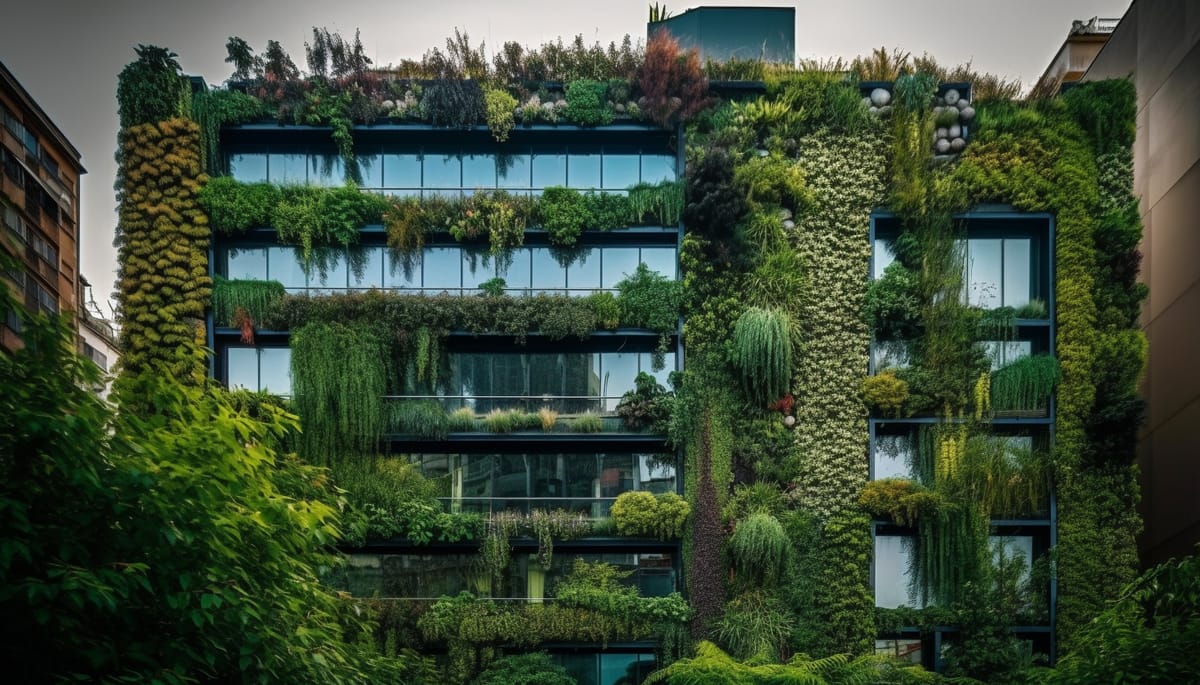
Elena Vasquez stared at the energy bill for Meridian Tower and felt her stomach drop.
The 40-storey commercial building she'd designed just three years ago — the project that was supposed to launch her reputation as a forward-thinking architect — was hemorrhaging money. Heating costs had tripled. Tenants complained about stifling summers on the south-facing floors. Two anchor tenants had already broken their leases, citing "uninhabitable working conditions" during peak months.
The building sector worldwide consumes up to 40% of all primary energy and a staggering share of global water resources. Elena's building was a textbook example of that waste — a glass-and-steel monument to a design philosophy that treated energy as an afterthought.
But here's what makes Elena's story worth your time: she didn't just fix her building. She tore apart everything she thought she knew about architecture and rebuilt her entire practice around a single question.
What if a building could give more than it takes?
That question led her down a path that transformed not just her career but the way entire cities think about construction. And the principles she discovered aren't theoretical. They're being applied right now, in buildings from Hamburg to Copenhagen, Stuttgart to Luxembourg — buildings that prove sustainable architecture isn't a sacrifice. It's a competitive advantage.
This is the complete guide to green building — every principle, every system, every strategy — told through the stories of people who learned them the hard way so you don't have to.
Part 1: The Wake-Up Call — Why Green Building Changes Everything
The Status Quo Before Elena's Transformation
For decades, the building industry operated on a simple formula: minimize construction costs, maximize rentable square footage, move on to the next project.
Nobody questioned it because the math seemed to work. Build cheap, sell fast, let the tenants worry about operating costs.
Then the world started changing.
Elena's colleague, Marcus Okonkwo — a structural engineer with 25 years in commercial real estate — described it this way:
"We designed buildings like we designed cars in the 1970s. Bigger engines, more power, no thought about fuel. Then the oil crisis hit, and suddenly everyone wanted a Honda Civic. The same thing is happening to buildings right now — except the crisis isn't coming. It's already here."
Here's what the numbers tell you:
| Factor | Impact |
|---|---|
| Building sector's share of global primary energy | Up to 40% |
| Oil price increase (annual average, 2004–2008) | ~25% per year |
| Service life of new/renovated buildings | 50–80 years |
| Projected global population by 2050 | ~9 billion |
| CO₂ from buildings sector | ~33% of global emissions |
Those buildings being constructed today will still be consuming energy and water in 2080 and beyond. Every design decision you make now locks in energy demand for half a century.
The Inciting Incident: What Forced the Change
For Elena, the turning point wasn't the energy bill. It was a phone call from a tenant — a technology company whose employees had started developing chronic headaches and respiratory issues on floors 15 through 22.
An indoor air quality assessment revealed volatile organic compounds (VOCs) from building materials were three times above recommended levels. The HVAC system, designed to minimum code requirements, couldn't provide adequate fresh air exchange.
The building wasn't just expensive to run. It was making people sick.
This is the pattern you'll see repeated across the industry. The motivation for green building isn't altruism. It's a convergence of forces that makes traditional construction increasingly untenable:
- Rising energy costs that make inefficient buildings financial liabilities
- Health and productivity research proving that indoor environment directly affects worker output
- Regulatory frameworks that are tightening year after year
- Tenant and investor demand for buildings with lower operating costs and higher comfort
- Carbon trading mechanisms that put a price on emissions
The Struggle: Confronting an Industry's Assumptions
When Elena began researching sustainable design, she hit resistance from every direction.
From her firm's partners: "Green buildings cost 15–20% more. No client will pay that."
From contractors: "These specifications are impossible to build on schedule."
From her own experience: "I was trained to design beautiful spaces. Nobody taught me thermodynamics."
Sound familiar? If you've ever tried to champion sustainability in a traditional construction environment, you know the objections by heart. But what Elena discovered — and what the evidence overwhelmingly shows — is that the objections are based on outdated information.
Green Buildings, properly designed using integrated planning methods, achieve payback on additional investment within 5 to 15 years through reduced energy and operating costs. And the "additional cost" itself is often a fraction of what skeptics claim, especially when systems are designed holistically from the start rather than bolted on as afterthoughts.
The Transformation: Elena's "Aha!" Moment
Elena's breakthrough came when she visited a building in Stuttgart — a state bank headquarters where 2,000 employees worked in 58,888 m² of space that consumed less energy than the national standard required.
The building wasn't austere or uncomfortable. It was luminous, airy, and the employees reported higher satisfaction than in their previous offices.
The secret wasn't any single technology. It was integration.
The architects, engineers, façade specialists, and building services consultants had worked together from day one — not sequentially (architect designs, engineer reacts) but simultaneously. Every decision about the envelope informed decisions about heating. Daylight strategies reduced lighting energy, which reduced cooling loads, which downsized mechanical systems, which reduced both capital and operating costs.
Key Insight for You: Green building isn't about spending more on "eco-friendly" technology. It's about spending smarter through integrated planning that treats the building as a single, interconnected system.
Part 2: The Rules of the Game — Framework, Carbon Trading, and Rating Systems
The Regulatory Landscape You Need to Understand
Marcus Okonkwo learned about carbon trading the expensive way. His client's industrial complex fell under emissions trading rules, and the penalties for exceeding CO₂ allowances wiped out an entire year's worth of projected rental income.
Here's the framework you need to know:
National and international laws, standards, and stipulations set minimum standards for energy efficiency in buildings. But here's the critical point: minimum standards are always backward-looking. They reflect what the market could achieve years ago, not what's possible today.
The gap between legal minimums and actual best-practice performance is enormous. And that gap is exactly where green building certifications come in.
The Major Rating Systems: Your Scorecard for Sustainability
Rating systems measure the sustainability level of green buildings and provide best-practice benchmarks for design, construction, and operation.
| Rating System | Origin | Certification Levels | Key Focus Areas |
|---|---|---|---|
| LEED (Leadership in Energy and Environmental Design) | United States | Certified (40–49), Silver (50–59), Gold (60–79), Platinum (≥80) | Sustainable site, water efficiency, energy & atmosphere, materials & resources, indoor environmental quality |
| BREEAM (BRE Environmental Assessment Method) | United Kingdom | Certified (30), Good (45), Very Good (55), Excellent (70), Outstanding (85) | Management, health & well-being, energy, transport, water, materials, waste, land use, pollution |
| DGNB (German Sustainable Building Certificate) | Germany | Bronze, Silver, Gold | Ecological quality, economic quality, sociocultural quality, technical quality, process quality, site quality |
| Green Star | Australia | 1–6 Stars | Management, indoor environment, energy, transport, water, materials, land use, emissions |
| CASBEE | Japan | C (Poor) to S (Excellent) | Indoor environment, quality of service, outdoor environment, energy, resources, off-site environment |
How Carbon Trading Affects Your Building Decisions
The Kyoto Protocol established the principle that CO₂ emissions have a market value. While the building sector in many regions isn't yet directly included in emissions trading, the direction is clear:
Buildings will be evaluated — and financially penalized or rewarded — based on their CO₂ footprint.
Here's the math that matters:
CO₂ Cost Impact = Annual Building Emissions (tonnes CO₂) × Carbon Price per Tonne

If your building emits 500 tonnes CO₂/year
And carbon price reaches 100 monetary units/tonne
That's 50,000 monetary units/year in carbon liability
Over a 50-year building life: 2,500,000 monetary units
The industrial nations that signed the Kyoto Protocol committed to reducing collective greenhouse gas emissions by 5% compared to 1990 levels. The European Community set its target at 8%, with some nations pushing even further.
The Global CO₂ Distribution (approximate):
| Region/Country | Share of Global CO₂ Emissions |
|---|---|
| Leading industrial nations | ~23% |
| China | ~17% |
| Russia | ~7% |
| Japan | ~5% |
| India | ~4% |
| Germany | ~3% |
| Other EU nations | ~12% |
| Rest of world | ~29% |
Your Takeaway: If you're designing, investing in, or operating a building today, you're making a 50–80 year bet on future energy costs and carbon prices. Green building isn't just ethically right. It's the only financially rational choice when you think in decades instead of quarters.
Part 3: Life Cycle Engineering — The Approach That Changes Everything
Why Sequential Planning Fails
Here's how traditional building projects work:
- The client defines a budget and program
- The architect creates a design
- Engineers figure out how to make it work
- The contractor builds it
- The operator runs it — usually discovering that reality doesn't match the plans
Each step happens in sequence. Each professional optimizes their piece without understanding the whole. The result? Buildings that cost more to operate than they should, systems that fight each other instead of working together, and comfort problems that persist for decades.
Life Cycle Engineering turns this on its head.
The Three Phases of Building Planning Evolution
Elena mapped the evolution of building planning into three distinct phases. Understanding where you are — and where you need to be — is critical:
| Approach | Who's Involved | When They Collaborate | What Gets Optimized |
|---|---|---|---|
| Sequential Planning | Client, Architect, Engineers (separately) | After each phase is complete | Individual systems in isolation |
| Integral Planning | Client, Architect, Engineers (together) | During design phase | Building systems as interacting components |
| Life Cycle Engineering | Client, Architect, Engineers, Operator, Facility Manager (all together) | From concept through operation | The entire building life from construction through operation to end-of-life |
The Cost Structure That Changes Your Thinking
Here's what stops most people from thinking long-term: construction costs are visible and immediate. Operating costs are invisible and deferred.
But look at what actually happens over a building's lifetime:
| Cost Category | Approximate Share of Total Life Cycle Cost |
|---|---|
| Planning and Construction | 15–25% |
| Energy costs (over building life) | 25–40% |
| Maintenance and repair | 20–30% |
| Renewal/renovation | 15–25% |
The construction cost that everyone obsesses over represents less than a quarter of what a building actually costs. The vast majority of cost comes from operations — energy, maintenance, and renewal.
This is why Life Cycle Engineering is transformative. By spending 5–10% more on intelligent design and high-quality systems upfront, you can reduce lifetime operating costs by 30–50%.
Elena's Rule: "Never evaluate a building decision based on first cost alone. Always ask: what does this cost over 50 years? The answer will change your design every single time."
Part 4: Sustainable Design — What Human Comfort Really Means
The Day Priya Changed Elena's Perspective
Elena's education in green building took an unexpected turn when she met Dr. Priya Anand, an occupational health researcher studying the link between indoor environments and worker productivity.
Priya showed Elena data that demolished a core assumption of traditional architecture: people don't just want comfortable buildings. They need them to function.
The research was unambiguous:
- Temperature variations of just 2–3°C from optimal can reduce cognitive performance by 5–15%
- Poor indoor air quality correlates with 20–50% increases in sick leave
- Inadequate daylight disrupts circadian rhythms and reduces alertness
- Acoustic problems can cut productivity by 5–10% in open offices
"Comfort isn't luxury," Priya told Elena. "It's the operating system for human performance. Get it wrong, and everything else — your technology, your management, your strategy — runs slower."
The Factors That Define Human Well-Being in Buildings
The science of indoor comfort is more complex than most architects realize. It involves a web of interacting variables:
| Comfort Factor | Key Variables | Impact on Well-Being |
|---|---|---|
| Thermal Comfort | Air temperature, radiant temperature, humidity, air velocity, clothing, activity level | Directly affects concentration, error rates, and physical comfort |
| Visual Comfort | Illuminance level, daylight factor, glare, colour rendering, luminance contrast | Affects alertness, mood, eye strain, and circadian rhythm |
| Acoustic Comfort | Reverberation time, background noise level, speech intelligibility, sound insulation | Affects concentration, communication, stress levels |
| Air Quality | CO₂ concentration, VOC levels, particulate matter, humidity, fresh air supply | Affects health, cognitive function, and long-term wellness |
| Electromagnetic Compatibility | Radiation levels from electrical systems, mobile devices, Wi-Fi | Potential long-term health effects under ongoing research |
Perceived Use Defines the Concept
One of the most powerful principles Priya taught Elena was this: the same building space may need completely different environmental conditions depending on how it's used — and even when it's used.
A children's room that doubles as a playroom should be warm during the day but cool at night. A conference room needs different acoustic conditions than an open-plan office. A hospital waiting area has different air quality requirements than a retail shop.
The formula for green building design starts with one question: Who will be in this space, doing what, and when?
Everything flows from the answer.
Part 5: The Comfort Equation — Temperature, Humidity, Air Velocity, and Clothing
Operative Temperature: The Metric That Actually Matters
Here's something that surprised Elena: air temperature alone tells you almost nothing about thermal comfort.
What matters is operative temperature — a combined measure of air temperature and the radiant temperature of surrounding surfaces. You can have an air temperature of 22°C and still feel cold if you're sitting next to a poorly insulated glass wall that's radiating cold at 14°C.
Prof. P.O. Fanger's research at the University of Copenhagen established that humans perceive temperature from the combined effect of:
- Air temperature around the body
- Mean radiant temperature of surrounding surfaces
- Air velocity (moving air increases heat loss)
- Relative humidity (affects evaporative cooling)
- Clothing insulation (measured in "clo" units)
- Metabolic rate (measured in "met" units)
Comfort Temperature Ranges for Different Building Types
| Building Type / Space | Winter Operative Temperature | Summer Operative Temperature |
|---|---|---|
| Office (sedentary work) | 21–22°C | 24–26°C |
| Meeting rooms | 21–22°C | 24–26°C |
| Retail | 19–21°C | 23–26°C |
| Hotel rooms | 22–23°C | 23–26°C |
| Residential | 20–22°C | 23–26°C |
| Hospitals (patient rooms) | 22–24°C | 23–26°C |
| Gyms / Exercise areas | 16–19°C | 18–23°C |
| Atria / Transition spaces | Variable (see below) | Variable (see below) |
Atria: A Special Case
Elena learned the hard way that atria and transition spaces follow different rules than occupied rooms. People moving through an atrium are in transition between indoor and outdoor environments, and their expectations adjust accordingly.
In winter: The operative temperature inside an atrium should be noticeably above outdoor conditions — providing relief from the cold — but doesn't need to match full indoor comfort levels.
In summer: The atrium should feel cooler than outdoors. If outdoor temperatures are 35°C, an atrium at 28°C feels refreshing even though that same temperature would feel uncomfortable in an office.
The critical insight: If direct solar radiation hits occupants inside the atrium, operative temperature effectively drops by about 5K because the body perceives radiant heat gain differently. This must be factored into design calculations.
Indoor Humidity: The Forgotten Variable
Humidity only has a negligible influence on thermal comfort as long as it stays within the range of 30–65% relative humidity and air temperatures are within the normal comfort range.
Outside this range, problems multiply:
| Humidity Level | Effects |
|---|---|
| Below 30% RH | Dry mucous membranes, increased susceptibility to respiratory infections, static electricity, irritated eyes |
| 30–65% RH | Comfort zone — minimal impact on thermal perception |
| Above 65% RH | Mould risk, condensation on cool surfaces, perception of stuffiness, dust mite proliferation |
| Above 80% RH | Significant mould growth, building material damage, major health risk |
The economic insight for you: In Central European climates, mechanical humidification of supply air is generally unnecessary if indoor humidity naturally stays above 30%. Eliminating humidification systems saves both capital cost and significant operating energy. Only in extremely dry climates or for specialized applications (museums, hospitals, server rooms) is active humidification justified.
Air Velocity and Draught Risk
Nothing destroys thermal comfort faster than unwanted air movement. People are extremely sensitive to draughts, especially at low metabolic rates (sitting at a desk) and when the air is cooler than skin temperature.
Critical thresholds:
| Activity Level | Maximum Acceptable Air Velocity |
|---|---|
| Sedentary (office work) | 0.15 m/s in winter, 0.20 m/s in summer |
| Standing / light activity | 0.20 m/s in winter, 0.25 m/s in summer |
| Transition spaces | Higher velocities acceptable |
Draughts come from two sources:
- Passive draughts — cold air falling down poorly insulated walls or glass surfaces (the "cold waterfall" effect)
- Active draughts — air supply from mechanical ventilation systems or window ventilation
Design Rule: Any ventilation strategy must deliver fresh air to the occupied zone without creating perceivable air movement above these thresholds. This single requirement drives an enormous amount of HVAC design decision-making.
Clothing and Activity Level: The Human Variables
The human body generates heat at rates that vary dramatically with activity:
| Activity | Metabolic Rate (met) | Heat Generation |
|---|---|---|
| Sleeping | 0.8 | ~47 W/m² |
| Seated, relaxed | 1.0 | ~58 W/m² |
| Sedentary office work | 1.2 | ~70 W/m² |
| Standing, light activity | 1.6 | ~93 W/m² |
| Walking (4 km/h) | 2.0 | ~116 W/m² |
| Heavy exercise | 4.0+ | ~232+ W/m² |
Clothing insulation (measured in clo) ranges from:
| Clothing | Insulation Value (clo) |
|---|---|
| Light summer clothing (shorts, t-shirt) | 0.3–0.5 |
| Typical office attire (light suit) | 0.7–1.0 |
| Heavy winter clothing | 1.5–2.0 |
The practical impact: In summer, with typical office clothing (~0.5 clo), standing activities or light exercise feel comfortable at indoor temperatures that would feel cold for a sedentary worker. This is why different zones within the same building need different temperature setpoints — and why one-size-fits-all climate control fails.
Part 6: The Invisible Design Layer — Visual Comfort, Acoustics, and Air Quality
Visual Comfort: Why Daylight Is Non-Negotiable
Elena's research into visual comfort revealed a truth that challenged decades of artificial-lighting-first design: the human body needs daylight not just for seeing, but for biological regulation.
Daylight synchronizes circadian rhythms, affects hormone production, influences mood, and has been proven to improve cognitive performance. Buildings that rely primarily on artificial lighting — even high-quality artificial lighting — deprive occupants of these biological benefits.
Daylight Factor: The Key Metric
The daylight factor measures what percentage of available outdoor light reaches the work surface inside a building. It depends on:
- Window size and placement
- Glass light transmittance
- Room depth
- Surface reflectance of walls, ceiling, and floor
- External obstructions
| Daylight Factor | Assessment |
|---|---|
| > 5% | Very good — generously daylit space |
| 3–5% | Good — adequate daylight for most tasks |
| 1–3% | Moderate — supplementary artificial lighting needed |
| < 1% | Poor — essentially dependent on artificial lighting |
The Green Building target: Achieve a daylight factor of at least 2–3% at work plane level across the majority of regularly occupied spaces.
The surprising finding: Research shows that illuminance levels as low as 300 Lux from daylight are perceived as comfortable for office work — compared to 500 Lux typically required from artificial sources. This is because daylight's spectral composition and dynamic variation provide psychological benefits that static artificial light cannot match. Higher luminance levels are accepted, and even desired, with daylight.
Practical design implications for you:
- Room depth should not exceed 2–2.5 times the window head height for effective daylighting
- Light-coloured interior surfaces (reflectance > 50% for walls, > 70% for ceilings) dramatically improve daylight distribution
- Daylight redirection systems (light shelves, prismatic glazing, mirror louvers) can push useful daylight 6–8 meters into a building
- Glare control must be addressed separately from solar protection — a shading device that blocks solar heat gain may also block valuable daylight
The Glare Problem: Solving It Without Killing Daylight
Glare is the number one complaint in daylit buildings. But the solution isn't to block daylight — it's to control it.
Types of glare to manage:
| Glare Type | Cause | Solution Approach |
|---|---|---|
| Direct glare | Sun or bright sky visible directly | External shading, light redirection |
| Reflected glare | Bright reflections on monitor screens | Screen positioning, matte surfaces, adjustable blinds |
| Contrast glare | Extreme brightness differences in field of view | Light-coloured surrounds, balanced luminance ratios |
The green building approach: Use exterior solar protection as the primary shading strategy (it's 3–5 times more effective than interior blinds at reducing cooling loads) and design it to preserve daylight transmission. Only activate interior glare protection when needed for specific visual tasks.
Acoustics: The Comfort Factor Nobody Talks About
"Acoustics was the thing that kept biting me," Elena admitted. "You can feel temperature. You can see light. But sound is invisible, and most clients don't think about it until it's too late and they're sitting in a room where they can't concentrate."
Reverberation time — how long sound persists in a room after the source stops — is the primary acoustic design parameter:
| Room Type | Target Reverberation Time (seconds) |
|---|---|
| Single office | 0.5–0.7 |
| Open-plan office | 0.5–0.7 |
| Conference room | 0.7–0.9 |
| Lecture hall | 0.8–1.1 |
| Music hall | 1.5–2.2 |
| Living area | 0.3–0.5 |
Sound insulation between spaces is equally critical:
| Sound Level (dB(A)) | Subjective Effect |
|---|---|
| 10 | Speech not audible |
| 20 | Speech audible but not comprehensible |
| 30 | Speech audible, difficult to comprehend |
| 40 | Speech comprehensible with effort |
| 50+ | Speech easily comprehensible (privacy lost) |
The green building challenge: Many energy-efficient strategies conflict with acoustic requirements. Thermally activated concrete ceilings (excellent for passive cooling) reflect sound. Natural ventilation openings transmit exterior noise. Open-plan layouts (efficient for space and daylight) create acoustic chaos.
Solutions that Elena learned to integrate:
- Acoustic furniture (sound-absorbing screens, perforated sideboards, micro-drilled doors) that absorb sound without covering thermally active surfaces
- Suspended acoustic islands that provide absorption while leaving ceiling mass exposed for thermal storage
- Phase Change Material (PCM) panels that serve dual purposes: thermal storage AND acoustic absorption
- Strategic placement of absorptive materials in zones where speech intelligibility matters most
Air Quality: The Foundation of Health
Indoor air quality may be the single most important factor in occupant health — and the one most often neglected.
Key pollutant sources and their effects:
| Pollutant | Primary Indoor Sources | Health Effects |
|---|---|---|
| CO₂ | Human respiration, combustion | Drowsiness, reduced cognitive function above 1000 ppm |
| VOCs (Volatile Organic Compounds) | Building materials, furnishings, cleaning products, paints | Headaches, eye/throat irritation, fatigue, potential carcinogenic effects |
| Formaldehyde | Pressed wood products, insulation, adhesives | Respiratory irritation, potential carcinogen |
| Particulate Matter (PM10, PM2.5) | Outdoor air, printers, cleaning activities | Respiratory disease, cardiovascular effects |
| NO₂ | Combustion processes, traffic | Respiratory irritation, reduced lung function |
| Radon | Ground beneath building, building materials | Lung cancer risk |
Fresh air requirements for acceptable indoor air quality:
| Space Type | Minimum Fresh Air Supply |
|---|---|
| Office (per person) | 30–40 m³/h |
| Meeting room (per person) | 20–30 m³/h |
| Classroom (per person) | 15–20 m³/h |
| Retail (per m²) | 4–8 m³/h |
CO₂ as an indicator: CO₂ concentration is widely used as a proxy for overall indoor air quality in occupied spaces:
| CO₂ Level (ppm) | Assessment |
|---|---|
| < 800 | Excellent air quality |
| 800–1000 | Good air quality |
| 1000–1400 | Acceptable air quality |
| > 1400 | Poor air quality — immediate ventilation needed |
Elena's Hard Lesson: "My first building used minimum-code ventilation rates and specified materials based on cost alone. The air quality problems that followed taught me something the textbooks hadn't: the cheapest materials and systems cost the most when you count healthcare, absenteeism, and tenant turnover."
Electromagnetic Compatibility: The Emerging Concern
This is a comfort factor that's still evolving in scientific understanding, but one that green building practitioners must be aware of.
Key principles for precautionary design:
- Minimize electric and magnetic field exposure in areas where people spend extended periods
- Use shielded cabling and proper grounding
- Maintain distance between high-power electrical equipment and occupied spaces
- Radiation from a mobile phone at the ear is approximately 100 times greater than at 1-meter distance — building design should support infrastructure that reduces the need for maximum-power transmission
- Particular caution for children and sleeping areas where prolonged low-level exposure occurs
Part 7: The Personal Touch — Individualized Indoor Climate Control
Why One Temperature Doesn't Fit All
Marcus Okonkwo's team discovered this through an internal survey: in their own open-plan office, at any given temperature setpoint, approximately 20–30% of occupants were dissatisfied.
Some people ran hot. Others ran cold. Men and women had different comfort preferences. People near windows wanted different conditions than those in the interior. The person who'd just walked in from outside wanted something completely different from the person who'd been sitting at a desk for three hours.
The research confirms it: Even under "optimal" conditions, Fanger's research shows that at least 5% of people will be dissatisfied with any uniform temperature setting. In practice, with real building constraints, that number is typically 10–20%.
The solution isn't to find the perfect temperature. The solution is to give people control.
The Hierarchy of Individual Control
Green buildings approach individualized climate control through a layered system:
| Control Level | What It Provides | User Interaction |
|---|---|---|
| Base conditioning | Building-wide temperature within 2–3°C of setpoint | Automatic (BMS controlled) |
| Zone control | Temperature adjustment for groups of 2–6 workstations | Thermostat per zone |
| Individual control | Personal temperature adjustment of ±2–3°C | Personal thermostat or app |
| Window ventilation | Direct access to outdoor air | Operable windows |
| Solar/glare protection | Daylight and heat gain management | Manual override of automated blinds |
| Lighting | Illuminance level at workstation | Task lighting, dimming controls |
The critical finding: Studies consistently show that perceived comfort is higher when people have control — even when the actual physical conditions are identical. A person who can open a window feels more comfortable than a person in a sealed building at the same temperature, because the act of control itself reduces stress.
Practical Window Ventilation Design
For green buildings in temperate climates, operable windows are a cornerstone of both energy efficiency and occupant satisfaction. But window ventilation must be carefully designed:
Effective ventilation depends on:
| Factor | Impact |
|---|---|
| Window type | Bottom-hung (tilting) windows provide controlled ventilation; side-hung casements allow larger air exchange |
| Window size | Ventilation opening area should be at least 1/30 of floor area for effective air exchange |
| Wind conditions | Cross-ventilation requires openings on opposite façades; single-sided ventilation is effective only to ~2.5 room depth |
| Traffic noise | External noise levels above 55 dB(A) may prevent window opening during work hours |
| Security | Ground-floor windows need design solutions that allow ventilation without security risk |
User Manual Approach: Some of the most successful green buildings provide occupants with a simple manual explaining how to operate the building's climate features — when to open windows, how the solar protection works, what the indicators mean. This small investment in user education dramatically improves both satisfaction and energy performance.
Part 8: The Energy Blueprint — Resource Consciousness That Changes the Bottom Line
Energy Benchmarks: Setting Targets Before You Design
Elena learned to think about building energy the way the automotive industry thinks about fuel efficiency: set the target first, then design the vehicle to hit it.
Just as a car's fuel consumption is specified for standard conditions (specific route, driver behaviour, temperature), building energy benchmarks define target consumption values under reference conditions.
The Energy Balance: Understanding Where Energy Goes
Every building exchanges energy with its environment through a predictable set of pathways:
| Energy Flow | Direction | Design Lever |
|---|---|---|
| Transmission through envelope | Losses in winter, gains in summer | Insulation, U-values, thermal bridges |
| Ventilation (air exchange) | Losses in winter (heating fresh air), gains in summer | Heat recovery, air-tightness, natural ventilation |
| Solar gains | Gains year-round (wanted in winter, managed in summer) | Glazing area, orientation, solar protection |
| Internal gains | Gains year-round (people, equipment, lighting) | Equipment efficiency, lighting design |
| Lighting electricity | Consumption year-round | Daylight utilization, efficient fixtures, controls |
| HVAC electricity | Consumption for fans, pumps, compressors | System efficiency, natural cooling/ventilation |
Energy Benchmarks by Building Type and System
Heating Energy Demand Benchmarks:
| Building Standard | Heating Energy Demand (kWh/m²·a) |
|---|---|
| Existing buildings (1970s era) | 150–250 |
| Current standard (code minimum) | 70–100 |
| Green Building target | 40–60 |
| Passive House standard | ≤ 15 |
Cooling Energy Demand Benchmarks:
| Building Type | Cooling Energy Demand (kWh/m²·a) |
|---|---|
| Residential | 0 (natural cooling) |
| Office | 15–30 |
| Hotel | 20–30 |
| Retail | 25–30 |
Electricity Demand for Artificial Lighting:
| Building Type | Standard Practice (kWh/m²·a) | Green Building Target (kWh/m²·a) |
|---|---|---|
| Residential | 5–10 | < 5 |
| Office | 20–30 | 10–15 |
| Hotel | 15–25 | 10–15 |
| Retail | 25–40 | 15–20 |
Electricity Demand for Air Transport (Ventilation Fans):
| Building Type | Standard (kWh/m²·a) | Green Building Target (kWh/m²·a) |
|---|---|---|
| Office | 15–25 | 5–10 |
| Hotel | 10–20 | 5–10 |
Primary Energy: The True Measure
Here's a concept that changes how you evaluate building energy: primary energy demand.
The electricity or gas that reaches your building is end energy or delivered energy. But producing and delivering that energy consumed additional energy — in power plants, transmission lines, refineries, and pipelines.
Primary energy factors convert delivered energy to total resource consumption:
| Energy Source | Primary Energy Factor (approximate) |
|---|---|
| Natural gas | 1.1 |
| Oil | 1.1 |
| Grid electricity (mixed) | 1.8–2.6 (varies by grid) |
| District heating (CHP) | 0.5–0.7 |
| Solar thermal | 0.0 |
| Photovoltaic electricity | 0.0 |
| Geothermal | 0.0–0.1 |
| Biomass (pellets) | 0.2 |
The critical insight: Because grid electricity has a primary energy factor of 2.0+, every kWh of electricity you save is worth twice as much as a kWh of gas saved in primary energy terms. This fundamentally changes how you prioritize energy-saving measures.
The Future Energy Benchmark: Embodied Energy in Materials
Traditional energy benchmarks only count operational energy — heating, cooling, lighting, and ventilation. But green building is moving toward a comprehensive life cycle energy benchmark that includes:
Total Life Cycle Primary Energy =
    Embodied Energy (materials production + transport + construction)
  + Operational Energy (heating + cooling + lighting + ventilation + appliances) × Building Life
  + End-of-Life Energy (demolition + disposal + recycling)
Cumulative primary energy demand of selected building materials:
| Material | Embodied Energy (MJ/kg, approximate) |
|---|---|
| Concrete | 0.7–1.5 |
| Steel (recycled) | 8–12 |
| Steel (virgin) | 20–35 |
| Aluminium (virgin) | 150–220 |
| Aluminium (recycled) | 8–15 |
| Timber (softwood) | 2–7 |
| Glass (float) | 15–20 |
| Insulation (mineral wool) | 15–25 |
| Insulation (EPS) | 80–100 |
| Copper | 50–90 |
Elena's Wake-Up Call: "When I calculated the embodied energy of the aluminium curtain wall on my failed building, I realized we'd spent more energy making the façade than the building would use for heating in its first 15 years. That was the moment I understood why material selection matters as much as system design."
Part 9: Every Drop Counts — Water, Materials, and Hidden Costs
Water Requirements: The Overlooked Resource
Water conservation rarely gets the attention that energy does in green building discussions. But in a world where freshwater scarcity is increasing across every continent, it deserves equal priority.
Drinking water consumption benchmarks:
| Usage Type | Daily Consumption per Person (litres) |
|---|---|
| Residential — standard | 120–150 |
| Residential — water-conscious | 80–100 |
| Office (per employee per day) | 30–50 |
| Hotel (per guest per night) | 150–300 |
| Hospital (per bed per day) | 300–500 |
Where does the water actually go?
| Use Category | Approximate Share |
|---|---|
| Bathing / showering | 30–35% |
| Toilet flushing | 25–30% |
| Laundry | 12–15% |
| Dishwashing | 6–8% |
| Drinking / cooking | 3–5% |
| Garden / outdoor | 5–10% |
| Other | 5–10% |
Water Conservation Strategies That Pay for Themselves
| Strategy | Water Savings | Implementation Complexity |
|---|---|---|
| Low-flow fixtures (aerating taps, low-flow showerheads) | 30–50% reduction in fixture flow | Low — retrofit possible |
| Dual-flush toilets | 30–50% reduction in flush volume | Low — standard specification |
| Rainwater harvesting (for toilet flushing, irrigation) | 30–50% of total consumption | Medium — requires collection, storage, distribution system |
| Greywater recycling (shower/sink water reused for flushing) | 20–30% of total consumption | Medium-High — requires treatment and parallel plumbing |
| Leak detection systems | 5–15% (eliminating waste) | Low — monitoring technology |
| Sensor-controlled fixtures | 15–30% (eliminating unnecessary flow) | Low-Medium |
| Landscape design (drought-resistant planting, mulching) | Up to 100% reduction in irrigation | Low-Medium |
A telling statistic: Over 75% of water used for tooth brushing could be saved if the tap were only opened for rinsing. This illustrates a principle that applies across all conservation efforts: behaviour change is as important as technology.
Use-Related Energy: The Appliances You Choose Matter
Beyond building systems, the appliances and equipment inside a building contribute significantly to total energy demand — and cooling loads.
Energy-efficient appliances consume approximately 50% less energy than standard equivalents. In buildings with high equipment density (offices, data centres, labs), this directly reduces cooling energy demand as well, creating a compound benefit.
Part 10: Reading the Climate — How Location Shapes Every Decision
Marcus Okonkwo's Global Education
When Marcus's firm expanded internationally, he quickly learned that green building strategies aren't universal. A technique that works brilliantly in Copenhagen can fail catastrophically in Dubai.
"Climate zones aren't just about temperature," Marcus explained. "They're about the relationship between temperature, humidity, wind, solar radiation, and seasonal variation. Get that relationship wrong, and your 'green' building becomes a liability."
The Four Climate Zones and Their Design Implications
| Climate Zone | Key Characteristics | Primary Design Challenges | Traditional Wisdom |
|---|---|---|---|
| Zone 1: Cold (Polar) | Long, severe winters; short summers; low solar angles | Minimizing heat loss; maximizing solar gain in winter; dealing with permafrost | Compact forms, heavy insulation, minimal windows on north, south-facing glazing for winter gain |
| Zone 2: Temperate | Distinct seasons; moderate temperatures; variable humidity | Balancing heating and cooling; managing solar gain across seasons | Moderate insulation, operable façades, mixed-mode ventilation |
| Zone 3: Dry (Arid) | Extreme heat; large diurnal temperature swings; low humidity | Cooling dominant; managing solar radiation; dust | Thermal mass, night cooling, courtyard forms, wind towers, evaporative cooling |
| Zone 4: Tropical | Consistently hot; high humidity; strong solar radiation | Cooling and dehumidification; ventilation; moisture management | Elevated structures, maximum ventilation, deep overhangs, light materials |
Climate-Adapted Construction: Ancient Wisdom Meets Modern Engineering
Some of the most effective green building strategies are thousands of years old.
Wind towers (Badgir) from Arabian and Persian architecture capture breezes at height and channel cool air down into buildings, sometimes passing it over water for evaporative cooling. Modern computational fluid dynamics (CFD) simulations have confirmed what ancient builders knew intuitively — these systems can reduce cooling energy by 30–50% in appropriate climates.
Thermal mass construction in desert regions absorbs heat during the day and radiates it at night, smoothing temperature swings. Modern buildings replicate this with thermally activated building systems (TABS) — pipes embedded in concrete floor and ceiling slabs that circulate water to charge and discharge thermal storage.
Courtyard architecture creates protected microclimates within buildings, providing shaded outdoor space and driving natural ventilation through stack effects.
Your Design Principle: Before selecting any technology or system, study the local climate in detail. The best green buildings work with their climate rather than fighting against it. Natural resources — sun, wind, earth, water — should do as much work as possible before mechanical systems are engaged.
Part 11: The Building's Skin — Shape, Orientation, and the Envelope
Urban Development and Infrastructure: The Decisions Before Design
Elena discovered that some of the most impactful green building decisions happen before an architect ever picks up a pencil.
Site selection factors that determine energy performance:
| Factor | Impact on Building Energy |
|---|---|
| Public transport access | Reduces mobility energy (which can exceed building energy for some uses) |
| Solar access | Determines potential for passive solar gain and photovoltaic generation |
| Wind exposure | Affects infiltration losses, natural ventilation potential, wind energy generation |
| Ground conditions | Determines feasibility of geothermal energy systems |
| Existing infrastructure | Access to district heating/cooling networks, renewable energy supply |
| Microclimate | Urban heat island effects, local wind patterns, shading from adjacent buildings |
The density sweet spot: Research shows that site coverage ratios between 3 and 6 (ratio of total floor area to site area) are desirable for green buildings. At this density, a large proportion of heating and cooling energy can be met through natural resources, and there's enough roof area relative to occupied floor area for meaningful solar energy generation.
Building Shape: The A/V Ratio
The relationship between building envelope area (A) and building volume (V) — the A/V ratio — fundamentally determines energy performance.
Principle: A lower A/V ratio means less surface area per unit of conditioned volume, which means less heat loss in winter and less heat gain in summer.
| Building Shape | A/V Ratio Impact |
|---|---|
| Cube | Optimal A/V ratio for a given volume |
| Elongated rectangle | Higher A/V — more envelope exposure |
| L-shape / U-shape / Courtyard | Higher A/V, but may gain natural ventilation and daylight benefits |
| Tower | Very high A/V at lower floors; improves with height |
| Sphere | Theoretical minimum A/V (impractical for construction) |
But A/V ratio isn't the whole story. A building with a higher A/V ratio but excellent insulation, intelligent solar orientation, and natural ventilation can outperform a compact building with poor systems. Shape is one variable in a multi-variable equation.
Building Orientation: Working With the Sun
| Façade Orientation | Solar Characteristics | Design Strategy |
|---|---|---|
| South (Northern Hemisphere) / North (Southern Hemisphere) | High winter gains, controllable summer gains (sun is high) | Maximize glazing with horizontal overhangs for summer shading |
| East | Morning gains; low sun angle makes shading difficult | Moderate glazing; vertical shading elements |
| West | Afternoon gains; low sun angle + high temperatures = maximum overheating risk | Minimize glazing OR provide excellent movable solar protection |
| North (Northern Hemisphere) / South (Southern Hemisphere) | Minimal direct solar gain; diffuse daylight | Good for daylighting without glare; higher insulation needed |
The Building Envelope: Heat Insulation and Density
The building envelope is the primary barrier between the controlled indoor environment and the variable outdoor climate. Its design drives the majority of heating and cooling energy demand.
Key envelope parameters:
| Component | Green Building Target U-Value (W/m²K) | Passive House Target |
|---|---|---|
| External walls | 0.15–0.25 | ≤ 0.15 |
| Roof | 0.10–0.20 | ≤ 0.15 |
| Floor / basement | 0.15–0.25 | ≤ 0.15 |
| Windows (including frame) | 0.8–1.2 | ≤ 0.80 |
| Curtain wall (average) | 1.0–1.5 | ≤ 0.85 |
Thermal bridges: These are locations where the insulation layer is interrupted — at connections between walls and floors, around window frames, at balcony connections, at structural penetrations.
A single unaddressed thermal bridge can:
- Increase heat loss from that zone by 30–50%
- Cause local surface temperatures to drop below dewpoint, leading to condensation and mould
- Create drafts through convective currents along cold surfaces
The green building imperative: Thermal bridges must be identified and addressed during design — not discovered during commissioning. Thermal simulation software and thermographic surveys are essential tools.
Insulation innovation — vacuum insulation panels (VIP): These panels achieve thermal conductivity of 0.004–0.008 W/mK — roughly 5–10 times better than conventional insulation. This means equivalent insulation performance in one-fifth the thickness, crucial for renovations where space is limited or for maximizing usable floor area.
Part 12: Mastering the Sun — Solar Protection, Glare Control, and Daylight Harvesting
Solar Protection: The Green Building's Most Important Defence
Elena's colleague, Yuki Nakamura — a façade engineer from Tokyo — put it simply: "In a well-insulated, airtight modern building, solar gain through glazing is the dominant factor for cooling energy demand. Get solar protection right, and you've solved 60% of your cooling problem."
The metric that matters: total solar energy transmittance (g-value or SHGC)
The combined effect of glass and solar protection device is measured as:
g_total = f × g_glass

Where:
f = shading coefficient of the protection device (0 = complete blocking, 1 = no protection)
g_glass = solar heat gain coefficient of the glazing
Target values for green buildings:
| Shading Quality | g_total Value |
|---|---|
| Very good | < 0.06 |
| Good | 0.06–0.10 |
| Moderate | 0.10–0.15 |
| Poor | > 0.15 |
External vs. Internal Solar Protection
This is one of the most important technical decisions in green building design:
| Factor | External Solar Protection | Internal Solar Protection |
|---|---|---|
| Effectiveness | 3–5× more effective (blocks heat before it enters) | Solar radiation already inside; can only reflect portion back |
| g_total achievable | 0.03–0.08 | 0.15–0.45 |
| Daylight preservation | Good with proper design | Variable |
| Wind resistance | Must be designed for wind loads | No wind issues |
| Maintenance | More complex (external access) | Simpler |
| Cost | Higher initial cost | Lower initial cost |
| Payback | Excellent (reduced cooling plant + energy) | Limited |
The Rule: External solar protection is almost always worth the additional investment in green buildings. The cooling energy savings alone typically pay for the difference within 3–7 years, and the reduced cooling system capacity delivers additional capital savings.
Solar Protection Technologies Compared
| Technology | Typical f-value | Daylight Transmission | Best Application |
|---|---|---|---|
| External venetian blinds | 0.10–0.15 | Good (adjustable) | Office buildings, all climates |
| External roller shutters | 0.03–0.05 | None when deployed | Residential, hotels |
| Fabric awnings | 0.15–0.25 | Diffuse light | Hospitality, residential |
| Fixed horizontal overhangs | 0.20–0.50 (south only) | Good | South façades in summer |
| Movable louvers | 0.05–0.15 | Good (adjustable) | High-performance offices |
| Solar control glazing | 0.25–0.45 | Reduced | Hot climates, minimal maintenance |
| Textile screens | 0.08–0.20 | Soft, diffuse light | Lightweight structures |
| Decorative/structural screens | Variable | Variable | Architectural expression |
Double-Skin Façades: The Advanced Solution
For buildings in noisy urban environments or those requiring natural ventilation in all conditions, double-skin façades provide a sophisticated solution:
Structure: An outer skin (usually glass) with an air cavity (200mm–2m deep) before the inner building envelope.
Benefits:
- Sound insulation while allowing window ventilation (sound attenuation of 10–30 dB through the cavity)
- Solar protection devices mounted in the protected cavity (no wind damage, no weathering)
- Pre-heated ventilation air in winter (reduces heating energy for ventilation)
- Natural ventilation even in high-wind or high-noise conditions
- Night cooling through controlled air flow
Considerations:
- Higher construction cost (typically 15–30% more than single-skin)
- Cavity overheating risk in summer (requires careful design of cavity ventilation)
- Cleaning and maintenance of cavity
- Fire protection strategy for cavity
Part 13: The Quiet Revolution — Noise Protection, Materials Science, and Smart Surfaces
Noise Protection: Where Green Building Gets Complicated
Marcus found that noise protection was the issue that most often forced trade-offs with other green building goals. Natural ventilation requires openings. Openings let in noise. And in urban environments, exterior noise levels frequently exceed 60–65 dB(A).
The innovative solutions emerging from green building practice:
| Solution | How It Works | Noise Reduction |
|---|---|---|
| Box-type windows | Double window with ventilation path through intervening air space | 25–35 dB |
| Sound-absorbing ventilation paths | Lined ducts between exterior and interior openings | 15–25 dB |
| Double-skin façades | Outer glass skin creates buffer zone | 10–30 dB |
| Active noise cancellation | Electronic counter-signal in ventilation paths | 5–15 dB (frequency-dependent) |
| Strategic window placement | Ventilation openings on quieter façade; views on noisy façade | Site-specific |
Building Materials: The Silent Health Determinant
Building materials emissions play a decisive role in health and well-being — whether occupants are aware of it or not.
The material selection principle for green buildings: Choose low-emission or emission-free materials from the outset. But this is easier said than done because:
- Materials behave differently when combined (interaction effects)
- Emissions can change over time and with temperature/humidity
- Not all "natural" materials are automatically safe
- Testing standards vary between countries
Material evaluation criteria for green buildings:
| Criterion | What to Assess |
|---|---|
| VOC emissions | Total VOC (TVOC) levels after 28 days, individual compound analysis |
| Formaldehyde | Emission rate, compliance with strictest available standard |
| Heavy metals | Presence in paints, coatings, wood treatments |
| Fibre release | Mineral fibres, asbestos (in renovation), synthetic fibres |
| Odour | Subjective assessment under realistic conditions |
| Embodied energy | Total energy consumed in production and transport |
| Recyclability | End-of-life pathway, recycled content |
| Durability | Service life relative to building life |
Smart Materials: The Future Is Already Here
Elena was fascinated by a new category of building materials that actively respond to environmental conditions:
Phase Change Materials (PCM):
PCMs absorb and release thermal energy during phase transitions (typically solid to liquid and back). When incorporated into building elements:
- A 1–6 cm layer of PCM-enhanced plasterboard can provide the same thermal storage capacity as 14 cm of concrete
- PCM ceilings absorb heat during the day (melting) and release it at night (solidifying), reducing peak temperatures by 2–4°C
- This passive cooling effect reduces or eliminates the need for mechanical cooling in moderate climates
Electrochromic glass:
Glass that changes its tint in response to electrical signals, allowing dynamic control of solar transmission:
- Light transmission can be varied from ~60% (clear) to ~1% (fully tinted)
- Eliminates the need for mechanical blinds
- Preserves views while controlling heat and glare
- Currently expensive but falling in price
Self-cleaning surfaces (inspired by the lotus effect):
Nano-structured coatings that cause water to bead and roll off, carrying dirt particles with it. Applied to building façades and glass, these coatings:
- Reduce cleaning frequency by 50–80%
- Maintain light transmission of glazing
- Reduce water consumption for cleaning
Bionic materials and surfaces:
Nature provides templates for building materials:
- Polar bear fur: Transparent fibres that collect solar radiation and channel it to the black skin beneath — inspiring transparent insulation materials
- Dolphin skin: Micro-structured surface that reduces friction — inspiring drag-reducing surface coatings for HVAC ducts
- Lotus leaf: Nano-scale surface texture that repels water and dirt — inspiring self-cleaning coatings
- Termite mounds: Natural ventilation systems that maintain stable internal temperatures — inspiring passive ventilation design
Part 14: Nature's Engineering Playbook — Natural Resources and Innovative Tools
The Five Rules of Natural Resource Use in Green Buildings
Elena codified her approach into five fundamental rules that guided every project:
Rule 1: Minimize heating energy demand through insulation Before considering how to heat a building, make it need as little heat as possible. Every unit of energy you don't need is a unit you don't have to generate, distribute, or pay for.
Rule 2: Exploit passive solar energy In a well-insulated passive house, the heat balance shows that waste heat from people and devices, combined with passive solar gains through windows, can cover the majority of heating demand. Active heating systems only need to handle peak conditions.
| Heat Balance Component (Passive House) | Approximate Share |
|---|---|
| Heat losses through envelope | 40% of balance |
| Heat losses through ventilation | 60% of balance |
| Gains from persons and devices | ~30% of heat demand |
| Usable passive solar energy | ~40% of heat demand |
| Active heating required | ~30% of heat demand |
Rule 3: Use natural ventilation where possible Natural ventilation through operable windows and stack effects can eliminate fan energy entirely in many building types and climates. Key design requirements:
- Effective cross-ventilation requires building depth ≤ 14m
- Single-sided ventilation effective to approximately 2.5× room height depth
- Stack-driven ventilation requires connected vertical spaces (atria, stairwells)
Rule 4: Exploit natural cooling before mechanical cooling In temperate climates, a combination of strategies can eliminate or dramatically reduce mechanical cooling:
| Natural Cooling Strategy | Mechanism | Cooling Effect |
|---|---|---|
| Night ventilation | Flush building with cool night air to discharge thermal mass | 2–4°C peak temperature reduction |
| Earth coupling | Ground temperature at 2–5m depth is stable at 10–15°C year-round | Significant pre-cooling of ventilation air |
| Evaporative cooling | Water evaporation absorbs heat from air | 5–10°C supply air temperature reduction in dry climates |
| Thermal mass activation | Circulate cool water through embedded pipes in concrete slabs | 20–40 W/m² cooling capacity |
| Radiant cooling | Chilled ceiling panels or floor systems | 40–80 W/m² cooling capacity |
Rule 5: Use natural daylight to reduce artificial lighting Daylight is free, renewable, and preferred by occupants. When a proper daylight strategy reduces artificial lighting demand by 50–70%, the compound savings are substantial:
Total Savings =
    Reduced lighting electricity
  + Reduced cooling load (less waste heat from lights)
  + Reduced cooling system capacity
  + Improved occupant well-being and productivity
Innovative Design Tools: Simulation Changes Everything
Modern green building design relies on computational tools that would have been impossible a generation ago:
| Simulation Type | What It Calculates | Design Impact |
|---|---|---|
| Thermal building simulation | Hourly energy balance, temperatures in every zone for every hour of the year | Optimizes envelope, systems, and controls for annual performance |
| Computational Fluid Dynamics (CFD) | Airflow patterns, temperature distribution, pollutant transport in 3D | Validates natural ventilation, identifies drafts, optimizes system placement |
| Daylight simulation | Illuminance levels, daylight factors, glare probability for all sky conditions | Optimizes window design, light redirecting systems, artificial lighting controls |
| Acoustic simulation | Reverberation time, sound pressure levels, speech intelligibility | Designs room geometry and surface treatments for acoustic quality |
| Life cycle assessment (LCA) | Environmental impact of materials and systems over building life | Guides material selection and system decisions |
Elena's Lesson: "Simulation isn't just for proving your design works. It's for discovering solutions you'd never find through intuition alone. I've seen CFD analyses reveal ventilation problems that experienced engineers missed — and reveal opportunities that nobody expected."
Part 15: The Mechanical Heart — Heating, Cooling, and Ventilation Systems
The Interface Between Building and Technology
Dr. Priya Anand introduced Elena to a concept that transformed her approach to building services engineering: benefits delivery.
"The building doesn't need heating," Priya explained. "It needs warmth at the right place, at the right time, in the right amount. The system that delivers that warmth with the least energy, cost, and environmental impact wins."
This reframing shifts attention from equipment to outcomes.
Heating Systems: Low Temperature Is the Future
| Heating System | Supply Temperature | Advantages for Green Buildings |
|---|---|---|
| Underfloor heating | 30–40°C | Large radiating surface = low temperatures possible; compatible with heat pumps; no radiators taking up wall space |
| Thermally activated building systems (TABS) | 22–28°C | Embedded in structure; uses building mass as storage; extremely low temperature; highest efficiency |
| Radiant ceiling panels | 35–45°C | Even heat distribution; fast response; can switch between heating and cooling |
| Radiators (conventional) | 55–75°C | Higher temperatures needed; less compatible with heat pumps; rapid response |
| Warm air (via ventilation) | 25–35°C | Combines ventilation and heating; limited capacity per air volume |
The green building imperative: Lower heating temperatures mean higher efficiency from heat pumps and solar thermal systems. Every degree you reduce supply temperature by increases heat pump efficiency by approximately 2.5%.
Cooling Systems: Comfort Without Energy Waste
The order of priority for green building cooling:
- Minimize cooling loads (insulation, solar protection, efficient lighting and equipment)
- Use natural cooling (night ventilation, earth coupling, radiant cooling)
- Use efficient mechanical cooling only for residual loads
| Cooling System | Typical Capacity | Energy Efficiency | Green Building Suitability |
|---|---|---|---|
| Thermally activated building systems (TABS) | 20–40 W/m² | Excellent (high water temperatures, ~16–20°C) | Ideal — uses free cooling sources |
| Chilled ceilings | 40–80 W/m² | Very good | Good — rapid response, comfortable |
| Floor cooling | 25–35 W/m² | Good | Limited by floor surface temperature minimum |
| Fan coil units | 80–150 W/m² | Moderate (fan energy) | Acceptable for high loads |
| Split air conditioning | Variable | Poor (high electricity, no heat recovery) | Not recommended |
Critical design point for you: In Central European climates and similar temperate zones, cooling requirements can often be met entirely via natural energy resources — geothermal cooling, night ventilation, and earth coupling — so that there is no significant primary energy demand for cooling.
Ventilation: The Most Complex System Decision
Ventilation must simultaneously:
- Deliver fresh air for health
- Remove heat, moisture, and pollutants
- Maintain thermal comfort (no drafts)
- Minimize energy consumption
- Operate quietly
- Be controllable by occupants
The ventilation strategy matrix:
| Strategy | Natural Ventilation | Hybrid (Mixed-Mode) | Mechanical Ventilation |
|---|---|---|---|
| Energy for air transport | Zero | Low | Moderate-High |
| Controllability | Variable | Good | Excellent |
| Heat recovery | Not possible | Partial | 60–90% recovery possible |
| Air filtration | Not possible | Partial | Full filtration possible |
| Noise protection | Poor (if windows open) | Good | Excellent |
| Suitable climate | Mild, low-noise | Most climates | All climates |
| Occupant satisfaction | Highest (if conditions allow) | Very high | Moderate |
The green building best practice: Hybrid ventilation — natural ventilation when conditions permit, mechanical support when they don't — offers the best balance of energy efficiency, comfort, and occupant satisfaction.
Heat recovery in mechanical ventilation is critical. A high-efficiency heat recovery unit (80–90% effectiveness) reduces heating energy for ventilation air by the same percentage. For an office building, this can mean savings of 20–40 kWh/m²·a in heating energy.
Ventilation Design Types Compared
| Ventilation Design | Description | Best Application |
|---|---|---|
| Mixing ventilation | Supply air mixed with room air; uniform conditions | Standard offices, consistent loads |
| Displacement ventilation | Cool air supplied at floor level; warm air extracted at ceiling | Lecture halls, theatres, tall spaces |
| Stratified ventilation | Supply air to occupied zone only; thermal stratification above | Exhibition halls, large retail, industrial |
| Personal ventilation | Air delivered directly to individual workstation | High-density offices, call centres |
| Decentralized ventilation | Individual room units (no ductwork) | Renovation, hotels, apartments |
Part 16: Powering the Future — Trigeneration, Solar, Wind, and Geothermal Energy
Trigeneration (CCHP): Three Benefits from One Fuel
Elena's most ambitious project used a trigeneration system — combined cooling, heat, and power (CCHP) — that produced electricity, heat, AND cooling from a single fuel source.
How it works:
Fuel Input (gas, biogas, biomass)
    ↓
Engine/Turbine → Electricity (direct use + grid export)
    ↓
Waste Heat → Heating (winter) + Absorption Chiller → Cooling (summer)
| System Component | Output | Efficiency |
|---|---|---|
| Gas engine | Electrical + thermal | 85–90% total efficiency |
| Gas turbine | Electrical + thermal | 80–85% total efficiency |
| Fuel cell | Electrical + thermal | 80–90% total efficiency |
| Absorption chiller | Cooling from waste heat | COP 0.7–1.2 |
| Overall CCHP system | Electricity + Heat + Cooling | 80–90% primary energy utilization |
Compared to separate production:
| Production Method | Primary Energy Utilization |
|---|---|
| Electricity from power plant + heat from boiler + cooling from chiller | ~55–65% |
| CCHP / Trigeneration | ~80–90% |
| Savings | 25–35 percentage points |
Solar Energy: Thermal and Photovoltaic
Solar thermal systems convert sunlight to heat:
| System Type | Temperature Range | Application |
|---|---|---|
| Flat plate collectors | 40–80°C | Domestic hot water, space heating support |
| Evacuated tube collectors | 60–120°C | Hot water, space heating, process heat |
| Concentrating collectors | 100–400°C | Industrial process heat, absorption cooling |
Photovoltaic (PV) systems convert sunlight to electricity:
| PV Technology | Efficiency | Application |
|---|---|---|
| Monocrystalline silicon | 18–22% | Rooftop, limited space |
| Polycrystalline silicon | 15–18% | Cost-effective large installations |
| Thin-film (amorphous Si, CdTe, CIGS) | 10–15% | Façade integration, curved surfaces |
| Building-integrated PV (BIPV) | 8–18% | Replace conventional building elements |
Key sizing principle: In temperate climates, a PV system covering approximately 10–15 m² of well-oriented roof per occupant can generate enough electricity to offset a significant portion of a green building's operational demand.
Wind Energy for Buildings
| System Type | Capacity Range | Application |
|---|---|---|
| Building-mounted micro turbines | 1–10 kW | Supplementary power for individual buildings |
| Ducted wind turbines | 10–100 kW | Integrated into building form (between towers, at roof level) |
| Near-building turbines | 50–500 kW | Adjacent to large commercial developments |
Critical consideration: Wind energy on buildings is only viable when local wind conditions provide consistent, unobstructed airflow. Urban environments often create turbulent, low-speed conditions that make building-mounted turbines impractical. Detailed wind assessment is essential before committing to any building-integrated wind system.
Geothermal Energy: The Earth as Battery
This was Elena's favourite renewable technology because of its reliability and dual-mode capability.
Types of geothermal systems for buildings:
| System | Depth | Mechanism | Application |
|---|---|---|---|
| Energy piles (foundation piles with embedded pipes) | Building foundation depth (5–30m) | Heat exchange with ground through structural piles | New buildings with piled foundations |
| Borehole heat exchangers | 50–200m | Closed-loop circulation through deep boreholes | All building types |
| Groundwater wells | Variable | Open-loop system using aquifer water directly | Where suitable aquifer exists |
| Aquifer Thermal Energy Storage (ATES) | Variable | Seasonal storage: store summer heat for winter, winter cold for summer | Large buildings with balanced heating/cooling |
The key advantage of ground-source systems: At depths of 2–5 meters, ground temperature stabilizes at approximately 10–15°C year-round (in temperate climates). This provides:
- A heat source for heat pumps in winter (more efficient than air-source)
- A cooling source in summer (often sufficient for direct cooling without a chiller)
- Seasonal thermal storage capability
Energy pile systems are particularly elegant for green buildings: the structural foundation elements that the building needs anyway are fitted with embedded heat exchange pipes, turning them into energy infrastructure at minimal additional cost.
Typical system performance:
Heating mode:
  Ground provides 3–4 units of heat for every 1 unit of electricity (COP 3–4)

Cooling mode:
  Ground provides direct cooling at COP 15–25 (essentially free cooling)
  Only pumping energy required
Part 17: The Moment of Truth — Commissioning and Verification
Why Commissioning Matters More Than Design
Marcus Okonkwo's most sobering lesson came from a building that was designed perfectly on paper but performed 40% worse than predicted in operation.
"The design was excellent," Marcus recalled. "The simulations showed we'd hit all our targets. But between the design drawings and the finished building, a hundred small things went wrong. Air seals weren't properly installed. Control systems were programmed with default settings instead of the optimized parameters from the simulations. Insulation was compressed during installation, reducing its effectiveness. Nobody tested anything until the tenants moved in — and by then, fixing problems meant disrupting occupied spaces."
Commissioning is the process of verifying that the building actually delivers what was designed. It's not optional for green buildings. It's essential.
The Commissioning Toolkit
1. Blower Door Test — Proof of Air-Tightness
An air-tightness test pressurizes the building to a standard 50 Pascal pressure difference and measures the air leakage rate.
| Air-Tightness Standard | n₅₀ Value (air changes per hour at 50 Pa) |
|---|---|
| Minimum code requirement | 3.0–6.0 h⁻¹ |
| Good practice | 1.0–3.0 h⁻¹ |
| Passive House requirement | ≤ 0.6 h⁻¹ |
Where leaks typically occur:
- Window and door frames
- Service penetrations (pipes, cables, ducts)
- Junctions between walls and roof
- Expansion joints
- Access panels
Smoke tests and infrared thermography at negative pressure can pinpoint leak locations for remediation.
2. Thermography — Proof of Thermal Insulation
Infrared cameras visualize surface temperatures, revealing:
- Thermal bridges (cold spots where insulation is missing or compromised)
- Moisture (evaporative cooling creates characteristic thermal patterns)
- HVAC system operation (verify that underfloor heating is evenly distributing heat)
Best conditions for external thermography:
| Parameter | Requirement |
|---|---|
| Temperature difference (inside/outside) | ≥ 15°C |
| Wind speed | < 5 m/s |
| No direct solar radiation | Nighttime or heavily overcast preferred |
| Time after sunset | ≥ 2 hours (to allow solar heating to dissipate) |
3. Air Quality Measurement
After building handover, indoor air quality should be verified:
| Parameter | Method | Acceptable Level |
|---|---|---|
| CO₂ | Continuous monitoring | < 1000 ppm during occupancy |
| TVOC | Active or passive sampling | < 300 µg/m³ (28-day post-completion) |
| Formaldehyde | Active sampling | < 0.1 mg/m³ (< 0.06 mg/m³ preferred) |
| Particulate matter | Continuous monitoring | PM2.5 < 25 µg/m³ |
4. Acoustic Verification
- Sound insulation between rooms: measured per standard methods and compared to design requirements
- Reverberation time: measured in furnished rooms and compared to targets
- Background noise: measured from HVAC systems and compared to noise criteria
5. Building Automation Emulation
A cutting-edge approach for verifying control system performance: emulation uses simulated sensor data to test building automation responses before the building is physically completed.
Process:
1. Create a virtual model of the building and its systems
2. Feed simulated weather data, occupancy patterns, and system states to the BMS
3. Observe whether the BMS responds correctly
4. Compare energy performance of emulated operation to design predictions
5. Identify and correct control logic errors BEFORE occupancy
This approach catches problems that would otherwise only surface months into operation, saving months of debugging and occupant frustration.
Part 18: The Never-Ending Story — Monitoring and Energy Management
The Commissioning Gap
Elena noticed a pattern across the industry: buildings perform well during the first year (when everyone is paying attention) and then gradually drift toward higher energy consumption. Within 3–5 years, many buildings consume 20–50% more energy than their first-year performance.
The causes of performance drift:
| Factor | Effect |
|---|---|
| Control setpoint changes | "Temporary" adjustments become permanent |
| Equipment degradation | Filters clog, efficiency drops, calibration drifts |
| Operational knowledge loss | Original building team moves on; new operators don't understand the design intent |
| Occupancy changes | Different tenants with different needs |
| Technology additions | New equipment adds loads not accounted for in design |
| Maintenance shortcuts | Budget pressure leads to deferred maintenance |
Continuous Monitoring: The Green Building's Nervous System
Green buildings require ongoing monitoring to maintain performance. This means:
1. Sub-metering all major energy consumers:
| System | What to Monitor |
|---|---|
| Heating (total) | Energy consumption, supply/return temperatures, flow rates |
| Cooling (total) | Energy consumption, supply/return temperatures, flow rates |
| Ventilation (total) | Fan electricity, air volumes, heat recovery effectiveness |
| Lighting (by zone) | Electricity consumption, operating hours |
| Plug loads (by zone) | Electricity consumption |
| Renewable generation | Solar thermal yield, PV electricity, geothermal energy |
| Water consumption | Total and by major use category |
2. Tracking performance against benchmarks:
Energy consumption data must be compared to design predictions, adjusted for actual weather conditions. This requires:
Normalized Energy = Measured Energy × (Design Degree Days / Actual Degree Days)
This adjustment accounts for the fact that a colder-than-average winter increases heating energy regardless of building performance.
3. Meaningful reporting periods:
A full performance evaluation requires at least one complete year of data to capture all seasonal variations. Monthly reporting enables early identification of problems.
4. Operator training and documentation:
The most sophisticated monitoring system is useless if operators don't understand what the data means or how to respond to anomalies.
Marcus's Law: "A green building without monitoring is like a race car without instruments. You might be winning. You might be about to blow the engine. Without data, you're just guessing."
Part 19: Proof It Works — Nine Green Buildings That Got It Right
The Buildings That Changed Elena's Mind
When Elena began her green building journey, she needed proof — not theoretical arguments, but real buildings, with real tenants, delivering real results.
She found nine examples that, taken together, demonstrate every principle in this guide. Each one solved different challenges and achieved different goals, but all share a common DNA: integrated design, intelligent systems, and measurable performance.
Case Study 1: The Dockland Building, Hamburg
The Challenge: Create a highly transparent, sculptural building on a waterfront site with extreme wind conditions, intense solar exposure on a tilted west-facing façade, and salt-air corrosion.
The Hero: The design team that refused to let architectural ambition compromise sustainability.
Key Facts:
| Parameter | Detail |
|---|---|
| Location | Fishing harbour, Hamburg |
| Completed | 2007 |
| Architect | BRT Architects (Hadi Teherani) |
| Distinctive feature | Parallelogram form; west façade tilted toward the River Elbe |
| Primary challenge | Maximum transparency on a fully exposed western façade |
What Made It Green:
The tilted western façade presented an extraordinary challenge: direct afternoon sun at low angles, combined with reflections off the water, created extreme solar loads that would make conventional glazing uninhabitable.
The solution integrated multiple strategies:
- External solar protection running from bottom to top (uniquely driven by the tilted geometry)
- Room temperatures controlled via low-energy TABS (thermally activated building systems) in the ceiling slabs
- Night cooling through activated thermal mass — a recooling unit designed to look like a ship's funnel charges the concrete structure with cool night air
- Cross-ventilation through carefully positioned openable windows
- Indoor climate simulation during early design phases to verify comfort under extreme conditions
The Result: Despite having one of the most challenging façade exposures imaginable, the building achieves excellent thermal comfort and energy performance.
Lesson for You: Architectural ambition and sustainability aren't in conflict. They require earlier integration of engineering expertise — in this case, indoor climate simulation and façade engineering were involved from competition stage, not added after the design was fixed.
Case Study 2: SOKA Building, Wiesbaden
The Challenge: Create a large administrative complex that's both robust and energy-efficient, proving that green building works for institutional-scale projects.
Key Facts:
| Parameter | Detail |
|---|---|
| Location | Wiesbaden, Germany |
| Architect | Herzog und Partner |
| Building type | Administrative complex with renovation of existing building |
| Key innovation | Integration of new and existing building stock |
What Made It Green:
- Triple glazing with highly insulated façade profiles achieving surface temperatures above 15°C (eliminating condensation risk and cold radiance)
- Combined heat and power (CHP) plant providing base-load heating, with waste heat driving absorption chiller for cooling
- Optimized operations through comprehensive energy monitoring with published energy balance data
Operational Performance (actual measured values):
The building published complete energy balance data for heat, cooling, and electricity — a transparency that allows continuous optimization and demonstrates accountability.
Lesson for You: Measure everything. Publish results. Transparency drives improvement and builds trust with tenants and stakeholders.
Case Study 3: KSK Tuebingen (Regional Bank)
The Challenge: Create an ecologically transparent banking headquarters that showcases green building principles to the community.
Key Facts:
| Parameter | Detail |
|---|---|
| Location | Tuebingen, Germany |
| Completed | April 2006 |
| Architect | Auer + Weber + Associates |
| Gross floor area | Administrative building |
| Key innovation | Geothermal energy through 150 energy piles |
What Made It Green:
- 150 energy piles serving dual purposes: structural foundation AND ground-source heat exchange
- Heat pump system using the energy piles covers the majority of heating demand
- Natural displacement ventilation in office areas: fresh air enters through wall outlets at floor level, rises naturally as it warms, and is extracted at ceiling level
- Acoustic ceiling panels that serve dual purpose: sound absorption AND thermal activation
- PCM-enhanced materials contributing to thermal mass without additional structural weight
The Geothermal System:
150 energy piles + heat pump system:
→ Covers majority of heating demand in winter
→ Provides direct cooling in summer (no chiller needed)
→ Ground regenerates naturally between seasons
Lesson for You: Look for dual-purpose solutions. When your foundation piles also heat and cool your building, you've eliminated an entire system's worth of capital cost while gaining a highly efficient energy source.
Case Study 4: LBBW Stuttgart (State Bank of Baden-Württemberg)
The Challenge: Build a 58,888 m² headquarters for 2,000 employees that stays below national energy standard requirements while achieving high comfort in a dense urban site.
Key Facts:
| Parameter | Detail |
|---|---|
| Location | Stuttgart, Germany |
| Architect | W. Wöhr – Jörg Mieslinger Architects |
| Gross floor area | ~58,888 m² |
| Employees | ~2,000 |
| Key achievement | Below national energy standard with Green Building Quality Seal |
The Quality Seal Approach:
This project developed a comprehensive Green Building Quality Seal covering:
- Building envelope performance
- Heating, ventilation, and cooling systems
- Lighting energy demand (including daylight credits)
- Primary energy demand for all room conditioning
Primary Energy Performance:
The measured primary energy consumption fell between the reference building (code minimum) and the much more ambitious Green Building Standard target — demonstrating that substantial improvement over code is achievable at commercial scale.
| Component | Performance |
|---|---|
| Heating energy | Below reference standard |
| Cooling energy | Significantly below standard |
| Lighting | Below standard (daylight harvesting) |
| Ventilation electricity | Below standard (efficient fans, natural ventilation) |
Lesson for You: Create a project-specific quality standard that goes beyond code but is economically justified. Define measurable criteria and verify them through monitoring. This protects both the investment value and the building's green credentials.
Case Study 5: Art Museum, Stuttgart
The Challenge: House a gallery collection in underground spaces while making the above-ground glass pavilion energy-efficient and comfortable — all while maintaining the architectural clarity of a glass cube.
Key Facts:
| Parameter | Detail |
|---|---|
| Location | Stuttgart, Germany |
| Architect | Hascher Jehle Architektur |
| Distinctive feature | Glass cube atop underground galleries |
| Primary challenge | Controlling solar gain in an all-glass structure while preserving views |
What Made It Green:
- Underground galleries exploit the earth's thermal mass for stable temperatures with minimal energy
- Natural ventilation for the glass-cube access corridor using thermal buoyancy (stack effect)
- Thermally activated stone walls with embedded water pipes for both heating and cooling
- Roof-level ventilation concept prevents overheating through controlled natural airflow
The Ventilation Innovation:
The access corridor — the visible glass cube — uses a sophisticated natural ventilation strategy:
- Cool air enters at low level through openings in the massive stone walls
- Air warms as it picks up heat from occupants and solar gain
- Buoyant warm air rises and exits through controlled openings in the roof
- The massive stone walls, thermally activated with water pipes, provide supplementary heating (winter) and cooling (summer)
Lesson for You: The most elegant green building solutions often make the architecture better, not just more efficient. Natural ventilation through a glass cube creates a dynamic, living interior that a sealed, mechanically cooled box never could.
Case Study 6: European Investment Bank (EIB), Luxembourg
The Challenge: Create a prestigious institutional headquarters that demonstrates sustainable building at the highest level — a building that should be as sustainable as the bank's investment philosophy.
Key Facts:
| Parameter | Detail |
|---|---|
| Location | Luxembourg |
| Architect | Ingenhoven Architects |
| Distinctive feature | Cylindrical glass shell enclosing multiple building blocks with connecting atrium |
| Key concept | Atrium as climate buffer between inside and outside |
The Façade System (Four-Layer Concept):
| Layer | Function |
|---|---|
| Outer glass shell | Weather protection, wind buffering, sound attenuation |
| Solar protection (in cavity) | External venetian blinds protected from weather |
| Light redirection | Mirror rasters in the intermediate pane space |
| Inner façade | Insulated, operable windows for individual ventilation control |
Ventilation Concept:
- Central ventilation units with highly efficient heat recovery
- Individual rooms conditioned via floor induction equipment
- Occupants can override automated controls at any time
- Atrium provides climate buffer that pre-conditions ventilation air
Lesson for You: For large institutional buildings, the atrium concept provides a climate-moderating buffer that reduces energy loads on the occupied spaces within. The atrium itself requires less precise conditioning than offices, making it an efficient climate transition zone.
Case Study 7: Nycomed (Altana Pharma), Constance
The Challenge: Build a pharmaceutical company headquarters with stringent indoor environment requirements that integrates renewable energy at scale.
Key Facts:
| Parameter | Detail |
|---|---|
| Location | Constance, Germany |
| Architect | Petzinka Pink Technologische Architektur |
| Key innovation | Module-based climate concept with direct outdoor connection |
What Made It Green:
- Module-based climate concept allowing individual room control
- Lamella façade system providing direct visual connection to outdoors while maintaining solar control — a completely new façade type developed specifically for this project
- Wood pellet boiler (1000 kW) operating at full load for 7000+ hours per year, replacing gas heating
- Extensive prototyping — the novel lamella system was laboratory-tested for thermal performance, structural integrity, and expansion behaviour before full deployment
The Pellet Boiler Economics:
| Parameter | Value |
|---|---|
| Boiler capacity | 1000 kW |
| Annual operating hours | 7000+ |
| Return on investment vs. gas | Within the medium term |
| CO₂ reduction | Significant (biomass is carbon-neutral) |
Lesson for You: When developing novel building elements, prototype and test before committing to full-scale deployment. The lamella system for this project was proven in the laboratory before a single unit was installed on the building.
Case Study 8: DR Byen, Copenhagen (Danish Broadcasting)
The Challenge: Create a massive 125,000 m² broadcasting headquarters in a Scandinavian climate, with demanding thermal and acoustic requirements for studios and offices.
Key Facts:
| Parameter | Detail |
|---|---|
| Location | Copenhagen, Denmark |
| Architect | Dissing + Weitling |
| Gross floor area | 125,000 m² |
| Key innovation | Aquifer Thermal Energy Storage (ATES) |
The Aquifer Thermal Energy Storage System:
This is perhaps the most innovative energy concept among all the case studies. The building uses the underground aquifer as a seasonal energy battery:
SUMMER:
- Building needs cooling
- Warm water from cooling the building is stored in the aquifer "warm well"
- Cold water from the aquifer "cold well" cools the building
- The aquifer charges with heat

WINTER:
- Building needs heating
- Warm water from the aquifer "warm well" provides heating (via heat pump)
- Cold water returns to the aquifer "cold well"
- The aquifer recharges with cold
Additional green features:
- High-temperature cooling (design for 14/18°C instead of conventional 6/12°C) enabling use of natural cooling sources
- Building-integrated photovoltaics
- Optimized façade design for the specific Copenhagen climate
Lesson for You: Seasonal energy storage transforms the economics of renewable energy. Instead of sized for peak demand, systems can be sized for average demand with storage handling the peaks. The aquifer system essentially allows summer sun to heat winter buildings and winter cold to cool summer buildings.
Case Study 9: D&S Advanced Building Technologies, Stuttgart (OWP 11)
The Challenge: Build a prototype low-energy office building that serves as both workplace and living laboratory for green building technologies.
Key Facts:
| Parameter | Detail |
|---|---|
| Location | Stuttgart, Germany |
| Building type | Office building / technology demonstrator |
| Key achievement | Measured performance confirming design predictions over multiple years |
The Integrated Concept:
This building represents the full application of Life Cycle Engineering:
- Basic evaluation with client and occupant involvement from concept stage
- Integrated design optimizing envelope, façade, room climate, and energy generation as a single system
- Geothermal energy through borehole heat exchangers
- Thermal Response Test conducted before design to verify ground conditions
- Comprehensive monitoring confirming predicted performance year after year
Measured Performance Confirmation:
| Parameter | Design Prediction | Measured Reality |
|---|---|---|
| Peak summer room temperature | 25–26°C (at 32°C outside) | Confirmed |
| Heating energy demand | Below target | Confirmed |
| Cooling energy demand | Near-zero (geothermal) | Confirmed |
| Total primary energy | Below Green Building Standard | Confirmed |
Lesson for You: Build your practice building first. Use it as a laboratory to test your ideas, measure real performance, and build credibility. Nothing is more convincing than measured data from your own building.
Part 20: Your Green Building Action Plan — From Inspiration to Implementation
Elena's Transformation: The Full Circle
Elena's journey from a traditional architect to a green building practitioner took five years. It required unlearning comfortable habits, investing in new knowledge, and accepting that buildings are living systems, not static objects.
But here's what she'd tell you today:
"I didn't become a green building architect to save the planet — though that's a bonus. I became one because green buildings are simply BETTER buildings. They cost less to operate. They make people healthier and more productive. They retain tenants longer. They command higher rents. They resist regulatory obsolescence. And they're more beautiful, because when you design with climate and comfort as your primary drivers, the building develops an honesty that people can feel even if they can't articulate it."
Your Implementation Roadmap
Phase 1: Foundation (Before Design)
- [ ] Define performance targets (energy, water, comfort) before starting design
- [ ] Select appropriate certification system (LEED, BREEAM, DGNB, or equivalent)
- [ ] Assemble an integrated design team (architect + engineers + specialist consultants from day one)
- [ ] Conduct detailed climate analysis for the specific site
- [ ] Evaluate site for renewable energy potential (solar access, wind, geothermal, aquifer)
Phase 2: Design (Integrated Process)
- [ ] Optimize building shape and orientation for passive solar performance
- [ ] Design envelope for target U-values with thermal bridge analysis
- [ ] Develop solar protection strategy (external preferred)
- [ ] Design daylight strategy with glare control
- [ ] Select low-emission, low-embodied-energy materials
- [ ] Design natural ventilation strategy (with mechanical backup)
- [ ] Size heating/cooling systems for actual loads (not worst-case assumptions)
- [ ] Integrate renewable energy generation
- [ ] Run thermal simulation for annual performance verification
- [ ] Run CFD for critical spaces (atria, naturally ventilated zones)
- [ ] Run daylight simulation for occupied spaces
- [ ] Conduct life cycle cost analysis
Phase 3: Construction (Quality Assurance)
- [ ] Verify air-tightness during construction (not just at completion)
- [ ] Conduct thermographic surveys to verify insulation continuity
- [ ] Test building automation system through emulation before occupancy
- [ ] Measure indoor air quality before and after occupancy
- [ ] Verify acoustic performance
Phase 4: Operation (Continuous Improvement)
- [ ] Install comprehensive sub-metering system
- [ ] Establish performance benchmarks from first year of operation
- [ ] Monitor monthly and compare to benchmarks (weather-normalized)
- [ ] Train operators on design intent and system logic
- [ ] Provide occupant manual for individual climate controls
- [ ] Conduct annual performance review and optimization
The Green Building Performance Formula
Here's the complete picture in a single framework:
Green Building Performance =
    Minimized Demand (through passive design)
  × Efficient Delivery (through optimized systems)
  × Clean Generation (through renewable energy)
  × Verified Quality (through commissioning)
  × Sustained Operation (through monitoring)
  × Human Satisfaction (through comfort and control)
Each factor multiplies the others. A brilliant passive design with poor commissioning underperforms. Efficient systems without monitoring degrade. Renewable energy without demand reduction is oversized and uneconomic. Green building performance is the product of all factors, not the sum.
The Comprehensive Green Building Evaluation Matrix
| Evaluation Category | Key Metrics | Target |
|---|---|---|
| Energy | Primary energy demand (kWh/m²·a) | 50–80% below conventional |
| Carbon | CO₂ emissions (kg CO₂/m²·a) | Net zero pathway |
| Water | Water consumption (litres/person/day) | 50% below conventional |
| Materials | Embodied energy, recyclability, VOC emissions | Low-emission, recyclable, low-embodied-energy |
| Comfort | Temperature, humidity, air quality, daylight, acoustics | Meet or exceed standards with individual control |
| Economics | Life cycle cost over 50 years | Lower than conventional when lifecycle is considered |
| Certification | LEED, BREEAM, DGNB, or equivalent | Minimum "Gold" or "Very Good" |
The Final Word: Buildings as Living Systems
Elena, Marcus, Priya, and Yuki — each came to green building from a different starting point. An architect recovering from failure. An engineer confronting regulatory reality. A health researcher proving that buildings affect bodies. A façade specialist who understood that the skin of a building is its most important organ.
What they all discovered is the same truth: A green building isn't a building with green technology bolted on. It's a building designed from the first sketch to work with the forces of nature instead of against them. It's a building that treats its occupants as the most important system component. It's a building that measures its own performance and gets better over time.
The building sector consumes 40% of global primary energy. The buildings being designed today will still be operating in 2080. Every building you design, invest in, commission, or operate is a statement about what kind of future you believe in.
The technology exists. The economics work. The evidence is in.
The only question is: what will you build next?
Continue the Conversation
What's the biggest barrier you face in implementing green building principles? Is it convincing stakeholders of the business case? Navigating certification requirements? Finding integrated design teams? Bridging the gap between design intent and operational reality?
Share your challenge in the comments below. The green building community grows stronger when we learn from each other's struggles — not just our successes.
This comprehensive guide is based on the principles documented in "Green Building – Guidebook for Sustainable Architecture" by Prof. Dr. Michael Bauer, Peter Mösle, and Dr. Michael Schwarz of Drees & Sommer Advanced Building Technologies, drawing on real-world case studies from projects across Europe. All performance data and technical specifications represent documented building science and engineering practice.


