
The Hidden Science of Air
A Complete Guide to Psychrometrics That Will Transform How You Design, Build, and Troubleshoot HVAC Systems

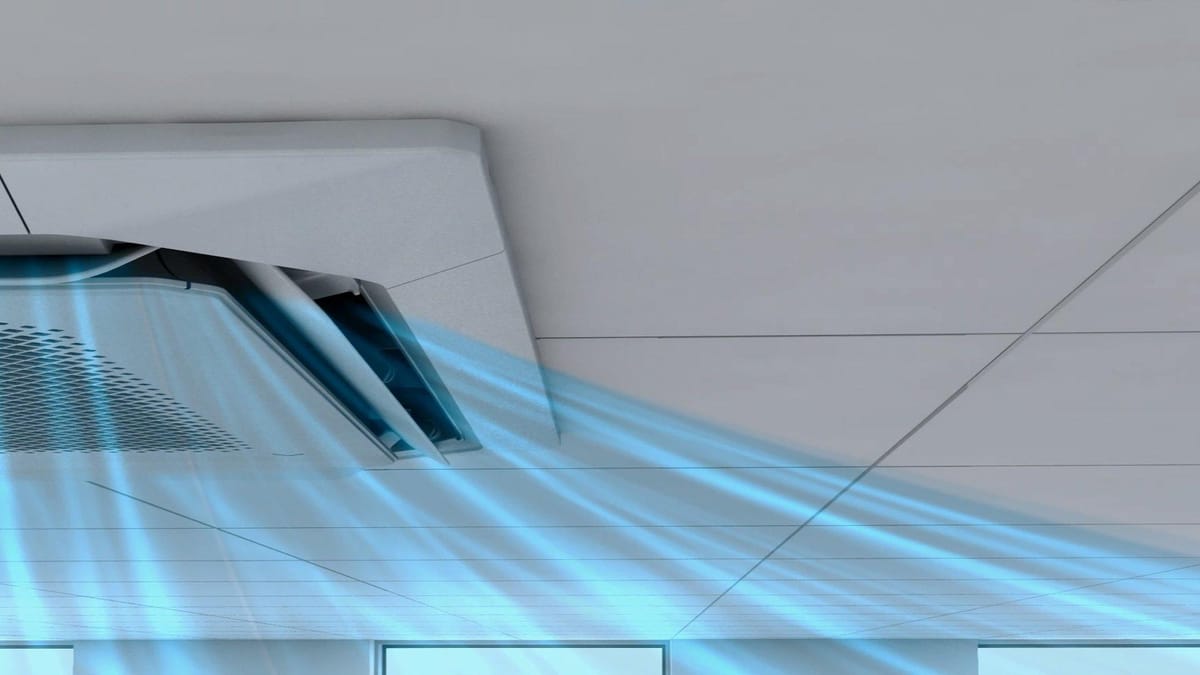
You walk into a building and something feels... wrong. The thermostat reads a comfortable temperature, yet your skin is clammy. The walls near the windows are weeping with condensation. A faint musty smell hints at mold growing somewhere behind the drywall. The building's occupants are complaining, the energy bills are through the roof, and nobody can figure out why.
This is what happens when you treat air as a simple gas. It isn't. Air is a living, dynamic mixture—and the science of understanding that mixture is called psychrometrics.
Whether you're an HVAC engineer designing a hospital in a tropical climate, a facilities manager troubleshooting a warehouse condensation problem, or a student staring at a psychrometric chart for the first time wondering what those curved lines mean—this guide was built for you.
Every formula. Every concept. Every practical application. From the molecular level to the building envelope. Let's go.
The Day the Data Center Almost Died
Setting the Scene
Meet Priya Nakamura, a mechanical engineer three years into her career at a mid-sized consulting firm. She's confident with ductwork sizing, decent with load calculations, and completely terrified of psychrometric charts.
One Tuesday morning, Priya's phone buzzes at 6:14 AM. It's the facilities director at DataVault, a regional data center her firm designed two years ago. The message is terse: "Server Room 3 is raining. Literally raining from the ceiling. Get here now."
When Priya arrives, she finds exactly what was described—condensation forming on the ceiling panels and dripping onto server racks worth millions. The cooling system is running. The temperature reads 20°C. Everything looks fine on the control panel.
But everything is not fine. The relative humidity has crept to 87%. Warm, moisture-laden air from an adjacent loading dock is infiltrating the server room through a poorly sealed cable penetration. That moist air hits the cold ceiling panels cooled by the overhead air distribution system, and the water vapor in the air surrenders its gaseous form. It condenses. It drips. It destroys.
Priya realizes in that moment that she never truly understood the air itself. She understood temperatures and airflows. She did not understand psychrometrics—the science that governs the relationship between dry air, water vapor, temperature, and energy.
This is where her journey begins. And if you've ever been confused by humidity ratios, dew points, or enthalpy calculations, this is where yours begins too.
What Is Psychrometrics, and Why Should You Care?
Psychrometrics is the study of the thermodynamic properties of moist air—the mixture of dry air and water vapor that surrounds us every moment of every day.
Here's why it matters to you:
- If you design HVAC systems, psychrometrics determines your coil selection, your duct sizing, your energy consumption, and whether your building will grow mold or crack from dryness.
- If you manage buildings, psychrometrics explains why some rooms feel stuffy at 22°C while others feel perfect at 24°C.
- If you work in manufacturing, psychrometrics controls product quality in industries from pharmaceuticals to food processing to semiconductor fabrication.
- If you're a student, psychrometrics is the bridge between thermodynamics theory and real-world mechanical engineering practice.
The science rests on a surprisingly small number of foundational principles. Master these, and the entire psychrometric chart—that intimidating web of curved lines—becomes as readable as a road map.
The Ideal Gas Equation — Where Everything Begins
The Foundation You Can't Skip
Priya's first step in her self-education journey takes her back to a principle she learned in university but never fully connected to HVAC work: the Ideal Gas Equation.
For moist air calculations, the equation takes this form:
Pv = P / ρ = Rₐ × T
Where:
| Symbol | Meaning | Units |
|---|---|---|
| P | Absolute pressure | Pa (Pascals) |
| v | Specific volume | m³/kg |
| ρ | Density | kg/m³ |
| Rₐ | Gas constant for dry air | J/(kg·K) |
| T | Absolute temperature | K (Kelvin) |
This equation tells you the relationship between pressure, volume (or density), and temperature for dry air. It's the starting point for virtually every psychrometric calculation you'll ever perform.
How accurate is it? For the pressures and temperatures encountered in HVAC applications (roughly -40°C to 65°C, and pressures near atmospheric), the ideal gas equation is valid to within 0.7% of actual measured values. That's more than sufficient for engineering practice.
Why This Matters to You
Every time you calculate airflow in a duct, determine the density of air at a given elevation, or figure out how much air a fan needs to move—you're relying on this equation. Treat it as your psychrometric North Star.
Gas Constants — The DNA of Air and Water Vapor
Two Gases, Two Identities
Moist air is a mixture of two primary components: dry air and water vapor. Each has its own gas constant, derived from the same universal principle but reflecting their different molecular structures.
The Universal Gas Constant
The universal gas constant (R̄) is one of the fundamental constants in physics:
| Constant | Symbol | Value | Units |
|---|---|---|---|
| Universal Gas Constant | R̄ | 8,314 | J/(kg·mol·K) |
This single number applies to all ideal gases. But individual gases behave differently because their molecules have different masses. To get the specific gas constant for any particular gas, you divide the universal constant by that gas's molecular mass.
Gas Constant for Dry Air
Dry air is a mixture of nitrogen (~78%), oxygen (~21%), argon (~0.9%), carbon dioxide (~0.04%), and trace gases. Its effective molecular mass is:
| Property | Symbol | Value |
|---|---|---|
| Molecular mass of dry air | Mₐ | 28.965 |
The specific gas constant for dry air:
Rₐ = R̄ / Mₐ = 8,314 / 28.965 = 287.036 J/(kg·K)
| Property | Symbol | Formula | Value | Units |
|---|---|---|---|---|
| Gas constant for dry air | Rₐ | R̄ / Mₐ | 287.036 | J/(kg·K) |
Gas Constant for Water Vapor
Water vapor—the gaseous phase of water—has a much lighter molecule:
| Property | Symbol | Value |
|---|---|---|
| Molecular mass of water | Mᵥ | 18.015 |
The specific gas constant for water vapor:
Rᵥ = R̄ / Mᵥ = 8,314 / 18.015 = 461.504 J/(kg·K)
| Property | Symbol | Formula | Value | Units |
|---|---|---|---|---|
| Gas constant for water vapor | Rᵥ | R̄ / Mᵥ | 461.504 | J/(kg·K) |
The Complete Gas Constants Reference Table
| Property | Symbol | Formula | Value | Units |
|---|---|---|---|---|
| Universal gas constant | R̄ | — | 8,314 | J/(kg·mol·K) |
| Molecular mass, dry air | Mₐ | — | 28.965 | — |
| Molecular mass, water vapor | Mᵥ | — | 18.015 | — |
| Gas constant, dry air | Rₐ | R̄ / Mₐ | 287.036 | J/(kg·K) |
| Gas constant, water vapor | Rᵥ | R̄ / Mᵥ | 461.504 | J/(kg·K) |
Why Two Gas Constants Matter
Notice that Rᵥ is significantly larger than Rₐ (461.5 vs. 287.0). This is because water molecules are lighter than the average air molecule. This difference is the root cause of a phenomenon you've probably noticed: humid air is less dense than dry air at the same temperature and pressure.
That's not intuitive. Most people assume moisture makes air "heavier." But water vapor molecules (molecular mass 18) are displacing nitrogen molecules (molecular mass 28) and oxygen molecules (molecular mass 32). The result is lighter air. This is why thunderstorm clouds rise—the moist air beneath them is buoyant.
For Priya, this was the first "aha" moment. She'd always calculated air density using a single value. Now she understood that density changes with moisture content—and that those changes affect fan performance, duct pressure drops, and natural ventilation calculations.
Atmospheric Pressure — The Invisible Variable
The Pressure That Changes Everything
Here's a detail that catches many engineers off guard: atmospheric pressure is not constant. It varies with elevation, weather, and temperature. And since psychrometric properties are all pressure-dependent, ignoring this variation can introduce significant errors.
Standard Reference Values
Two common reference pressures appear throughout engineering literature:
| Reference | Symbol | Value | Units |
|---|---|---|---|
| One Bar | bar | 100 | kPa |
| One Standard Atmosphere | atm | 101.325 | kPa |
One standard atmosphere (101.325 kPa) represents the average sea-level pressure. But if your project is located at any significant elevation, you need to adjust.
Calculating Atmospheric Pressure at Elevation
For locations above sea level, atmospheric pressure decreases approximately linearly. The following simplified model provides practical accuracy for HVAC applications:
P = a + b × H
Where:
| Symbol | Meaning | Units |
|---|---|---|
| P | Atmospheric pressure at elevation | kPa |
| H | Elevation above sea level | m |
| a | Base pressure constant | kPa |
| b | Pressure lapse rate | kPa/m |
The constants a and b depend on elevation range:
| Elevation Range | Constant a | Constant b |
|---|---|---|
| H ≤ 1,220 m | 101.325 | -0.01153 |
| H > 1,220 m | 99.436 | -0.01000 |
Worked Example: Pressure at 1,400 m Elevation
Let's calculate the atmospheric pressure for a facility at 1,400 meters above sea level:
Step 1: Since H = 1,400 m > 1,220 m, use the second set of constants:
- a = 99.436
- b = -0.01
Step 2: Apply the formula:
P = 99.436 + (-0.01 × 1,400) P = 99.436 - 14.0 P = 85.436 kPa
Compare this to sea-level pressure of 101.325 kPa—that's a 15.7% reduction in atmospheric pressure. This significantly affects:
- Air density (less dense air means fans must move more volume)
- Boiling points (water boils at lower temperatures, affecting cooling towers and humidifiers)
- Moisture-carrying capacity of air
- Equipment ratings (most HVAC equipment is rated at sea-level conditions)
Quick Reference: Atmospheric Pressure at Common Elevations
| City Example | Approx. Elevation (m) | Approx. Pressure (kPa) | % of Sea Level |
|---|---|---|---|
| Sea level | 0 | 101.325 | 100.0% |
| ~200 m | 200 | 99.02 | 97.7% |
| ~500 m | 500 | 95.56 | 94.3% |
| ~1,000 m | 1,000 | 89.80 | 88.6% |
| ~1,400 m | 1,400 | 85.44 | 84.3% |
| ~2,000 m | 2,000 | 79.44 | 78.4% |
| ~3,000 m | 3,000 | 69.44 | 68.5% |
Why Elevation Matters More Than You Think
Priya had designed the DataVault facility using sea-level psychrometric charts. The data center was located at approximately 800 meters above sea level. At that elevation, the atmospheric pressure is roughly 92 kPa instead of 101.325 kPa—a 9% difference.
That 9% meant the air was less dense, which meant the fans were delivering less mass flow than calculated. It meant the moisture-carrying capacity of the air was different than what the standard psychrometric chart showed. It meant the dew point temperatures she'd assumed were wrong.
The lesson for you: Always determine the elevation of your project site and correct your atmospheric pressure accordingly. A calculation done at the wrong pressure isn't just inaccurate—it can be dangerously wrong.
Dalton's Law — How Air and Water Vapor Coexist
The Principle That Unlocks Psychrometrics
This is where psychrometrics truly begins to take shape. Dalton's Law of Partial Pressures states:
In a mixture of ideal gases, each gas behaves as if the other gases were not present. The total pressure of the mixture equals the sum of the partial pressures of each individual gas.
For moist air, this means:
P = pₐ + pᵥ
| Symbol | Meaning | Notes |
|---|---|---|
| P | Total atmospheric pressure | The pressure you feel, measured by a barometer |
| pₐ | Partial pressure of dry air | Pressure contributed by N₂, O₂, CO₂, Ar, and trace gases |
| pᵥ | Partial pressure of water vapor | Pressure contributed by the water vapor in the air |
What "Partial Pressure" Actually Means
Imagine a sealed room at 101.325 kPa. Inside that room, nitrogen molecules are bouncing around contributing about 79.1 kPa of pressure. Oxygen molecules contribute about 21.2 kPa. Argon adds about 0.9 kPa. And water vapor might contribute 1.0 to 3.0 kPa, depending on how humid the air is.
Each gas exerts its pressure independently, as if the other gases didn't exist. The total pressure is simply the sum. This is Dalton's Law, and it's valid for gas mixtures up to approximately 3 atmospheres—well beyond any normal HVAC application.
The Saturation Pressure: Nature's Humidity Ceiling
There's a maximum amount of water vapor the air can hold at any given temperature. When the air holds this maximum, we say it's saturated. The pressure exerted by the water vapor at saturation is called the saturation pressure (pₛ).
| Symbol | Meaning |
|---|---|
| pₛ | Saturation pressure of water vapor at the current temperature |
| pᵥ | Actual partial pressure of water vapor in the mixture |
Key relationships:
- If pᵥ < pₛ: The air is unsaturated. It can absorb more moisture.
- If pᵥ = pₛ: The air is saturated (100% relative humidity). Any additional moisture will condense.
- pᵥ can never exceed pₛ at a given temperature—nature enforces this limit through condensation.
Saturation pressure increases dramatically with temperature. This is why warm air "holds more moisture" than cold air (technically, warm air has a higher saturation pressure, allowing more vapor to exist before condensation occurs).
How Dalton's Law Connects to the Data Center Crisis
Back at DataVault, Priya now understands what happened. Warm, humid air from the loading dock (say, 35°C with a high moisture content) had a partial vapor pressure of perhaps 3.5 kPa. When this air entered the server room and encountered the cold ceiling panels at 14°C, the saturation pressure at 14°C is only about 1.6 kPa.
The vapor pressure of 3.5 kPa vastly exceeded the saturation pressure of 1.6 kPa at the ceiling surface temperature. The excess moisture had to condense. Physics demanded it.
Dalton's Law didn't cause the problem—but it explains exactly why the problem was inevitable. The partial pressures of the vapor in the infiltrating air exceeded what the cold surface could sustain.
Humidity — The Concept Everyone Gets Wrong
Three Ways to Measure the Same Thing (and Why It Matters)
Ask ten people what "humidity" means and you'll get ten different answers. That's because there are multiple ways to quantify the amount of moisture in air, and each tells a different story.
Humidity Ratio (W) — The Engineer's Favorite
The humidity ratio (also called the mixing ratio) is the most fundamental moisture measurement in psychrometric calculations:
W = mᵥ / mₐ
| Symbol | Meaning | Units |
|---|---|---|
| W | Humidity ratio | kg water vapor / kg dry air (dimensionless ratio) |
| mᵥ | Mass of water vapor | kg |
| mₐ | Mass of dry air | kg |
This ratio tells you: for every kilogram of dry air, how many kilograms of water vapor are present?
Connecting Mass to Pressure
Using the ideal gas equation, we can express the masses in terms of partial pressures:
mᵥ = (pᵥ × V) / (Rᵥ × T)
mₐ = (pₐ × V) / (Rₐ × T)
Where V is the volume and T is the temperature. Since V and T are the same for both gases in the mixture (they occupy the same space at the same temperature), these terms cancel when you take the ratio:
W = mᵥ / mₐ = (pᵥ × Rₐ) / (pₐ × Rᵥ)
Or equivalently:
W = (Rₐ / Rᵥ) × (pᵥ / pₐ) = 0.62198 × (pᵥ / pₐ)
Where:
- 0.62198 is the ratio Rₐ/Rᵥ = Mᵥ/Mₐ = 18.015/28.965
- pᵥ is the partial pressure of water vapor
- pₐ = P - pᵥ (the partial pressure of dry air)
So the full practical formula becomes:
W = 0.62198 × pᵥ / (P - pᵥ)
This is one of the most important equations in psychrometrics. Memorize it.
Why Engineers Prefer Humidity Ratio
Humidity ratio is a mass-based measurement that doesn't change as air is heated or cooled (as long as no moisture is added or removed). This makes it ideal for tracking moisture through HVAC processes:
- Heating air? The humidity ratio stays constant (you're just adding heat, not moisture).
- Cooling air above its dew point? Humidity ratio stays constant.
- Cooling air below its dew point? Now moisture condenses out, and the humidity ratio drops.
- Adding steam to the airstream? Humidity ratio increases.
This property makes W the backbone of psychrometric chart analysis.
Practical Example
If a sample of moist air contains 1.2 kg of water vapor for every 1.0 kg of dry air:
W = 1.2 / 1.0 = 1.2 kg/kg
In practice, typical humidity ratios for comfortable indoor conditions are much smaller—usually between 0.007 and 0.012 kg/kg (7 to 12 grams of water per kilogram of dry air).
Relative Humidity (φ) — The Number Everyone Knows (and Misunderstands)
Relative humidity is the measurement most people encounter in weather reports and thermostat displays. It's expressed as a percentage and defined as:
φ = xᵥ / xₛ × 100%
Where:
| Symbol | Meaning |
|---|---|
| xᵥ | Mole fraction of water vapor in the actual mixture |
| xₛ | Mole fraction of water vapor in a saturated mixture at the same temperature and pressure |
For a mixture of ideal gases, the mole fractions simplify beautifully:
xᵥ = pᵥ / P
xₛ = pₛ / P
So relative humidity becomes:
φ = pᵥ / pₛ × 100%
This is the ratio of the actual vapor pressure to the maximum possible vapor pressure at the current temperature.
Why Relative Humidity Is Misleading
Here's the critical insight that trips up beginners and experts alike: relative humidity is temperature-dependent. The same absolute amount of moisture in the air produces different relative humidity values at different temperatures.
Consider this scenario:
| Condition | Temperature | Actual pᵥ | Saturation pₛ | Relative Humidity |
|---|---|---|---|---|
| Morning | 15°C | 1.2 kPa | 1.70 kPa | 70.6% |
| Afternoon | 30°C | 1.2 kPa | 4.24 kPa | 28.3% |
The air contains exactly the same amount of moisture in both cases. The humidity ratio is identical. But the relative humidity swings from 71% to 28% purely because the temperature changed and with it, the saturation pressure.
This is why relative humidity alone is a poor indicator for HVAC design. A relative humidity of 50% at 20°C contains far less actual moisture than 50% at 35°C.
When Relative Humidity Does Matter
Despite its limitations, relative humidity directly governs:
- Human comfort (your body's ability to cool itself through evaporation depends on relative humidity, not absolute moisture)
- Condensation risk (condensation occurs when relative humidity reaches 100% at a surface)
- Material preservation (museums, libraries, and archives specify relative humidity ranges because materials respond to the air's relative moisture, not absolute moisture)
- Static electricity (low relative humidity increases static discharge risk—critical in electronics manufacturing)
The best practice: Use humidity ratio for system calculations and energy analysis. Use relative humidity for comfort assessment and condensation checks. Use both together for a complete picture.
Mole Fractions — The Molecular View
For completeness, let's define the mole fractions that underpin relative humidity:
Mole Fraction of Water Vapor (xᵥ)
xᵥ = pᵥ / P
This is the ratio of water vapor molecules to total molecules in the mixture. For a mixture of ideal gases, this equals the ratio of vapor pressure to total pressure.
| Symbol | Formula | Meaning |
|---|---|---|
| xᵥ | pᵥ / P | Proportion of water vapor molecules in the air-vapor mixture |
Mole Fraction at Saturation (xₛ)
xₛ = pₛ / P
This is the maximum possible mole fraction at the given temperature and pressure.
| Symbol | Formula | Meaning |
|---|---|---|
| xₛ | pₛ / P | Maximum proportion of water vapor molecules at saturation |
The Elegant Connection
Relative humidity then becomes a ratio of mole fractions:
φ = xᵥ / xₛ
Or equivalently, a ratio of partial pressures:
φ = pᵥ / pₛ
Both expressions are identical for ideal gas mixtures.
The Psychrometric Chart — Your Roadmap Through Moist Air
The Struggle Before the Breakthrough
Three weeks into her self-study, Priya sits in a café with a printed psychrometric chart spread across the table. Lines curve, intersect, and overlap in what looks like abstract art. She's identified the dry-bulb temperature axis along the bottom and the humidity ratio on the right side. But the rest is chaos.
Then she has a realization: the psychrometric chart is nothing more than a graphical representation of the equations she's already learned. Every line on that chart is one of the formulas from the previous chapters, plotted across a range of conditions.
Here's how the pieces connect:
Anatomy of the Psychrometric Chart
| Chart Element | What It Represents | Based On |
|---|---|---|
| Horizontal axis | Dry-bulb temperature (°C) | Direct measurement |
| Vertical axis (right) | Humidity ratio, W (kg/kg) | W = mᵥ / mₐ |
| Curved upper boundary | Saturation line (100% RH) | pᵥ = pₛ at each temperature |
| Curved lines within | Constant relative humidity (%) | φ = pᵥ / pₛ |
| Diagonal lines (steep) | Wet-bulb temperature | Adiabatic saturation process |
| Diagonal lines (shallow) | Specific enthalpy | Energy content of moist air |
| Nearly vertical lines | Specific volume | From ideal gas equation |
How to Read Any Point on the Chart
Every point on the psychrometric chart defines a unique state of moist air. From that single point, you can read:
- Dry-bulb temperature — read horizontally to the bottom axis
- Humidity ratio — read horizontally to the right axis
- Relative humidity — identify which curved line the point sits on
- Wet-bulb temperature — follow the diagonal line (constant wet-bulb) to the saturation curve
- Dew point temperature — follow horizontally left to the saturation curve, then read down to the temperature axis
- Specific enthalpy — read the diagonal enthalpy line through the point
- Specific volume — read the volume line through the point
One point. Seven properties. That's the power of the psychrometric chart.
Critical Note: Charts Are Pressure-Specific
Every psychrometric chart is drawn for a specific atmospheric pressure (usually 101.325 kPa, standard sea level). If your project is at a different elevation, you need a chart corrected for that pressure—or you need to calculate properties using the equations from the previous chapters with the correct local pressure.
This is exactly the mistake Priya had made at DataVault. She used a standard sea-level chart for a facility at 800 m elevation. The corrected chart would have shown different humidity ratios, different dew points, and would have flagged the condensation risk her standard chart missed.
Putting It All Together — The Complete Equation Framework
The Master Reference
Here is the complete set of psychrometric relationships, consolidated into a single reference framework. These equations work at any atmospheric pressure, making them universal for projects at any elevation, in any climate, anywhere in the world.
9.1 Ideal Gas Relations
| Equation | Application |
|---|---|
| Pv = RₐT | Specific volume of dry air |
| Pv = RᵥT | Specific volume of water vapor |
| ρ = P / (Rₐ × T) | Density of dry air |
9.2 Gas Constants
| Formula | Result | Notes |
|---|---|---|
| Rₐ = R̄ / Mₐ = 8314 / 28.965 | 287.036 J/(kg·K) | Dry air |
| Rᵥ = R̄ / Mᵥ = 8314 / 18.015 | 461.504 J/(kg·K) | Water vapor |
| Mᵥ / Mₐ = 18.015 / 28.965 | 0.62198 | Ratio used in humidity calculations |
9.3 Atmospheric Pressure at Elevation
| Elevation | Formula | Constants |
|---|---|---|
| H ≤ 1,220 m | P = 101.325 + (-0.01153 × H) | a = 101.325, b = -0.01153 |
| H > 1,220 m | P = 99.436 + (-0.01 × H) | a = 99.436, b = -0.01 |
9.4 Dalton's Law
| Equation | Meaning |
|---|---|
| P = pₐ + pᵥ | Total pressure = dry air pressure + vapor pressure |
| pₐ = P - pᵥ | Dry air partial pressure |
9.5 Humidity Relationships
| Property | Formula | Notes |
|---|---|---|
| Humidity ratio | W = mᵥ / mₐ | Mass of vapor per mass of dry air |
| Humidity ratio (pressure form) | W = 0.62198 × pᵥ / (P - pᵥ) | Practical calculation form |
| Mole fraction of vapor | xᵥ = pᵥ / P | For ideal gas mixtures |
| Mole fraction at saturation | xₛ = pₛ / P | Maximum mole fraction |
| Relative humidity | φ = pᵥ / pₛ = xᵥ / xₛ | Actual vs. maximum vapor pressure |
Real-World Applications — Where Theory Meets Practice
Application: Data Center Humidity Control
Priya's DataVault crisis illustrates the critical importance of humidity control in data centers:
The Standard: ASHRAE recommends data center conditions of 18–27°C dry-bulb with 5.5°C dew point to 15°C dew point and a maximum of 60% relative humidity.
The Psychrometric Analysis:
| Parameter | Design Value | Actual (During Failure) |
|---|---|---|
| Dry-bulb temperature | 20°C | 20°C |
| Relative humidity | 45% | 87% |
| Dew point | ~8°C | ~18°C |
| Ceiling panel surface temp | 14°C | 14°C |
| Condensation? | No (dew point < surface temp) | Yes (dew point > surface temp) |
The fix required three actions:
- Sealing the cable penetration to stop infiltration of unconditioned air
- Adding a dedicated dehumidification unit for the server room
- Installing dew-point monitoring sensors (not just temperature and RH sensors)
Application: Comfort Cooling Design
When designing a comfort cooling system, you're fundamentally moving a point on the psychrometric chart from one state to another.
Design scenario: Outdoor air at 35°C, 60% RH must be cooled and dehumidified to 24°C, 50% RH.
Using the psychrometric equations:
Outdoor condition (State 1):
- T₁ = 35°C
- φ₁ = 60%
- pₛ at 35°C ≈ 5.63 kPa
- pᵥ₁ = 0.60 × 5.63 = 3.38 kPa
- W₁ = 0.62198 × 3.38 / (101.325 - 3.38) = 0.02146 kg/kg
Indoor condition (State 2):
- T₂ = 24°C
- φ₂ = 50%
- pₛ at 24°C ≈ 2.98 kPa
- pᵥ₂ = 0.50 × 2.98 = 1.49 kPa
- W₂ = 0.62198 × 1.49 / (101.325 - 1.49) = 0.00928 kg/kg
Moisture removed per kg of dry air:
ΔW = W₁ - W₂ = 0.02146 - 0.00928 = 0.01218 kg/kg
For an airflow of 1 kg/s of dry air, the system must condense and drain 0.01218 kg/s (about 43.8 kg/hr or 43.8 liters/hr) of water. This directly determines the condensate drain sizing and the latent cooling capacity required from the cooling coil.
Application: Elevation Correction
The Problem: A consulting engineer uses a standard sea-level psychrometric chart to design a hospital HVAC system for a facility at 1,800 m elevation.
The Error:
| Parameter | Sea Level (101.325 kPa) | At 1,800 m (~81.4 kPa) | Error |
|---|---|---|---|
| Air density at 24°C | 1.189 kg/m³ | 0.955 kg/m³ | -19.7% |
| Humidity ratio at φ=50%, 24°C | 0.00928 kg/kg | 0.01161 kg/kg | +25.1% |
| Required fan volume flow | Baseline | +24.5% more | Under-designed |
The consequence: Fans sized at sea level will deliver 20% less mass flow at elevation. Cooling coils will underperform. The system will fail to maintain design conditions, and the hospital may struggle with infection control, surgical suite humidity requirements, and patient comfort.
Always correct for elevation.
Common Misconceptions Destroyed
Myth 1: "Humid Air Is Heavier Than Dry Air"
False. Water vapor (M = 18.015) is lighter than both nitrogen (M = 28.013) and oxygen (M = 31.999). When water vapor enters an air mixture, it displaces heavier molecules, making the mixture lighter. This is why moist air rises, driving the convection cycles that create weather systems.
Myth 2: "Relative Humidity Tells You How Much Moisture Is in the Air"
Misleading. Relative humidity tells you how close the air is to saturation at its current temperature. Air at 50% RH and 35°C contains far more moisture (by mass) than air at 90% RH and 5°C. Always check the humidity ratio for actual moisture content.
Myth 3: "The Psychrometric Chart Works Everywhere"
Only if you use the right one. Standard charts are drawn for 101.325 kPa. At elevations above roughly 300 m, the errors become increasingly significant. Either use an elevation-corrected chart or calculate properties from first principles using the local atmospheric pressure.
Myth 4: "Warm Air Holds More Moisture"
Technically incorrect, though practically useful. Air doesn't "hold" water vapor like a sponge holds water. The correct statement is: at higher temperatures, the saturation pressure of water vapor is higher, so more water vapor can exist in the gaseous phase before condensation begins. The distinction matters when analyzing processes like fog formation, where the air is supersaturated and liquid water coexists with vapor.
Myth 5: "You Don't Need Psychrometrics for Simple HVAC"
There is no HVAC without psychrometrics. Even a simple residential split system involves cooling air past its dew point on the evaporator coil, condensing moisture, and delivering air at a new psychrometric state. Understanding that process—even at a basic level—is the difference between properly sizing equipment and installing an oversized system that short-cycles and fails to dehumidify.
The Transformation — From Crisis to Mastery
Priya's Resolution
Six months after the DataVault crisis, Priya presents at her firm's technical lunch-and-learn. Her topic: "Why Every HVAC Calculation Starts with Psychrometrics."
She shows the DataVault condensation photos. She walks through the ideal gas equation, gas constants, elevation correction, Dalton's Law, and humidity relationships. She demonstrates how a 15-minute psychrometric analysis at the design stage would have caught the infiltration risk.
Her colleagues are engaged. Two senior engineers admit they'd been using sea-level charts for a high-altitude project. A junior engineer asks for her spreadsheet formulas. The firm's principal asks her to develop a psychrometric review checklist for all future projects.
Priya didn't become a psychrometrics expert because she wanted to. She became one because a building forced her to.
The question is: will you learn these principles proactively, or will a building teach you the hard way?
Your Psychrometric Toolkit — Quick Reference
Essential Constants
| Constant | Value | Units |
|---|---|---|
| Universal gas constant, R̄ | 8,314 | J/(kg·mol·K) |
| Molecular mass, dry air, Mₐ | 28.965 | — |
| Molecular mass, water, Mᵥ | 18.015 | — |
| Gas constant, dry air, Rₐ | 287.036 | J/(kg·K) |
| Gas constant, water vapor, Rᵥ | 461.504 | J/(kg·K) |
| Standard atmosphere | 101.325 | kPa |
| Ratio Mᵥ/Mₐ | 0.62198 | — |
Essential Formulas
| # | Formula | Application |
|---|---|---|
| 1 | Rₐ = R̄ / Mₐ | Gas constant for dry air |
| 2 | Rᵥ = R̄ / Mᵥ | Gas constant for water vapor |
| 3 | P = a + bH | Atmospheric pressure at elevation |
| 4 | P = pₐ + pᵥ | Dalton's Law for moist air |
| 5 | W = mᵥ / mₐ | Humidity ratio (definition) |
| 6 | W = 0.62198 × pᵥ / (P - pᵥ) | Humidity ratio (pressure form) |
| 7 | φ = pᵥ / pₛ | Relative humidity |
| 8 | xᵥ = pᵥ / P | Mole fraction of vapor |
Decision Flowchart: Which Humidity Measure to Use
| Situation | Use This | Why |
|---|---|---|
| HVAC load calculation | Humidity ratio (W) | Mass-based, doesn't change with temperature alone |
| Comfort assessment | Relative humidity (φ) | Governs evaporative cooling from skin |
| Condensation risk check | Dew point temperature | Direct comparison with surface temperatures |
| Energy analysis | Humidity ratio + enthalpy | Tracks both moisture and energy simultaneously |
| Weather reporting | Relative humidity (φ) | Familiar to general public |
| Process control (pharma, food) | Both W and φ | Product quality may depend on either or both |
Worked Problems for Practice
Problem 1: Find the Gas Constant
Given: R̄ = 8,314 J/(kg·mol·K), Mₐ = 28.965
Find: Rₐ
Solution:
Rₐ = R̄ / Mₐ = 8,314 / 28.965 = 287.036 J/(kg·K)
Problem 2: Atmospheric Pressure at Elevation
Given: A building located at 500 m above sea level.
Find: Local atmospheric pressure.
Solution:
Since 500 m ≤ 1,220 m, use:
- a = 101.325
- b = -0.01153
P = 101.325 + (-0.01153 × 500) P = 101.325 - 5.765 P = 95.56 kPa
Problem 3: Humidity Ratio from Conditions
Given: Atmospheric pressure P = 95.56 kPa, dry-bulb temperature = 25°C, relative humidity = 55%. Saturation pressure at 25°C ≈ 3.17 kPa.
Find: Humidity ratio W.
Solution:
Step 1: Find actual vapor pressure:
pᵥ = φ × pₛ = 0.55 × 3.17 = 1.744 kPa
Step 2: Calculate humidity ratio:
W = 0.62198 × pᵥ / (P - pᵥ) W = 0.62198 × 1.744 / (95.56 - 1.744) W = 1.085 / 93.816 W = 0.01157 kg/kg
Compare to sea level: At 101.325 kPa, the same conditions give W = 0.01089 kg/kg. The elevation-corrected value is 6.2% higher—the air at elevation holds more moisture per kg of dry air at the same temperature and relative humidity.
Problem 4: Will Condensation Occur?
Given: Indoor air at 22°C, 50% RH. Window surface temperature = 5°C. Atmospheric pressure = 101.325 kPa.
Find: Will condensation form on the window?
Solution:
Step 1: Find actual vapor pressure:
pₛ at 22°C ≈ 2.64 kPa pᵥ = 0.50 × 2.64 = 1.32 kPa
Step 2: Find dew point (temperature where pₛ = 1.32 kPa):
Dew point ≈ 11°C
Step 3: Compare dew point to surface temperature:
Dew point (11°C) > Surface temperature (5°C)
Yes, condensation will occur. The window surface is colder than the dew point of the room air.
Beyond the Basics — Where to Go Next
You've now built a solid foundation in the core principles of psychrometrics. Here's what comes next as you deepen your expertise:
Advanced Topics to Explore
- Enthalpy of moist air — calculating the total energy (sensible + latent) in an air-vapor mixture
- Wet-bulb temperature — the temperature that accounts for evaporative cooling
- Adiabatic saturation — the process that defines wet-bulb temperature theoretically
- Psychrometric processes — heating, cooling, humidification, dehumidification, and mixing plotted on the chart
- Cooling coil performance — apparatus dew point, bypass factor, and sensible heat ratio
- Evaporative cooling — direct and indirect systems analyzed psychrometrically
- Dehumidification systems — desiccant wheels, heat pipe assist, and dual-path systems
- Fog and supersaturation — when the air goes beyond 100% RH
Recommended Next Steps
- Get a psychrometric chart for your local elevation and practice plotting state points
- Build a spreadsheet using the formulas in Chapter 9—calculate properties from first principles
- Analyze a real system: take temperature and humidity readings at your coil inlet and outlet, plot them on the chart, and compare to design intent
- Study the processes: trace a line on the chart for each HVAC process (sensible heating, cooling and dehumidification, evaporative cooling, mixing) and understand what drives each one
The Takeaway: Air Is Never "Just Air"
Priya learned this lesson through a crisis. You now have the chance to learn it proactively.
Every building you design, operate, or troubleshoot contains moist air—a dynamic mixture governed by the principles in this guide. The ideal gas equation gives you the relationship between pressure, volume, and temperature. Gas constants connect universal physics to the specific behavior of air and water vapor. Dalton's Law reveals how these two gases coexist. And the humidity relationships tell you how much moisture is present, how close it is to condensing, and what happens when conditions change.
Psychrometrics isn't a niche specialty. It's the foundation of every HVAC system on the planet. The engineer who understands it designs better systems, troubleshoots faster, and avoids the kind of expensive failures that come from treating air as a simple, single-component gas.
The formulas are straightforward. The concepts are logical. The psychrometric chart is just a picture of the math. And the math starts with five numbers you now know by heart: 8,314... 28.965... 18.015... 287.036... 461.504.
Your Turn
What's the elevation of your current project site? Have you been using sea-level psychrometric charts without correction? Have you ever encountered a condensation problem that could have been predicted with a 15-minute dew-point calculation?
Drop your experience in the comments below. Whether it's a war story, a question, or a correction—the conversation continues here.
This guide is based on ASHRAE Fundamentals and standard psychrometric relationships. All formulas use SI units and are universally applicable regardless of location or local standards. No currency-specific references are included—the principles apply globally, today and for decades to come.


