
The Invisible Architecture
How Heat, Light, Sound, and Sustainability Shape Every Building You'll Ever Enter

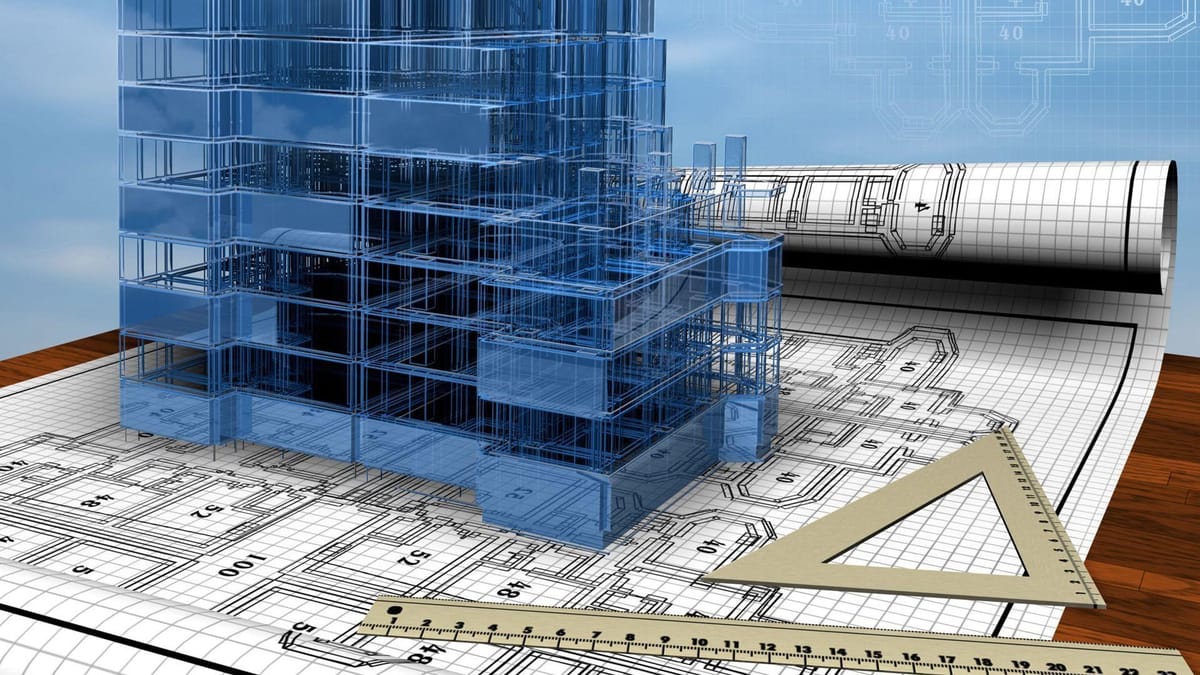
A Complete Guide to Architectural Science — From Physics to Practice
Mara Okafor stood on the rooftop of her first commissioned building — a community health clinic in a tropical coastal city — and watched the morning sun hit the east-facing glass wall she'd designed so carefully in her studio.
By 10:00 a.m., the waiting room was a furnace. Patients fanned themselves with intake forms. Nurses propped doors open with chairs. The brand-new air conditioning system screamed at full capacity, and the electricity meter spun like a turbine.
"I designed a beautiful building," Mara told her mentor that evening, her voice cracking. "But I forgot to design a building that actually works."
That single moment — standing on a roof, watching her design fail the people it was supposed to serve — changed everything about how Mara approached architecture. And it might change everything for you, too.
What This Guide Will Give You
This is not a textbook summary. This is a practitioner's field manual — built from the physics of heat, light, and sound — that will transform how you think about every wall, window, roof, and room you'll ever design, evaluate, or inhabit.
You will learn:
- How heat actually moves through buildings, and why getting this wrong costs more than any other design error
- Why your eyes lie to you about lighting, and how to design spaces that genuinely serve human vision
- What sound does inside rooms, and why most "quiet" buildings are actually acoustic disasters
- Where energy comes from, where it goes, and what sustainable design actually means when you strip away the marketing
Every concept is anchored in real physics, illustrated through the journeys of fictional architects and engineers who learned these lessons the hard way — so you don't have to.
PART ONE: HEAT — The Thermal Environment
The Physics That Governs Every Building on Earth
The Language of Heat — What Every Designer Must Know First
Before Mara could fix her clinic, she had to unlearn something fundamental. She thought heat was simple — hot and cold, that's it. She was catastrophically wrong.
Here's what heat actually is: a form of energy, contained in substances as molecular motion or appearing as electromagnetic radiation in space. Energy is the ability to do work, and it is measured in joules (J).
The entire system of thermal measurement flows logically from three base units:
| Base Quantity | Unit | Derived Quantity | Unit | What It Means |
|---|---|---|---|---|
| Length | m (metre) | Velocity | m/s | Movement per unit time |
| Mass | kg (kilogram) | Force | N (newton) = kg·m/s² | What accelerates mass |
| Time | s (second) | Energy/Work | J (joule) = N·m | Force acting over distance |
| — | — | Power/Energy Flow | W (watt) = J/s | Energy flow per unit time |
| — | — | Pressure | Pa (pascal) = N/m² | Force per unit area |
Temperature (T) is the symptom of heat's presence. Two scales matter:
- Celsius (°C): Based on water — 0°C freezing, 100°C boiling
- Kelvin (K): Starts at absolute zero (−273.15°C), where all molecular motion ceases
A critical convention you must internalize: a point on the scale is written °C, but a temperature difference or interval is written K. So 40°C minus 10°C equals 30 K — not 30°C.
Why this matters to you: Every heat flow calculation you'll ever do depends on temperature difference (ΔT, measured in K), not absolute temperature. Confuse the two, and your math falls apart.
The Bridge Between Heat and Temperature: Specific Heat
Specific heat is the quantity of heat required to raise the temperature of 1 kg of a substance by 1 K. It's measured in J/(kg·K), and it varies dramatically:
- Metals: 100–800 J/(kg·K) — heat up fast, cool down fast
- Masonry (brick, concrete): 800–1200 J/(kg·K) — moderate thermal storage
- Water: 4176 J/(kg·K) — the highest of any common substance
Practical Example: You have 0.5 kg of water at 20°C in an 800 W electric kettle. How long to boil?
Heat needed = 0.5 kg × 4176 J/(kg·K) × (100 − 20) K = 167,040 J
At 800 W (= 800 J/s): Time = 167,040 / 800 = 209 seconds ≈ 3.5 minutes
This isn't just a physics exercise. This exact calculation — mass × specific heat × temperature change = energy — is the foundation of every building heating and cooling load calculation you'll ever perform.
Latent Heat: The Hidden Energy in Phase Changes
When ice melts into water, or water evaporates into steam, heat is absorbed without any change in temperature. This is latent heat:
| Phase Change | Latent Heat |
|---|---|
| Ice → Water (at 0°C) | 335 kJ/kg |
| Water → Steam (at 100°C) | 2,261 kJ/kg |
| Water → Vapour (at ~18°C) | 2,400 kJ/kg |
The reverse releases the same energy. This is why evaporative cooling works — and why condensation on cold surfaces dumps enormous amounts of heat into your wall assembly.
The Two Laws That Govern Everything
First Law of Thermodynamics (Conservation of Energy): Energy cannot be created or destroyed — only converted. In any system, energy output equals energy input, unless there's a change in storage.
Second Law of Thermodynamics (Direction of Flow): Heat flows spontaneously in one direction only — from hotter to cooler. Like water flowing downhill. Only with external energy input (a pump, a compressor, a heat pump) can you move heat "uphill."
For designers, the second law is everything. It means:
- Heat will always try to escape your warm building in winter
- Heat will always try to invade your cool building in summer
- You can resist this flow (insulation), redirect it (shading), or exploit it (passive solar) — but you cannot stop the physics
The Three Highways of Heat Flow
Mara's mentor, Professor Tanaka, drew three arrows on a whiteboard. "Every joule of heat that enters or leaves your building," he said, "travels by one of these three roads. Master these roads, and you master the building."
Heat moves through buildings by conduction, convection, and radiation. Every thermal problem you'll ever face is some combination of these three.
Highway #1: Conduction — Heat Through Solids
Conduction is heat flowing through a material by molecular vibration — molecule bumps molecule, passing energy along like a bucket brigade.
The key property: Conductivity (λ), measured in W/(m·K). This is the heat flow density through a 1 m thick body with a 1 K temperature difference.
The fundamental conduction equation:
Q = A × U × ΔT
Where:Q = heat flow rate (W)A = area (m²)U = transmittance or U-value (W/m²·K)ΔT = temperature difference (K)
Example: Outside temperature = 10°C, inside = 22°C, so ΔT = −12 K (negative = heat loss). Over a 10 m² brick wall with U = 1.5 W/(m²·K):
Q = 10 × 1.5 × (−12) = −180 W (the negative confirms it's heat loss)
Dimensional check: m² × W/(m²·K) × K = W ✓
Resistance and Transmittance — Two Sides of One Coin:
| Concept | Symbol | Unit | Formula | What It Means |
|---|---|---|---|---|
| Conductivity | λ | W/(m·K) | Material property | How easily heat passes through a material |
| Conductance | C | W/(m²·K) | λ/b | Property of a specific body (material + thickness) |
| Resistance | R | m²·K/W | b/λ | How much a layer resists heat flow |
| Transmittance (U-value) | U | W/(m²·K) | 1/R_total | Overall heat transfer, air-to-air |
For layers in series (like a wall made of multiple materials), resistances add up:
R_total = R_surface_inside + R_layer1 + R_layer2 + ... + R_surface_outside
For paths in parallel (like a wall with a window), conductances (area-weighted) add up.
Critical Warning About Insulation:
Insulating materials are porous and fibrous — extremely sensitive to moisture. Look at what happens to a porous cement insulating board:
| Condition | Density (kg/m³) | Conductivity (W/m·K) |
|---|---|---|
| Dry | 136 | 0.051 |
| Wet | 272 | 0.144 |
| Soaked | 400 | 0.203 |
Wet insulation has nearly 4× the conductivity of dry insulation. This is why vapour barriers and moisture management aren't optional — they're critical to your insulation actually performing.
Also: laboratory-declared conductivity values must be corrected for real-world conditions using correction factors (κ):
λ_design = λ_declared × (1 + κ₁ + κ₂ + ...)
| Material | Condition | κ |
|---|---|---|
| Expanded polystyrene (EPS) | Between cast concrete layers | 0.42 |
| EPS | Between masonry wall layers | 0.10 |
| EPS | With cement render applied | 0.25 |
| Mineral wool | Between masonry wall layers | 0.10 |
| Polyurethane | In ventilated air gap | 0.15 |
If you design using laboratory values without correction, your building will underperform by 10–42%.
Highway #2: Convection — Heat Between Surfaces and Fluids
Convection is heat transfer between a solid surface and a moving fluid (air, water). The equation:
Q_cv = A × h_c × ΔT
Where h_c is the convection coefficient (W/m²·K), which depends on:
- Surface position and heat flow direction:
- Vertical surfaces (horizontal heat flow): h_c = 3 W/(m²·K)
- Horizontal, heat flowing up: h_c = 4.3 W/(m²·K)
- Horizontal, heat flowing down: h_c = 1.5 W/(m²·K)
- Wind or forced air: h_c = 5.8 + 4.1v (where v is air velocity in m/s)
Why heat flow up is stronger than down: Hot air rises. A warm floor radiates and convects upward more aggressively than a warm ceiling convects downward. This is why radiant floor heating is more efficient than ceiling heating — and why heat stratification plagues tall spaces.
Highway #3: Radiation — Heat Across Empty Space
Radiation is electromagnetic energy transfer. No medium required — it works through vacuum.
Three critical surface properties:
| Property | Symbol | What It Measures | Range |
|---|---|---|---|
| Reflectance | ρ | Fraction of radiation reflected | 0–1 |
| Absorptance | α | Fraction absorbed (relative to black body) | 0–1 |
| Emittance | ε | Ability to emit radiation | 0–1 |
For any opaque surface: α + ρ = 1
For an ordinary surface at the same wavelength: α = ε
But many surfaces are wavelength-selective: high absorptance for solar radiation (6000°C source) but low emittance at ordinary temperatures (~60°C). This is why:
- Solar collector absorber panels want high α₆₀₀₀ and low ε₆₀ (absorb sun, don't re-radiate)
- Cool roof surfaces want low α₆₀₀₀ and high ε₆₀ (reject sun, radiate heat away)
- White paint (especially titanium oxide) naturally has low solar absorptance but high terrestrial emittance — making it superior to shiny metal for cool roofs
The solar heat gain equation:
Q_s = A × G × α
Where G = global irradiance (W/m²), the total solar radiation hitting the surface.
This equation — deceptively simple — is behind every solar heat gain calculation, every shading analysis, every overheating complaint.
Humid Air and Psychrometry — The Fourth Dimension of Thermal Design
"I understand hot and cold," Mara said. "But why does 30°C in a desert feel completely different from 30°C in a rainforest?"
"Because," Professor Tanaka replied, "you're not just a thermometer. You're a sweating, breathing thermal machine — and humidity changes everything."
The air around us is humid air — a mixture of oxygen, nitrogen, and varying amounts of water vapour. At any temperature, air can only hold a limited amount of moisture. When it reaches that limit, it's saturated.
The Psychrometric Chart is the single most powerful tool in thermal design. Its axes:
- Horizontal: Dry-bulb temperature (°C) — ordinary air temperature
- Vertical: Absolute humidity (AH, in g/kg) — grams of moisture per kg of dry air
The saturation curve at the top defines the maximum moisture air can hold at each temperature. Below it, relative humidity (RH) curves show moisture as a percentage of saturation:
RH = (AH / SH) × 100 = (pv / pvs) × 100
Where:
- SH = saturation humidity at that temperature
- pv = vapour pressure
- pvs = saturation vapour pressure
Why the psychrometric chart matters to you:
Every HVAC process — heating, cooling, humidifying, dehumidifying — traces a path on this chart. When you cool air below its dew point, moisture condenses. When you heat air, its RH drops (same moisture, higher capacity). Evaporative cooling follows the wet-bulb temperature line. If you can read this chart, you can predict what any air-handling system will do to the air in your building.
Air Flow: Stack Effect and Wind Effect
Two forces drive natural ventilation:
Stack Effect (Buoyancy): Warm air rises and escapes through high openings, drawing cooler air in through low openings. The pressure difference is proportional to the height difference and the temperature difference between inside and outside air.
Wind Effect (Cross-Ventilation): Wind creates positive pressure on the windward side and negative pressure on the leeward side. The resulting pressure difference drives air through the building.
These two effects are your primary tools for passive cooling in warm climates. Understanding them isn't optional — it's the difference between buildings that breathe and buildings that suffocate.
Thermal Comfort — Designing for the Human Body
Six months after the clinic disaster, Mara was redesigning the space. But first, she needed to understand something she'd never studied: the human body as a thermal system.
Your body is a heat engine. It continuously produces heat through metabolism, and it must continuously shed that heat to survive. The thermal balance equation:
M ± Cv ± Cd ± Rd − Ev = ΔS
Where:
- M = metabolic heat production (always positive)
- Cv = convective heat exchange (+ gain, − loss)
- Cd = conductive heat exchange (+ gain, − loss)
- Rd = radiative heat exchange (+ gain, − loss)
- Ev = evaporative heat loss (always negative — cooling)
- ΔS = change in stored heat (should be zero for comfort)
For comfort, ΔS must equal zero — heat production must equal heat loss.
The Six Factors of Thermal Comfort
Comfort depends on six variables — four environmental, two personal:
| Environmental Factors | Personal Factors |
|---|---|
| Air temperature (DBT) | Metabolic rate (met) |
| Mean radiant temperature (MRT) | Clothing insulation (clo) |
| Air velocity | — |
| Humidity | — |
Metabolic rates (1 met = 58.2 W/m² body surface):
| Activity | Met | Heat Output (W) |
|---|---|---|
| Sleeping | 0.7 | ~80 |
| Seated, quiet | 1.0 | ~115 |
| Standing, light work | 1.6 | ~185 |
| Walking (5 km/h) | 3.4 | ~395 |
| Heavy physical work | 5+ | ~580+ |
Clothing insulation (1 clo ≈ 0.155 m²·K/W):
| Clothing | Clo |
|---|---|
| Nude | 0 |
| Light summer clothes | 0.5 |
| Typical indoor clothing | 1.0 |
| Heavy winter suit | 1.5 |
| Arctic clothing | 3.5+ |
The Thermal Neutrality Temperature
Humphreys and Nicol established that people's comfort expectations adapt to their climate. The neutrality temperature — the temperature perceived as neither warm nor cool — can be estimated as:
T_n = 17.6 + 0.31 × T_o(mean)
Where T_o(mean) is the annual mean outdoor temperature.
So in a tropical city where the annual mean is 27°C:
T_n = 17.6 + 0.31 × 27 = 25.97°C ≈ 26°C
And in a cold northern city where the annual mean is 5°C:
T_n = 17.6 + 0.31 × 5 = 19.15°C ≈ 19°C
The comfort zone is typically T_n ± 2.5 K. This means:
- Tropical city: 23.5°C to 28.5°C
- Cold city: 16.7°C to 21.7°C
This is revolutionary for design. It means people in different climates don't need the same indoor temperature. Designing every building on earth to maintain 22°C wastes enormous amounts of energy for no comfort benefit.
Climate — Reading the Forces That Act on Your Building
Mara pulled up weather data for her clinic's city. For the first time, she didn't just see numbers — she saw forces pressing against every surface of her building, every hour of every day.
The Sun: The Dominant Force
The sun's position determines everything — solar heat gain, daylight availability, shading requirements. It's defined by two angles:
- Altitude (ALT): Angle above the horizon (0° at sunrise/sunset, maximum at solar noon)
- Azimuth (AZI): Horizontal angle from north (measured clockwise)
These angles change every hour of every day, depending on:
- Latitude of the site
- Solar declination (the tilt of the earth's axis — ±23.45° over the year)
- Time of day
Solar radiation reaching the earth's surface has three components:
| Component | Symbol | What It Is |
|---|---|---|
| Beam (direct) | G_b | Direct from the sun |
| Diffuse | G_d | Scattered by atmosphere/clouds |
| Reflected | G_r | Reflected from ground/surfaces |
| Global (total) | G | G_b + G_d + G_r |
The Greenhouse Effect: Why Your Building Is Part of the Problem
The earth's energy balance works like this:
- Sun sends short-wave radiation (light + short infrared)
- Earth absorbs it, warms up, re-emits long-wave (thermal) infrared
- Greenhouse gases (CO₂, CH₄, H₂O vapour) trap some outgoing radiation
- This keeps the planet about 33 K warmer than it would otherwise be
The crisis: We've increased atmospheric CO₂ from ~280 ppm (pre-industrial) to over 400 ppm, trapping more heat and warming the climate. Buildings and their operations account for 42% of global energy consumption and 40% of atmospheric emissions.
Climate Classification and Design Response
The Köppen-Geiger system classifies world climates into zones. For building design, four basic climate archetypes matter most:
| Climate Type | Challenge | Priority | Key Design Strategy |
|---|---|---|---|
| Cold | Severe heat loss | Minimize heat loss, maximize solar gain | Compact form, super-insulation, south-facing glass, thermal mass |
| Temperate | Both heating and cooling | Balance heat gain/loss seasonally | Moderate insulation, operable shading, natural ventilation |
| Hot-Dry | Extreme solar gain, large diurnal swings | Reject sun, exploit thermal mass | Heavy walls, courtyard form, small windows, night ventilation |
| Warm-Humid | Overheating + high humidity | Maximize ventilation, reject solar gain | Lightweight, elevated, large openings, deep overhangs, cross-ventilation |
Degree-Days: Quantifying Climate Demands
Heating Degree-Days (HDD) measure cumulative heating demand:
HDD = Σ (T_b − T_o) for all days where T_o < T_b
Where T_b is the balance-point temperature (typically 15–18°C) and T_o is the daily mean outdoor temperature.
Cooling Degree-Days (CDD) work the same way for cooling demand. Higher degree-days = more energy needed. This single number lets you compare climate severity across any location on earth.
How Buildings Actually Behave Thermally
"A building," Professor Tanaka told Mara, "is not a box. It's a thermal filter — a selective membrane between the outdoor climate and the indoor environment you're trying to create."
Solar Control: Shading Design
Before anything enters your building, you need to control what the sun does to it. Shading is the most cost-effective thermal strategy in any warm or temperate climate.
Shadow angles are defined by:
- Vertical Shadow Angle (VSA): Controls horizontal devices (overhangs, canopies)
- Horizontal Shadow Angle (HSA): Controls vertical devices (fins, wing walls)
The design rule: Your shading must block summer sun while admitting winter sun. In most locations, this means:
- The equinox cut-off provides a starting point — shade that blocks sun above the equinox altitude angle will shade all summer but admit all winter sun
- East and west facades are the hardest to shade (sun is low on the horizon) — vertical fins or deep recesses are needed
- North-facing facades (in the southern hemisphere) or south-facing (in the northern hemisphere) are easiest — simple horizontal overhangs work well
Solar Heat Gain Through Windows
Windows are the critical thermal weak point. The total solar heat gain through a glass element:
Q_s = A × G × θ
Where θ is the solar gain factor of the glass (what fraction of incident radiation gets through — a combination of direct transmission + absorbed-and-re-radiated heat).
| Glass Type | Solar Gain Factor (θ) |
|---|---|
| Single clear | 0.76 |
| Double clear | 0.64 |
| Low-E double | 0.42–0.55 |
| Tinted/reflective | 0.20–0.45 |
The designer's dilemma: Windows that let in light also let in heat. Windows that reduce heat gain also reduce daylight. The art of fenestration design is managing this tradeoff.
Sol-Air Temperature: The True Temperature Your Surfaces Experience
The outdoor air temperature alone doesn't tell you what's happening at your building's surface. The sol-air temperature combines air temperature with solar radiation and radiative cooling:
T_sa = T_o + (G × α / h_o) − (ε × ΔR / h_o)
Where:
- T_o = outdoor air temperature
- G × α = absorbed solar radiation
- h_o = outside surface conductance
- ε × ΔR = long-wave radiative correction
For a dark roof with α = 0.9, under 800 W/m² solar radiation, with h_o = 20 W/m²·K: The sol-air excess is (800 × 0.9) / 20 = 36 K above air temperature. If the air is 35°C, the roof surface acts as though the outdoor temperature were 71°C.
This is why roof colour and insulation matter so much, and why Mara's dark-roofed clinic was a furnace.
Steady-State vs. Dynamic Heat Flow
Steady-state analysis assumes constant conditions — useful for sizing heating systems and doing quick comparisons, but buildings never actually experience steady conditions. The sun moves. The air temperature swings. Occupants come and go.
Dynamic (periodic) heat flow accounts for the thermal mass effect:
- Time lag (φ): How many hours it takes for a heat pulse on one side of a wall to appear on the other side. Heavy concrete walls can have 8–12 hour time lags.
- Decrement factor (μ): How much the temperature swing is reduced as it passes through the wall. Heavy walls might reduce it to 15–30% of the original swing.
| Wall Type | Time Lag (hours) | Decrement Factor |
|---|---|---|
| Lightweight timber frame | 1–3 | 0.7–0.9 |
| Brick veneer (single brick) | 5–7 | 0.3–0.5 |
| Double brick | 8–10 | 0.15–0.25 |
| Heavy concrete (300mm) | 10–14 | 0.1–0.2 |
For hot-dry climates with large diurnal swings (15–20 K daily range): A wall with 10-hour time lag and 0.2 decrement factor transforms a 40°C afternoon peak into a gentle 24°C warmth arriving inside at 2:00 a.m. — exactly when you need it for cool-night thermal recharge.
Thermal Bridges: The Silent Killers of Thermal Performance
A thermal bridge is any area where the insulation is compromised — a steel beam penetrating an insulated wall, a concrete slab edge connecting inside to outside, or simply the junction between wall and roof.
Thermal bridges can increase overall heat loss by 20–30% beyond what a simple U-value calculation predicts. They also create cold spots where condensation forms, leading to mould, structural damage, and health problems.
Types of thermal bridges:
- Geometric: Corners where outside surface area exceeds inside surface area
- Material: High-conductivity elements (steel columns, concrete slabs) crossing the insulation plane
- Combined: Both effects at once (the most severe)
The fix: Continuous insulation — wrap the building in a thermal blanket with no gaps. Every break in the insulation envelope is a thermal bridge waiting to happen.
Passive Thermal Design — Making the Building Do the Work
Mara's redesigned clinic had no dark roof. It had deep overhangs on the east and west. The waiting room faced north (away from the equatorial sun), with high clerestory windows for stack-effect ventilation. The walls were heavy masonry, painted white. The electricity bill dropped 60%.
"You didn't add technology," her mentor observed. "You removed the need for it."
Passive design means controlling indoor conditions through the building itself — its form, orientation, materials, and openings — rather than through energy-consuming mechanical systems.
The Control Potential Zone (CPZ) Method
The CPZ method overlays passive design strategies onto the psychrometric chart, showing which outdoor conditions each strategy can bring within the comfort zone:
| Strategy | What It Does | When It Works |
|---|---|---|
| Passive solar heating | Admits solar radiation, stores in mass | Cold conditions below comfort zone |
| Thermal mass effect | Absorbs daytime heat, releases at night | Hot-dry climates with >10 K diurnal swing |
| Mass + night ventilation | Flushes stored heat at night | Hot-dry climates with cool nights |
| Air movement | Increases evaporative cooling from skin | Warm conditions, up to ~36°C |
| Evaporative cooling | Cools air by evaporating water | Hot-dry climates with low humidity |
Climatic Design Archetypes: What Works Where
In Cold Climates
Think of Sven's cabin in northern Scandinavia — compact, buried against the north wind, with triple-glazed south windows and 400mm of insulation.
Principles:
- Minimum surface area — compact form (Eskimo igloos are geometrically optimal: minimum surface for maximum volume)
- Super-insulation everywhere: walls, roof, floor, edges
- South-facing glazing (north-facing in southern hemisphere) to maximize solar gain
- High thermal mass inside the insulation to store solar warmth
- Air-tight construction with controlled mechanical ventilation and heat recovery
- Earth sheltering where possible — soil temperature at depth is close to annual mean
In Temperate Climates
Consider Elena's family home outside Madrid — seasonally adapted, performing differently in January and July.
Principles:
- Moderate insulation with good thermal mass
- Adjustable shading — fixed overhangs for equinox cut-off, plus operable external blinds
- Operable windows for natural ventilation in shoulder seasons
- Thermally zoned plan — living spaces facing the sun, service spaces as buffers on cold sides
- Socrates proposed the ideal temperate house around 400 BC: open to winter sun, shaded from summer sun, with thermal mass floors
In Hot-Dry Climates
Ahmed's courtyard house in a North African city — thick stone walls, tiny windows, a central fountain.
Principles:
- Heavy thermal mass — 300–500mm solid masonry walls
- Courtyard plan — creates a protected microclimate, allows night-sky radiative cooling
- Minimal openings on east and west facades
- Light-coloured external surfaces (α < 0.4)
- Night ventilation to flush stored heat from mass
- Evaporative cooling — fountains, pools, wetted surfaces
In Warm-Humid Climates
Back to Mara's tropical clinic — the climate where getting it wrong costs the most.
Principles:
- Lightweight construction — you don't want thermal storage when nights are as warm as days
- Elevated structures — catch breezes, avoid ground-level humidity
- Maximum openings for cross-ventilation (70–100% of wall area on windward/leeward sides)
- Deep overhangs and verandahs — shade walls and openings from rain and sun
- High ceilings — allow hot air to stratify above occupant level
- Elongated plan perpendicular to prevailing wind — maximize cross-ventilation potential
Condensation and Moisture Control
When humid air contacts a surface colder than its dew-point temperature (DPT), moisture condenses. This creates:
- Mould growth (health hazard)
- Structural damage to timber and steel
- Degraded insulation performance
- Staining and aesthetic damage
Prevention:
- Keep interior surfaces above the dew-point temperature (adequate insulation)
- Place vapour barriers on the warm side of insulation
- Ventilate moisture-producing spaces (kitchens, bathrooms)
- In cold climates, ensure wall assemblies can dry outward
Active Controls — When Passive Isn't Enough
Even Mara's perfectly redesigned clinic needed some mechanical assistance. The operating room required precise temperature and humidity control that no passive system could guarantee. The question wasn't whether to use active systems — it was how to minimize their burden.
Heating Systems
Local heating (space heaters, stoves, radiators) heats the room directly. Central heating generates heat in one location and distributes it through pipes (water) or ducts (air).
Heat pumps are the most efficient heating technology available. They don't create heat — they move it from a low-temperature source (outdoor air, ground, water) to a high-temperature sink (your building):
Coefficient of Performance (CoP) = Heat delivered / Energy input
| System | Typical CoP |
|---|---|
| Electric resistance heater | 1.0 (100% efficient — but that's the maximum) |
| Gas boiler | 0.75–0.95 |
| Air-source heat pump | 2.5–4.0 |
| Ground-source heat pump | 3.5–5.0 |
A heat pump with CoP = 4 delivers 4 units of heat for every 1 unit of electricity consumed. This makes heat pumps 3–5 times more efficient than direct electric heating.
Air Conditioning: The Four Basic Systems
| System | How It Works | Best For |
|---|---|---|
| All-air | Central plant conditions air, distributes via ducts | Large single-zone spaces |
| Induction | Central air + local water coils in each zone | Multi-zone buildings |
| Dual duct | Hot and cold air ducts, mixed at each zone | High-precision control |
| Local air-handling | Central chilled water, local fan-coil units | Hotels, apartment buildings |
The structural storage effect: If a building has significant thermal mass (heavy concrete structure), the air conditioning system can "pre-cool" the mass during off-peak hours (cheaper electricity) and let the mass absorb heat gains during peak hours. This can reduce required plant capacity by 30–50% — a massive capital cost saving.
Open-Cycle Cooling: The Overlooked Alternative
In hot-dry climates, evaporative cooling can replace or supplement air conditioning:
- Direct evaporative cooling: Air passes through a wet pad, giving up heat to evaporate water. The air is cooled but humidified.
- Indirect evaporative cooling: A secondary air stream is evaporatively cooled and used to cool a heat exchanger, which then cools the primary air supply without adding moisture.
When outdoor air is 42°C and 10% RH, a direct evaporative cooler can deliver air at 24°C — with zero compressor energy. The only cost is the fan and water.
PART TWO: LIGHT — The Luminous Environment
Designing for How You Actually See
The Physics of Light — What Your Eyes Evolved to Detect
Kwame was a lighting consultant called in to fix a brand-new office tower where workers complained of headaches, fatigue, and an inability to concentrate. The lighting met every code requirement. The problem wasn't the quantity of light. It was everything else about it.
Light is electromagnetic radiation in the narrow wavelength band from 380 nm (violet) to 780 nm (red) — a tiny sliver of the full electromagnetic spectrum that happens to activate our visual system.
Colour: The Quality of Light
The colour of light is determined by its spectral composition — which wavelengths are present and in what proportions:
| Colour | Wavelength Band (nm) |
|---|---|
| Red | 780–660 |
| Orange | 660–610 |
| Yellow | 610–570 |
| Green | 550–510 |
| Blue | 480–440 |
| Violet | 440–380 |
Colour temperature rates the apparent colour of a light source against the colour of a heated black body:
| Colour Temperature | Appearance | Example |
|---|---|---|
| ~1,800 K | Warm orange | Candle flame |
| ~2,700 K | Warm white | Incandescent lamp |
| ~3,000 K | Warm white | Halogen lamp |
| ~4,000 K | Neutral white | Cool fluorescent |
| ~5,500 K | Daylight white | Direct sunlight |
| ~6,500 K | Cool white | Overcast sky |
| ~24,000 K | Blue | Blue sky |
The counter-intuitive naming: "Warm" colours have low colour temperatures, "cool" colours have high colour temperatures.
Surface Colours: The Munsell System
The Munsell system describes any surface colour with three attributes:
- Hue: The colour name (red, yellow, green, blue, purple, and intermediates)
- Value (V): Lightness, 0 (black) to 10 (white). Converts to reflectance: ρ = V × (V−1) / 100
- Chroma: Saturation or intensity of the colour
Photometry: Measuring Light for Human Vision
Four quantities define the lighting in any space:
| Quantity | Symbol | Unit | What It Measures |
|---|---|---|---|
| Luminous intensity | I | candela (cd) | Strength of a light source in a direction |
| Luminous flux | Φ | lumen (lm) | Total light output of a source |
| Illuminance | E | lux (lx) = lm/m² | Light falling on a surface |
| Luminance | L | cd/m² | Brightness of a surface as seen by the eye |
Key relationships:
E = I / d² (Inverse square law — illuminance drops with the square of distance)
E = E_n × cos θ (Cosine law — illuminance drops with angle of incidence)
Some reference illuminance values:
| Condition | Illuminance (lux) |
|---|---|
| Bright sunny day, outdoors | 80,000 |
| Overcast day, outdoors | 5,000 |
| Well-lit office desk | 300–500 |
| Average general room lighting | 100 |
| Full moonlit night | 0.1 |
Luminous efficacy — how efficiently a source converts power into visible light — measured in lm/W:
| Source | Efficacy (lm/W) |
|---|---|
| Candle | ~0.3 |
| Incandescent (100W) | ~17 |
| Halogen | ~20 |
| Compact fluorescent | ~60 |
| Fluorescent tube | ~80–100 |
| LED | ~100–200 |
| Maximum theoretical | 683 (at 555 nm) |
Vision — Designing for the Biological Eye
Kwame's investigation revealed the real problem: the office had uniform 500 lux across every surface, with fluorescent tubes of 6,500 K colour temperature — cold, flat, and relentless. The space had the visual character of a hospital laboratory. No contrast, no warmth, no visual hierarchy. The workers' eyes were stressed not by too little light, but by light that contradicted every biological expectation.
How the Eye Works
The retina contains two types of receptors:
- Cones (~6.5 million): Concentrated in the fovea, sensitive to both quantity and colour of light, operate only in good lighting (photopic vision)
- Rods (~125 million): Spread across the retina, more sensitive but see only brightness, no colour (scotopic vision)
Adaptation:
- Pupil response: Nearly instantaneous, adjusting to average luminance
- Retinal adaptation to darkness: Up to 30 minutes (visual purple production)
- Retinal adaptation to brightness: About 3 minutes (visual purple removal)
This is why emerging from a dark cinema into daylight is uncomfortable for seconds, but entering a dark room takes minutes to adjust. Design implication: Transition zones between bright and dim spaces should provide gradual luminance changes.
Visual Performance Factors
Contrast sensitivity — In full daylight, you can distinguish a 1% luminance difference. In poor lighting, surfaces with 10% difference may appear identical. Contrast is defined as:
C = (L₁ − L₂) / L₂
Visual acuity — Sharpness of vision improves with illuminance, following a diminishing-returns curve. A small increase at low light levels produces dramatic improvement; the same increase at high levels produces barely any difference.
This means the first 200 lux on a desk produces far more visual benefit than increasing from 500 to 700 lux. Over-lighting is wasteful twice — in energy and in effectiveness.
Glare: The Enemy of Good Lighting
Discomfort glare reduces visual efficiency and causes annoyance. Disability glare actually impairs vision.
Causes:
- Luminance ratio (L_max / L_min) within the field of vision greater than about 10–15
- Direct view of bright light sources
- Reflections of light sources in glossy surfaces ("veiling reflections")
- Bright windows behind a task (computer screens are the worst offenders)
Contrast grading is the primary defense:
- Visual task luminance = 100%
- Immediate surroundings ≥ 50%
- Rest of the visual field ≥ 20%
Daylight Design — Harnessing the Best Light Source in the Universe
Kwame's recommendation was radical: reduce the electric lighting by 60% and redesign the window layout. "The sun delivers 100,000 lux for free," he told the building owner. "Your building is rejecting 99% of it and then spending a fortune to replace it with inferior artificial light."
Sky Conditions
The available daylight depends on sky type:
- CIE standard overcast sky: Luminance is three times brighter at zenith than at the horizon. The illuminance on the ground depends on the sun's altitude behind the clouds: E ≈ 200 × ALT (lux)
- Clear sky: Up to 100,000 lux direct sunlight, 40,000–50,000 lux diffuse
- Intermediate sky: E ≈ 500 × ALT (lux)
The Daylight Factor
The Daylight Factor (DF) is the ratio of indoor illuminance to outdoor horizontal illuminance under an overcast sky, expressed as a percentage:
DF = (E_indoor / E_outdoor) × 100%
It has three components:
- Sky Component (SC): Direct light from the visible sky
- Externally Reflected Component (ERC): Light reflected from external surfaces
- Internally Reflected Component (IRC): Light reflected from internal surfaces
Design targets:
| Space | Minimum DF | Average DF |
|---|---|---|
| Living rooms | 0.5% | 1.5% |
| Offices | 2% | 5% |
| Classrooms | 2% | 5% |
| Art studios | 4–6% | 10%+ |
Planning for Daylight: Rules of Thumb
- Room depth should not exceed 2× the window head height for adequate daylight penetration
- Window area of 20–25% of floor area typically provides adequate daylight in side-lit rooms
- Light shelves can redirect daylight deeper into spaces
- Roof lights are 3× more effective than side windows for the same area (they see more sky)
- Toplighting should provide 2–5% of floor area for workspaces
Electric Lighting — The Artificial Sun
Lamp Types and Their Characteristics
| Lamp Type | Efficacy (lm/W) | Colour Temp (K) | Colour Rendering (CRI) | Life (hours) |
|---|---|---|---|---|
| Incandescent | 10–17 | 2,700 | 100 | 1,000 |
| Halogen | 15–25 | 3,000 | 100 | 2,000–4,000 |
| Compact fluorescent | 50–70 | 2,700–6,500 | 80–90 | 8,000–15,000 |
| Fluorescent tube (T5) | 80–104 | 3,000–6,500 | 80–95 | 15,000–30,000 |
| LED | 80–200+ | 2,700–6,500 | 80–98 | 25,000–50,000+ |
| High-pressure sodium | 80–130 | 2,000 | 25 | 12,000–24,000 |
The relationship between colour temperature and illuminance level is crucial:
At high illuminances (500+ lux), people prefer higher colour temperatures (4,000–5,000 K — "daylight white"). At low illuminances (< 200 lux), lower colour temperatures (2,700–3,000 K — "warm white") are preferred. Getting this relationship wrong creates spaces that feel clinical, sterile, or uncomfortable, even though the illuminance level is "correct."
This was exactly Kwame's diagnosis. The office had cold light (6,500 K) at moderate levels (500 lux) — a combination that falls in the "disliked" zone on the Kruithof curve.
Lighting Design Method: The Lumen Method
The total luminous flux required to achieve a target illuminance:
Φ = (E × A) / (UF × MF)
Where:
- E = target illuminance (lux)
- A = room area (m²)
- UF = utilization factor (fraction of lamp output reaching the work plane — depends on room proportions, surface reflectances, and luminaire type)
- MF = maintenance factor (accounts for lamp ageing and dirt accumulation — typically 0.6–0.8)
Number of luminaires = Φ / (flux per luminaire)
PART THREE: SOUND — The Sonic Environment
The Invisible Architecture of What You Hear
The Physics of Sound — Vibrations That Shape Experience
Yuki was an acoustic consultant hired to save a new concert hall that had been called "acoustically dead" by every critic who heard it. The architect had created a visually stunning space. But sound doesn't care about aesthetics — it obeys physics.
Sound is mechanical vibration transmitted through a medium. In buildings, we deal with airborne sound (vibrations in air) and structureborne sound (vibrations in the building fabric).
The Fundamental Properties
| Property | Symbol | Unit | Meaning |
|---|---|---|---|
| Frequency | f | Hz (hertz) | Vibrations per second — perceived as pitch |
| Wavelength | λ | m | Distance between wave peaks |
| Velocity | v | m/s | Speed of propagation (≈340 m/s in air) |
| Sound power | P | W | Total acoustic energy output |
| Sound pressure | p | Pa | Pressure variation in the medium |
| Sound intensity | I | W/m² | Power per unit area |
The fundamental relationship: v = f × λ
At 340 m/s: a 100 Hz bass note has a wavelength of 3.4 m; a 4,000 Hz treble note has a wavelength of 0.085 m (85 mm). This wavelength difference is why bass sounds bend around obstacles (diffraction) while treble sounds cast sharp acoustic shadows.
Sound Power: A Sense of Scale
| Source | Sound Power |
|---|---|
| Jet airliner | 10,000 W (10⁴ W) |
| Pneumatic riveter | 1 W |
| Large symphony orchestra | 0.01 W (10⁻² W) |
| Conversational speech | 0.00001 W (10⁻⁵ W) |
A full symphony orchestra produces just one-hundredth of a watt — less than a dying flashlight bulb. The human ear is extraordinarily sensitive.
The Decibel Scale: Compressing the Incomprehensible
The ear responds logarithmically to stimulus intensity (Fechner's law). The decibel (dB) scale compresses the enormous range of human hearing:
Sound Intensity Level: L = 10 × log(I / I₀)
Sound Pressure Level: L = 20 × log(p / p₀)
Reference values (threshold of audibility):
- I₀ = 10⁻¹² W/m²
- p₀ = 20 × 10⁻⁶ Pa
Critical: Decibels don't add linearly.
Two sources of 90 dB and 80 dB produce:
- NOT 170 dB
- But rather 90.4 dB (intensities add, then convert back to dB)
Rule of thumb: Doubling intensity adds 3 dB. Doubling sound pressure adds 6 dB. A 10 dB increase sounds approximately twice as loud.
Frequency Weighting: The A-Weighted Scale
The ear is not equally sensitive to all frequencies — most sensitive around 4,000 Hz, much less sensitive to low frequencies. The A-weighting filter approximates this frequency response. Sound levels measured with A-weighting are reported as dBA — the most commonly used single-figure descriptor of environmental sound.
Hearing — The Human Sound Receiver
The ear is a remarkable transducer:
- Outer ear (auditory tube): Collects and funnels sound to the eardrum
- Middle ear (ossicles): Three tiny bones (hammer, anvil, stirrup) amplify vibration 20×
- Inner ear (cochlea): 25,000 hair cells selectively respond to different frequencies, converting vibration to nerve impulses
The audible range: 20 Hz to 16,000 Hz (reducing with age — a 60-year-old may lose 70 dB sensitivity at 16 kHz, but only 10 dB at 1 kHz).
Hearing damage:
- Continuous exposure above 85 dBA causes gradual permanent damage
- Brief exposure above 120 dBA causes pain
- Above 140 dBA: immediate permanent damage possible
For building designers: The primary concerns are protecting occupants from harmful noise levels and providing acoustic conditions appropriate for the intended activities.
Noise Control — Defending Against Unwanted Sound
Yuki's first job, years before the concert hall, was soundproofing apartments above a nightclub. "That project taught me," she said, "that noise control is a war, and every gap in your armour is a total defeat."
Noise Criteria
Background noise levels appropriate for different spaces:
| Space | NC Curve / dBA |
|---|---|
| Concert hall | NC 15–20 / 25–30 dBA |
| Bedroom at night | NC 25–30 / 30–35 dBA |
| Private office | NC 30–35 / 35–40 dBA |
| Open-plan office | NC 35–40 / 40–45 dBA |
| Restaurant | NC 40–45 / 45–50 dBA |
| Workshop | NC 50–60 / 55–65 dBA |
Sound Transmission Loss (TL)
When sound hits a wall or partition, some is reflected, some is absorbed, and some is transmitted through. The Transmission Loss (TL) measures how much is stopped:
TL = 10 × log(1/τ) where τ is the transmission coefficient
The Mass Law: For a single-leaf partition, TL increases approximately 6 dB for every doubling of mass per unit area, and approximately 6 dB for every doubling of frequency.
| Wall Construction | Mass (kg/m²) | Approx. STC/Rw |
|---|---|---|
| Single plasterboard (13mm) | 10 | 25–28 |
| Double plasterboard (2×13mm) | 20 | 30–33 |
| 110mm brick | 200 | 45 |
| 220mm brick | 400 | 50 |
| Staggered stud double plasterboard | 25 | 50+ |
| Isolated double-leaf with cavity | varies | 55–65+ |
The Weak Link Principle: Sound transmission is governed by the weakest element. A wall with STC 50 that has a gap of 1% of its area drops to effectively STC 30. Doors, windows, service penetrations, and gaps are where noise control succeeds or fails.
Flanking Transmission
Sound doesn't only go through walls — it goes around them:
- Through the floor slab connecting two rooms
- Through the ceiling plenum (above a dropped ceiling)
- Through ductwork connecting spaces
- Through structural elements that bypass the partition
The lesson: A partition is only as good as the weakest flanking path. You must address every route sound can take between spaces.
Impact Sound
Footsteps, dropped objects, and machinery create vibrations that travel directly through the building structure. Impact sound is controlled by:
- Soft surface coverings (carpet, resilient flooring) — absorb the initial impact
- Floating floors — a structural slab with a resilient layer supporting the finish floor
- Isolated ceilings — hung on resilient hangers below the structural slab
Room Acoustics — Shaping Sound Inside Spaces
Back to Yuki's concert hall. The problem wasn't noise from outside — it was what happened to sound inside. The room was killing the music.
Reverberation: The Persistence of Sound
When a sound source stops, the sound doesn't disappear instantly — it bounces off surfaces, gradually losing energy with each reflection. Reverberation time (RT₆₀) is the time for sound to decay by 60 dB after the source stops.
RT₆₀ = 0.161 × V / A
(Sabine formula)
Where:
- V = room volume (m³)
- A = total sound absorption in the room (m² sabins = Σ surface areas × absorption coefficients)
Ideal reverberation times depend on room use and volume:
| Room Type | Optimal RT₆₀ (seconds) |
|---|---|
| Recording studio | 0.2–0.4 |
| Speech/lecture room | 0.6–0.8 |
| Multi-purpose hall | 1.0–1.5 |
| Concert hall (chamber music) | 1.4–1.8 |
| Concert hall (symphonic) | 1.8–2.2 |
| Cathedral/organ music | 2.5–4.0+ |
Yuki's concert hall had an RT₆₀ of 0.8 seconds — perfect for a lecture theatre, fatal for symphonic music. The hard surfaces the architect chose for their visual drama were absorbing almost no sound, but the room was too small for the reflections to build up properly. It was the worst combination: not reverberant enough for music, not dry enough for speech.
Absorption Coefficients
The absorption coefficient (α) of a surface measures the fraction of incident sound energy that is not reflected. It varies with frequency:
| Material | 125 Hz | 500 Hz | 2000 Hz | 4000 Hz |
|---|---|---|---|---|
| Concrete/brick (unpainted) | 0.01 | 0.02 | 0.02 | 0.05 |
| Plaster on masonry | 0.01 | 0.02 | 0.04 | 0.04 |
| Timber panelling | 0.10 | 0.10 | 0.08 | 0.08 |
| Heavy carpet on underlay | 0.10 | 0.30 | 0.50 | 0.60 |
| Acoustic tile (25mm) | 0.20 | 0.70 | 0.80 | 0.60 |
| Open window | 1.00 | 1.00 | 1.00 | 1.00 |
Design principle: Use absorptive materials (high α) to reduce reverberation and control noise. Use reflective materials (low α) to project sound and create liveliness. The art is in the balance.
Room Shape and Sound Distribution
The geometry of a room profoundly affects what listeners hear:
- Concave surfaces (domed ceilings, curved walls) focus sound, creating "hot spots" and "dead zones" — generally to be avoided
- Convex surfaces scatter sound, promoting even distribution — generally desirable
- Parallel walls create flutter echoes — can be broken by angling one wall 5–8°
- Large flat rear walls cause delayed reflections that interfere with the direct sound — should be treated with absorption
PART FOUR: RESOURCES — Energy, Water, and the Survival Question
The Mathematics of Whether Civilization Continues
Energy — The Currency That Runs Everything
Twelve years into her career, Mara stood at a conference podium. "I spent the first years learning to design buildings that work," she told the audience. "Now I understand something harder: the energy that flows through every building I design is the same energy that's changing our climate. The building isn't just a thermal filter — it's an ethical statement."
Energy: One Unit to Rule Them All
Energy is the potential for doing work, measured in joules (J). Power is energy flow rate, measured in watts (W = J/s).
The practical energy unit: kilowatt-hour (kWh)
1 kWh = 3,600,000 J = 3.6 MJ
This is what appears on electricity bills worldwide. It's the energy consumed by a 1,000 W appliance running for one hour.
Conversion from legacy units:
| Unit | Equivalent |
|---|---|
| 1 barrel of oil | ~1,667 kWh |
| 1 tonne of oil equivalent (TOE) | ~11,630 kWh |
| 1 tonne of coal equivalent (TCE) | ~8,056 kWh |
| 1 British thermal unit (Btu) | ~0.293 Wh |
| 1 kilocalorie (kcal) | ~1.16 Wh |
The Power of Wind: A Physics Lesson
Wind power is proportional to velocity cubed:
P_wind = ½ × A × ρ × v³
Where A is the swept area, ρ is air density (≈1.2 kg/m³), and v is wind speed.
This means: doubling wind speed increases power 8×. A location with 8 m/s average wind has 8 times the wind energy of a 4 m/s location — not double.
The Energy Crisis: What the Numbers Say
The world consumes oil at the rate of roughly 71 million barrels per day. Total estimated reserves are approximately 960 billion barrels. The simple division (the "static index") gives about 37 years.
But it won't happen that way. As supplies diminish, prices rise, consumption falls, and alternatives become competitive. The real danger isn't running out — it's the climate damage from burning what we have.
Electricity: Humanity's Most Versatile Energy Form
Electricity generation from fossil fuels involves a triple conversion: chemical → thermal → mechanical → electrical. The overall efficiency is typically 30–35% — meaning 65–70% of the fuel's energy is wasted as heat.
Conversion efficiencies of various systems:
| Process | Device | Efficiency |
|---|---|---|
| Chemical → Heat | Open fireplace | 0.30 |
| Chemical → Heat | Gas boiler | 0.75 |
| Heat → Mechanical | Steam turbine | 0.20–0.50 |
| Chemical → Mechanical | Diesel engine | 0.32–0.38 |
| Mechanical → Electrical | AC generator | 0.97 |
| Electrical → Mechanical | AC motor | 0.92 |
Cogeneration (Combined Heat and Power) captures the "waste" heat from electricity generation for useful heating, achieving 70–80% overall efficiency — more than double a conventional power station.
Renewable Energy — The Only Long-Term Answer
Solar Energy: Direct Applications
Solar thermal systems — Low-temperature applications:
| System | Application | Typical Efficiency |
|---|---|---|
| Flat-plate collector | Domestic hot water | 40–60% |
| Evacuated tube collector | Hot water, space heating | 50–70% |
| Solar air heater | Space heating, crop drying | 30–50% |
| Swimming pool heater | Pool heating | 60–80% |
Passive vs. Active distinction:
- Passive system: CoP > 50 (energy delivered / energy consumed by the system itself)
- Hybrid system: 20 < CoP < 50
- Active system: CoP < 20
Photovoltaic (PV) systems convert sunlight directly to electricity:
| PV Technology | Typical Efficiency |
|---|---|
| Monocrystalline silicon | 15–22% |
| Polycrystalline silicon | 13–18% |
| Thin film (amorphous) | 6–13% |
| Multi-junction (concentrated) | 30–45% |
Wind Energy
Wind turbines convert kinetic energy to electricity. Key metrics:
- Capacity factor: Actual output / theoretical maximum (typically 25–40%)
- Cut-in speed: Minimum wind speed to start generating (typically 3–4 m/s)
- Rated speed: Wind speed at maximum output (typically 12–15 m/s)
- Cut-out speed: Maximum safe operating speed (typically 25 m/s)
Large modern turbines can reach 5–15 MW capacity with rotor diameters exceeding 150 m.
Hydroelectric Power
Potential energy of elevated water:
E_p = M × g × h
Where M is mass (kg), g is gravitational acceleration (9.81 m/s²), and h is height difference (m).
1 m³ of water falling 100 m: E = 1000 × 9.81 × 100 = 981,000 J = 981 kJ ≈ 0.27 kWh
If that water flows at 1 m³/s, the power output is 981 kW (before efficiency losses).
Energy Use in Buildings — Where the Waste Lives
Buildings account for approximately 42% of all energy consumption globally. This breaks down into:
- Heating and cooling: 50–70% of building energy in most climates
- Lighting: 15–25%
- Hot water: 10–20%
- Equipment and appliances: 10–20%
Energy Rating Systems
Buildings worldwide are increasingly rated for energy performance:
| Rating | Performance |
|---|---|
| 1 Star — POOR | Poor management or outdated systems, consuming much unnecessary energy |
| 2 Stars — GOOD | Average performance, some efficiency elements in place |
| 3 Stars — VERY GOOD | Current best practice, good systems and management |
| 4 Stars — EXCELLENT | Exceeds best practice, innovative solutions |
| 5 Stars — EXCEPTIONAL | Leadership-level performance, demonstrating what's possible |
CO₂ emission conversion factors for building energy:
| Energy Source | kg CO₂ per kWh |
|---|---|
| Electricity (average) | 0.72 |
| Solid fuel (coal, coke) | 0.34 |
| Fuel oil | 0.29 |
| Natural gas | 0.21 |
Water, Wastes, and the Full Picture
Water in Buildings
Water consumption in buildings includes:
- Domestic/sanitary use: Toilets, showers, hand washing
- Mechanical systems: Cooling towers, boilers
- Irrigation and maintenance
Water conservation strategies:
- Low-flow fixtures and dual-flush toilets (can reduce consumption by 30–50%)
- Rainwater harvesting for non-potable uses
- Greywater recycling (shower/basin water reused for toilet flushing/irrigation)
- Waterless urinals
Waste Management in Building Design
Buildings generate approximately 25% of solid wastes and 20% of liquid wastes.
Design for waste reduction:
- Specify materials with recycled content
- Design for disassembly (bolted connections rather than adhesive)
- Minimize off-cuts through modular dimensioning
- Provide adequate space for waste sorting and recycling
- Compost organic waste on-site where possible
Sustainability — The Architect's Responsibility
Mara's career had taken her from that failed clinic to designing net-zero-energy buildings across three continents. But the final lesson was the hardest.
"Sustainability isn't a technology," she told a graduating class. "It's a commitment. Every building you design is a 50–100 year bet on the future. Make it count."
The Brundtland Definition
"Sustainable development is development that meets the needs of the present without compromising the ability of future generations to meet their own needs."
What Buildings Contribute to the Problem
| Impact Category | Buildings' Share |
|---|---|
| Global energy consumption | 42% |
| Atmospheric emissions | 40% |
| Raw materials used | 30% |
| Water usage | 25% |
| Solid wastes | 25% |
| Liquid wastes | 20% |
Every one of these can be strongly influenced by architects and designers.
Embodied Energy: The Hidden Cost of Materials
The energy used to extract, manufacture, transport, and install building materials is the embodied energy (or Process Energy Requirement, PER):
| Category | Material | Embodied Energy (kWh/kg) |
|---|---|---|
| Low (< 1 kWh/kg) | Sand, gravel | 0.01 |
| Air-dried sawn hardwood | 0.14 | |
| Concrete | 0.2 | |
| Stabilised earth | 0.19 | |
| Clay bricks | 0.69 | |
| Medium (1–10 kWh/kg) | Plasterboard | 1.0–1.22 |
| Cement | 2.2–5.6 | |
| Glass | 3.5–6.0 | |
| Mild steel | 9.44–10 | |
| High (> 10 kWh/kg) | Plastics in general | 10–25 |
| Zinc | 14–15 | |
| Copper | 16–28 | |
| Aluminium | 47–56 |
The Operational/Capital energy ratio: In the 1970s, a building used as much energy in operation over 5 years as was embodied in its construction (O/C ratio = 5). Today, improved buildings show ratios of 30–50 — meaning better operations have shifted focus toward reducing embodied energy.
The Four Pillars of Sustainable Design
1. Site:
- Preserve undisturbed land where possible
- Use already-disturbed or derelict land
- Prevent soil erosion
- Promote higher density to reduce sprawl and transport
2. Energy:
- Maximize passive strategies first
- Right-size active systems
- Use renewable energy sources
- Target net-zero operational energy
3. Materials:
- Prefer low-embodied-energy materials
- Use renewable, plantation-sourced timber
- Specify recycled content
- Design for longevity, adaptability, and eventual disassembly
4. Wastes:
- Minimize construction waste through modular design
- Design for on-site water recycling
- Provide for waste sorting in operation
- Retain stormwater on-site
Building Materials Assessment
A comprehensive evaluation uses 14 criteria grouped across the building lifecycle:
| Lifecycle Stage | Criteria |
|---|---|
| Raw Materials | Environmental damage in extraction, extent relative to output, abundance/renewability, recycled content |
| Manufacture | Solid/liquid wastes, air pollution, embodied energy |
| Construction | Transport energy, assembly energy, on-site waste |
| In Use | Maintenance requirements, toxic emissions during lifecycle |
| Demolition | Demolition energy/effects, recyclability |
The Transformation: What Mara — and You — Take Away
Twenty years after that first failed clinic, Mara returned to the same city. The clinic had been rebuilt to her second design. The waiting room was cool without air conditioning most days. The operating room used 40% less energy than comparable facilities. The building collected its own rainwater. The roof had become a community garden.
A young architecture student was sketching the building. "How do you make a building like this?" she asked.
Mara smiled. "You start by understanding that a building isn't an object. It's an interface between the climate and the people inside it. Every wall, every window, every surface is making a thermal, luminous, and acoustic decision — whether you designed it to or not."
"Learn the physics. Respect the climate. Design for the human body. And remember that every kilowatt-hour your building wastes is a vote against the future."
Your Next Steps
If you're a beginner: Start with one thing — master the U-value calculation. Understand how heat flows through one wall. Then expand to the whole building.
If you're a practitioner: Audit your last project. How much of the heating/cooling load was caused by design decisions you could have changed? What would you do differently?
If you're making decisions about buildings: Ask your architect one question: "What is the building's annual energy consumption per square metre, and how does that compare to best practice?"
If they can't answer, you need a different architect.
Quick Reference: Essential Formulas
| Formula | Application | Variables |
|---|---|---|
| Q = A × U × ΔT | Heat flow through building elements | Q: heat flow (W), A: area (m²), U: transmittance (W/m²K), ΔT: temperature difference (K) |
| R = b / λ | Thermal resistance of a layer | R: resistance (m²K/W), b: thickness (m), λ: conductivity (W/mK) |
| U = 1 / R_total | Transmittance from total resistance | Sum all R values (surfaces + layers) |
| Q_s = A × G × α | Solar heat gain on opaque surface | G: irradiance (W/m²), α: absorptance |
| Q_s = A × G × θ | Solar heat gain through glass | θ: solar gain factor |
| T_n = 17.6 + 0.31 × T_o | Thermal neutrality temperature | T_o: annual mean outdoor temp (°C) |
| HDD = Σ(T_b − T_o) | Heating degree-days | T_b: balance point temp |
| E = I / d² | Illuminance from point source | I: intensity (cd), d: distance (m) |
| DF = E_in / E_out × 100 | Daylight factor | Ratio of indoor to outdoor illuminance |
| L = 10 × log(I/I₀) | Sound intensity level | I₀ = 10⁻¹² W/m² |
| L = 20 × log(p/p₀) | Sound pressure level | p₀ = 20 × 10⁻⁶ Pa |
| RT₆₀ = 0.161 × V / A | Reverberation time | V: volume (m³), A: total absorption (m² sabins) |
| P_wind = ½ × A × ρ × v³ | Wind power | ρ: air density (~1.2 kg/m³), v: wind speed (m/s) |
| CoP = Output / Input | Heat pump performance | Higher is better — 3 to 5 for good heat pumps |
Complete Glossary of Key Terms
| Term | Definition | Unit |
|---|---|---|
| Absorptance (α) | Fraction of incident radiation absorbed by a surface | — (0–1) |
| Admittance (Y) | Thermal property relating to cyclic heat flow at a surface | W/m²K |
| Conductance (C) | Heat flow density per degree through a body | W/m²K |
| Conductivity (λ) | Heat flow density per degree per unit thickness of a material | W/mK |
| Decrement factor (μ) | Ratio of indoor to outdoor temperature swing through a wall | — (0–1) |
| Degree-days (DD) | Cumulative temperature difference below/above a base | Kd |
| Emittance (ε) | Ability to emit radiation relative to a black body | — (0–1) |
| Illuminance (E) | Light falling on a surface | lux (lm/m²) |
| Luminance (L) | Brightness of a surface as perceived by the eye | cd/m² |
| Reflectance (ρ) | Fraction of incident radiation reflected | — (0–1) |
| Resistance (R) | Opposition to heat flow | m²K/W |
| Reverberation time (RT₆₀) | Time for sound to decay 60 dB | seconds |
| Sol-air temperature | Effective outdoor temperature including solar radiation effects | °C |
| Sound level (L) | Logarithmic measure of sound intensity or pressure | dB |
| Thermal bridge | Area where insulation is compromised, allowing excess heat flow | — |
| Time lag (φ) | Delay between outdoor temperature peak and indoor appearance | hours |
| Transmittance (U) | Heat flow density per degree, air-to-air | W/m²K |
| Vapour pressure (pv) | Partial pressure of water vapour in air | Pa |
The building is not just a shelter. It is a selective filter — excluding the unwanted, admitting the desirable. Master heat, light, sound, and energy, and you don't just design buildings. You design the conditions for human life.
What question about your building's performance will you investigate first? Share in the comments below — or better yet, pick up a thermometer, a light meter, or a sound level app and start measuring. The physics is already happening. Your job is to make it work for the people inside.
Based on the principles presented in "Introduction to Architectural Science: The Basis of Sustainable Design" by Steven V. Szokolay — the foundational text bridging building physics with sustainable practice.


