
The Mechanical HVAC Designer's Complete Field Bible
How One Engineer's Worst Day Became the Industry's Best Playbook

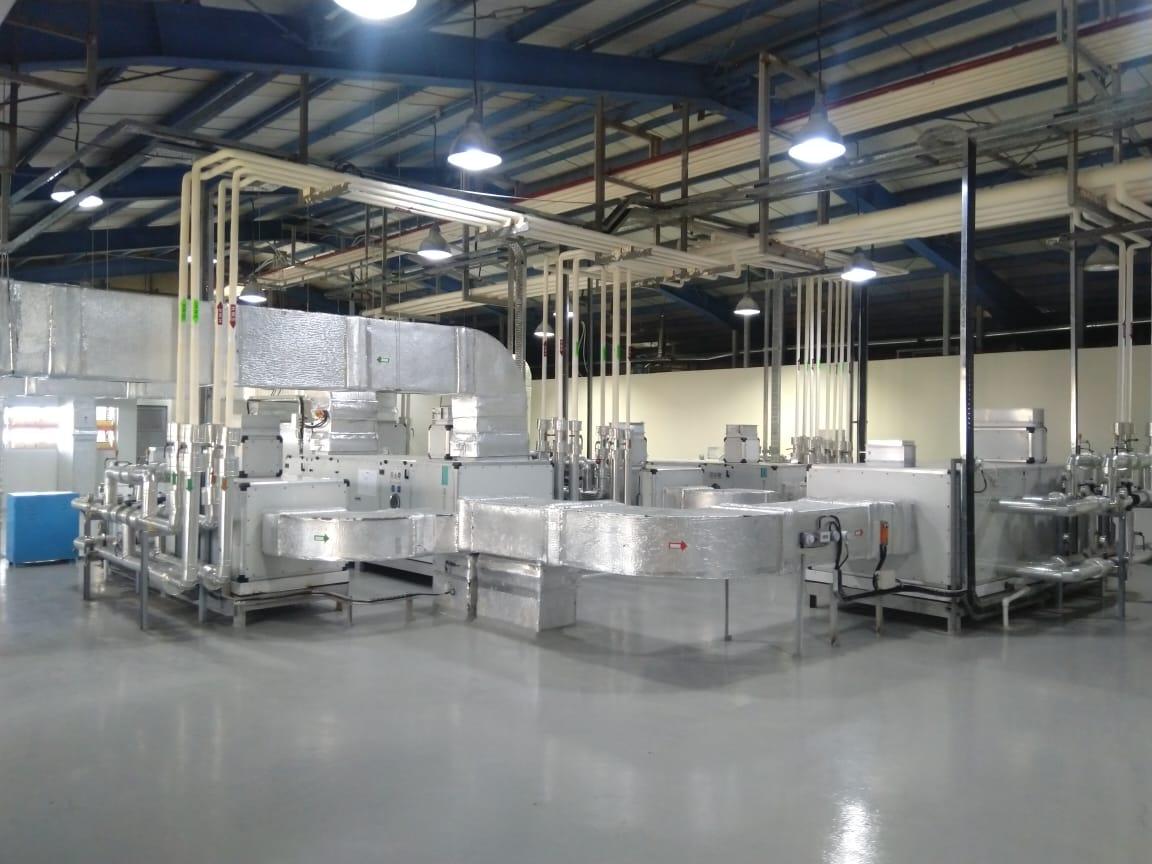
"The building was 14 floors of chaos. The fans were screaming. The tenants were sweating. And the only thing standing between a complete system meltdown and a comfortable building was a battered handbook with coffee stains on page 47."
Who This Guide Is For
Whether you're a first-year apprentice staring at your first set of mechanical drawings, a seasoned engineer who needs a rapid-fire reference during a field emergency, or a building owner trying to understand why your HVAC contractor keeps talking about static pressure and air density corrections — this is your guide.
Every formula. Every table. Every troubleshooting trick. Every selection criterion. All of it — extracted from the legendary Handbook for the Mechanical Designer and transformed into a narrative you'll actually remember when you're standing on a rooftop at 2 AM wondering why the exhaust fan sounds like a jet engine.
The Story Begins: Meet the Characters
The Status Quo
Marco Reyes had been designing HVAC systems for twelve years. He was good — reliable, methodical, thorough. His drawings were clean, his specifications were tight, and his clients rarely complained. He worked for a mid-sized mechanical engineering firm, and his desk was always organized: three monitors, a mechanical pencil, a calculator, and a dog-eared copy of the ASHRAE Fundamentals handbook.
But Marco had a problem he didn't know he had.
He was designing systems the way he'd learned in school — textbook-correct, but without the field intuition that separates a competent designer from a legendary one.
Priya Sharma was Marco's opposite. A field commissioning engineer with eight years of boots-on-the-ground experience, she had seen every installation nightmare imaginable: backward-spinning fans, undersized ductwork, pump cavitation that sounded like gravel in a blender, and kitchen exhaust systems that recirculated grease-laden air straight back into the dining room.
Priya didn't design systems. She fixed the ones that designers like Marco got wrong.
Tom Birch was the building owner — a pragmatic businessman who had just sunk a significant investment into a new mixed-use development: retail on the ground floor, offices on floors 2 through 10, and luxury apartments on floors 11 through 14. He didn't understand BTU calculations or static pressure curves. He understood one thing: comfort equals tenants, and tenants equal revenue.
The Inciting Incident
It was a Thursday in late August when everything fell apart.
Tom's building had been occupied for six weeks. The complaints started as a trickle — apartment 1407 was too warm, the office suite on 6 smelled like the restaurant below, and the retail space on the ground floor had a mysterious whistling sound every time the wind blew from the south.
By week eight, the trickle became a flood. Tenants were threatening to break leases. The restaurant owner was furious because his kitchen exhaust seemed to pull makeup air from the parking garage. And the rooftop units were tripping breakers every afternoon when the outdoor temperature climbed above 35°C (95°F).
Tom called Marco. Marco called Priya. And Priya walked into that mechanical room, looked at the installation, and said six words that changed Marco's career forever:
"You didn't account for the altitude."
The building was at 1,830 meters (6,000 feet) above sea level. The fan selections, the motor sizing, the duct velocities — all of it had been calculated for standard conditions. Sea level. 21°C (70°F).
None of it was right.
The Struggle
What followed was a six-month crash course in everything Marco thought he knew but didn't. Priya became his field mentor. Together, they systematically diagnosed, redesigned, and corrected every system in Tom's building.
This guide is the record of everything they learned.
Every chapter that follows is a lesson from that experience — structured around the technical fundamentals that every mechanical HVAC designer needs, but told through the lens of real problems, real solutions, and real consequences.
Fan Basics — The Heartbeat of Every HVAC System
The Lesson Marco Learned the Hard Way
The first thing Priya checked when she entered Tom's building was the rooftop exhaust fans. She put her hand near the discharge of a centrifugal fan that was supposed to be moving 3,400 m³/h (2,000 CFM) and felt... almost nothing.
"It's spinning," Marco said defensively.
"It's spinning," Priya agreed. "But it's moving air at altitude density, and you selected it for sea-level density. That fan thinks it's working hard. The air molecules just aren't there to push."
That conversation is where fan basics begin.
Fan Types: Choosing the Right Weapon
There are two fundamental families of fans, and choosing the wrong one is like bringing a screwdriver to a job that needs a hammer.
Axial Fans discharge air parallel to the axis of impeller rotation. Think of a propeller slicing through the air in a straight line.
Centrifugal Fans discharge air perpendicular to the axis of impeller rotation. The air enters the center of the spinning wheel and gets flung outward by centrifugal force.
Here's the decision framework:
| Factor | Axial Fans | Centrifugal Fans |
|---|---|---|
| Best for | High volume, low pressure | Higher pressure, ducted systems |
| Typical use | Non-ducted, ventilation, replacement air | Ducted HVAC, process exhaust |
| Pressure capability | Low to medium | Medium to high |
| Efficiency | Varies by subtype | Generally higher for ducted |
| Installation | Compact, straight-through flow | Requires more space, 90° turn |
Axial Fan Subtypes
Propeller Fans — The simplest and cheapest. Two or more blades on a small hub. Low efficiency, low pressure. Use them for wall ventilation, air circulation within a space, or replacement air applications where ductwork isn't involved. Energy transfer is primarily velocity pressure.
Tube Axial Fans — A step up. Four to eight blades with a hub normally less than 50% of the fan tip diameter. Blades can be airfoil or single-thickness cross-section. Good for low to medium pressure ducted systems where downstream air distribution isn't critical. You'll find these in drying ovens, paint spray booths, and fume exhaust systems.
Vane Axial Fans — The premium axial option. Airfoil blades (fixed or adjustable pitch) with a hub greater than 50% of tip diameter. Medium to high pressure at good efficiency. Excellent downstream air distribution. The compact alternative to centrifugal fans for the same duty. These work in everything from general HVAC to industrial applications.
Centrifugal Fan Subtypes — The Impeller Design Guide
This is where Marco's education really started. Each centrifugal impeller design has a personality:
Airfoil Impeller — The highest efficiency of all centrifugal designs. Nine to sixteen blades of airfoil contour, curved away from the direction of rotation. Air leaves at a velocity less than tip speed. Deep blades provide efficient expansion within blade passages. For any given duty, the airfoil design runs at the highest speed of all centrifugal types.
- Use for: General HVAC, clean air industrial applications. Significant power savings in larger sizes.
- Why Marco should have chosen this: For the building's main air handling units, the airfoil impeller would have given him peak efficiency and lowest operating cost.
Backward Inclined / Backward Curved — Slightly less efficient than airfoil. Single-thickness blades (9-16) curved or inclined away from rotation. Same general performance characteristics as airfoil but more tolerant of corrosive or erosive environments.
- Use for: General HVAC systems, industrial applications where airfoil blades aren't suitable.
- The key distinction: When the air might carry particles or corrosive elements that would damage the hollow airfoil blade profile.
Radial Impeller — The simplest and least efficient, but the toughest. High mechanical strength, easy field repair. Six to ten blades, straight or modified radial. Medium speed for a given rating.
- Use for: Material handling in industrial plants. High-pressure industrial requirements. Not commonly found in HVAC.
- Why it exists: Sometimes you need a fan that can survive having chunks of material thrown through it. That's the radial impeller.
Forward Curved — The small, quiet workhorse. Twenty-four to sixty-four shallow blades with heel and tip curved forward. Air leaves at velocities greater than tip speed. The smallest wheel of all centrifugal types for a given duty, operating most efficiently at the lowest speed.
- Use for: Low-pressure HVAC — domestic furnaces, central station units, packaged rooftop equipment.
- The trap Marco fell into: Forward curved fans are inexpensive and compact, which makes them popular. But they're sensitive to system changes and can overload the motor if the ductwork resistance drops below design. Marco spec'd these where he should have used backward inclined.
Fan Selection Criteria — Your Pre-Flight Checklist
Before you select a single fan, you need answers to every one of these questions:
- Air volume required — measured in CFM (cubic feet per minute) or m³/h
- System resistance — the static pressure (SP) the fan must overcome
- Air density — adjusted for altitude AND temperature (this is where Marco went wrong)
- Type of service:
- Environment type (indoor, outdoor, corrosive, explosive)
- Materials/vapors to be exhausted
- Operating temperature
- Space limitations — physical dimensions available for installation
- Fan type — axial vs. centrifugal, and which subtype
- Drive type — direct drive or belt drive
- Noise criteria — how quiet does it need to be?
- Number of fans — redundancy requirements
- Discharge orientation — top horizontal, down blast, up blast, angular
- Rotation direction — clockwise or counterclockwise (as viewed from drive side)
- Motor position — W, X, Y, or Z (face the drive side and select)
- Expected fan life — in years of continuous operation
Priya's Field Rule: "If you can't answer every one of those questions before you open a fan catalog, you're not selecting a fan — you're guessing."
Fan Laws — The Three Rules That Govern Everything
The fan laws are the mathematical relationships that predict how fan performance changes when you change speed. They're simple, elegant, and absolutely critical.
Fan Law #1: Volume varies directly with speed
CFM₁ / CFM₂ = RPM₁ / RPM₂
Double the speed, double the airflow. Halve the speed, halve the airflow. Linear relationship.
Fan Law #2: Pressure varies with the SQUARE of speed
SP₁ / SP₂ = (RPM₁ / RPM₂)²
Double the speed, and static pressure increases by a factor of four. This is why small speed changes have dramatic pressure effects.
Fan Law #3: Power varies with the CUBE of speed
HP₁ / HP₂ = (RPM₁ / RPM₂)³
This is the one that gets people in trouble. Double the speed, and power consumption increases by a factor of eight. A 10% speed increase means a 33% power increase. This is why variable frequency drives (VFDs) save so much energy — even small speed reductions yield massive power savings.
| Speed Change | Volume Change | Pressure Change | Power Change |
|---|---|---|---|
| +10% | +10% | +21% | +33% |
| +20% | +20% | +44% | +73% |
| +50% | +50% | +125% | +238% |
| -10% | -10% | -19% | -27% |
| -20% | -20% | -36% | -49% |
| -50% | -50% | -75% | -88% |
Marco's Takeaway: "I always knew the fan laws existed. I just never appreciated that the cubic relationship on power meant my 10% safety margin on airflow was actually a 33% safety margin on horsepower — or a 33% penalty if the system had less resistance than I calculated."
Air Density Factors — The Correction That Saves (Or Destroys) Projects
This is the single biggest lesson from Tom's building disaster. Fan performance tables and curves are based on standard air density: 0.075 lb/ft³ (1.2 kg/m³). That's sea level at 21°C (70°F).
When altitude and temperature differ from standard conditions, you MUST apply correction factors. Here is the complete air density factor table:
| Altitude (ft / m) | 21°C (70°F) | 38°C (100°F) | 93°C (200°F) | 149°C (300°F) | 204°C (400°F) | 260°C (500°F) | 316°C (600°F) | 371°C (700°F) |
|---|---|---|---|---|---|---|---|---|
| 0 / 0 | 1.000 | .946 | .803 | .697 | .616 | .552 | .500 | .457 |
| 305 / 1,000 | .964 | .912 | .774 | .672 | .594 | .532 | .482 | .441 |
| 610 / 2,000 | .930 | .880 | .747 | .648 | .573 | .513 | .465 | .425 |
| 914 / 3,000 | .896 | .848 | .720 | .624 | .552 | .495 | .448 | .410 |
| 1,219 / 4,000 | .864 | .818 | .694 | .604 | .532 | .477 | .432 | .395 |
| 1,524 / 5,000 | .832 | .787 | .668 | .580 | .513 | .459 | .416 | .380 |
| 1,829 / 6,000 | .801 | .758 | .643 | .558 | .493 | .442 | .400 | .366 |
| 2,134 / 7,000 | .772 | .730 | .620 | .538 | .476 | .426 | .386 | .353 |
| 2,438 / 8,000 | .743 | .703 | .596 | .518 | .458 | .410 | .372 | .340 |
| 2,743 / 9,000 | .714 | .676 | .573 | .498 | .440 | .394 | .352 | .326 |
| 3,048 / 10,000 | .688 | .651 | .552 | .480 | .424 | .380 | .344 | .315 |
| 4,572 / 15,000 | .564 | .534 | .453 | .393 | .347 | .311 | .282 | .258 |
| 6,096 / 20,000 | .460 | .435 | .369 | .321 | .283 | .254 | .230 | .210 |
Worked Example: The Correction That Saved Tom's Building
Here's exactly how Priya recalculated the fan selections for Tom's building at 1,830 m (6,000 ft) elevation with 93°C (200°F) exhaust temperature:
Step 1: Find the air density correction factor from the table above.
- Altitude: 6,000 ft → Row for 1,829 / 6,000
- Temperature: 200°F → Column for 93°C (200°F)
- Air Density Factor = 0.643
Step 2: Calculate the corrected static pressure the fan must be selected at:
Corrected SP = Design SP / Air Density Factor
Corrected SP = 1.5" SP / 0.643
Corrected SP = 2.33" SP
Step 3: Using the fan performance table at the corrected SP, find the required RPM.
- At 7,500 CFM and 2.33" SP → RPM = 976
Step 4: The BHP from the performance table at this point is 3.53. Correct it back to actual altitude conditions:
Actual BHP = Table BHP × Air Density Factor
Actual BHP = 3.53 × 0.643
Actual BHP = 2.27 BHP
Final Operating Conditions: 7,500 CFM, 1.5" SP, 976 RPM, 2.27 BHP
Critical Warning: The fan must be SELECTED at the corrected (higher) static pressure but will actually CONSUME power at the corrected (lower) BHP. The RPM stays the same. The volume stays the same. The motor must be sized for the startup condition AND for the possibility that the air density might be higher than design (cold days at altitude, for instance).
Spark Resistant Construction — When Your Exhaust Could Explode
Some fan applications handle potentially explosive or flammable particles, fumes, or vapors. AMCA Standard 99-401-86 defines three construction types:
Type A — Full Nonferrous: All parts in contact with the air stream must be nonferrous material (less than 5% iron). The impeller, bearings, and shaft must be adequately restrained against lateral or axial shift. This is the highest level of spark protection.
Type B — Nonferrous Impeller + Ring: The impeller and the ring around the shaft opening must be nonferrous. Ferrous hubs, shafts, and hardware are allowed IF construction prevents any two ferrous parts from rubbing or striking each other during a shift.
Type C — No-Rub Construction: All-ferrous construction is acceptable as long as a shift of impeller or shaft cannot cause two ferrous parts to rub or strike.
Critical Notes:
- No bearings, drive components, or electrical devices in the air stream unless they're enclosed to prevent ignition
- All fan parts must be electrically grounded
- DANGER: Aluminum impellers rubbing on rusty steel can cause high-intensity sparking. Research by the U.S. Bureau of Mines confirmed this. If you're using aluminum in the presence of steel that might rust, you need special consideration.
- Spark resistant construction does NOT protect against catastrophic failure or ignition from airstream materials already present in the system. It reduces risk — it doesn't eliminate it.
Centrifugal Fan Component Terminology
Every part has a name, and every name matters when you're troubleshooting in the field. Here's your vocabulary:
| Component | What It Does |
|---|---|
| Housing (Scroll) | The snail-shell shaped enclosure that collects and directs air from the impeller to the discharge |
| Impeller (Wheel) | The rotating component with blades that transfers energy to the air |
| Shroud | The curved inlet panel of the impeller |
| Back Plate | The flat plate that forms the back of the impeller |
| Blade | Individual airfoil or flat element on the impeller |
| Inlet | The opening where air enters the fan housing |
| Inlet Collar | The ring at the housing inlet that matches the impeller shroud |
| Cutoff | The point where the scroll meets the housing at the smallest clearance to the impeller |
| Blast Area | The area of the fan outlet that actually has high-velocity air (always less than outlet area) |
| Outlet Area | The total cross-sectional area of the discharge opening |
| Discharge | The rectangular opening where air exits the fan |
| Shaft | Connects the impeller to the motor (directly or through bearings) |
| Bearing Support | The structural frame that holds the bearings in position |
| Side Panel | The flat side wall of the fan housing |
| Frame | The structural base that supports the entire assembly |
Drive Arrangements — How the Motor Connects to the Fan
AMCA Standard 99-2404-78 defines the standard drive arrangements. The most common ones you'll encounter:
| Arrangement | Configuration | Typical Use |
|---|---|---|
| Arr. 1 SWSI | Impeller overhung, two bearings on base | Belt or direct drive. Most common arrangement. |
| Arr. 2 SWSI | Impeller overhung, bearings in bracket on housing | Belt or direct drive. Compact. |
| Arr. 3 SWSI | One bearing on each side, supported by housing | Belt or direct. Most stable impeller support. |
| Arr. 3 DWDI | Same as Arr. 3 but double-width, double-inlet | Higher capacity. Belt or direct. |
| Arr. 4 SWSI | Impeller overhung on motor shaft, no fan bearings | Direct drive only. Simplest. |
| Arr. 7 SWSI/DWDI | Arr. 3 plus a base for the prime mover | Belt or direct. Integrated base. |
| Arr. 8 SWSI | Arr. 1 plus extended base for motor | Belt or direct. Easy motor access. |
| Arr. 9 SWSI | Impeller overhung, two bearings, motor outside base | Belt drive. |
| Arr. 10 SWSI | Impeller overhung, two bearings, motor inside base | Belt drive. Compact footprint. |
SWSI = Single Width, Single Inlet DWDI = Double Width, Double Inlet
Rotation and Discharge Designations
The cardinal rule: Rotation is ALWAYS designated as viewed from the drive side of the fan.
There are eight standard discharge positions, each available in clockwise (CW) or counterclockwise (CCW):
- Top Horizontal — CW or CCW
- Top Angular Down — CW or CCW
- Top Angular Up — CW or CCW
- Down Blast — CW or CCW
- Up Blast — CW or CCW
- Bottom Horizontal — CW or CCW
- Bottom Angular Down — CW or CCW
- Bottom Angular Up — CW or CCW
Priya's Field Story: "I once walked into a mechanical room where someone had wired a three-phase motor with two leads swapped. The fan was spinning backward — counterclockwise instead of clockwise. The airflow was about 40% of design, and nobody could figure out why until I put my hand near the inlet and felt air blowing out of it. Always check rotation arrows against actual rotation on startup."
Motor Positions for Belt Drive Fans
To determine motor position: face the drive side of the fan. The motor position is designated by letters W, X, Y, or Z, based on which quadrant the motor sits in relative to the fan shaft center.
Fan Installation Guidelines — The Rules Marco Broke
This section cost Tom a significant amount of money to learn. Fan performance depends critically on inlet and outlet conditions.
Inlet Conditions — What's Correct:
- Converging duct at inlet: limit slope to 15° converging. Cross-sectional area not greater than 112.5% of inlet area.
- Diverging duct at inlet: limit slope to 7° diverging. Cross-sectional area not greater than 92.5% of inlet area.
- Straight duct at inlet: minimum of 2.5 inlet diameters (3 recommended) of straight, unobstructed duct.
Inlet Conditions — What's Wrong:
- Sharp turns immediately before the fan inlet → creates turbulence
- Obstructions in the inlet → destroys the smooth airflow pattern the impeller needs
- No straight duct run → the fan can't develop its rated performance
Outlet Conditions — What's Correct:
- Diverging duct at outlet: limit slope to 7° diverging. Cross-sectional area not greater than 105% of outlet area.
- Converging duct at outlet: limit slope to 15° converging. Cross-sectional area not greater than 95% of outlet area.
- Straight duct at outlet: minimum of 2.5 outlet diameters (3 recommended).
Outlet Conditions — What's Wrong:
- Elbows immediately at the fan discharge → creates massive turbulence in the blast area
- Abrupt expansion → air separates from the duct walls, losing energy
The Painful Truth: Fan performance is tested and certified under ideal laboratory conditions. In the field, you'll NEVER match lab performance perfectly. The gap between lab and field is determined by how well you follow these installation guidelines. Marco's rooftop units had elbows within one outlet diameter of the fan discharge. They were losing 15-25% of their rated capacity just from poor ductwork connections.
Fan Troubleshooting Guide — Priya's Diagnostic Playbook
When something goes wrong with a fan, the symptoms fall into four categories:
Symptom: Low Capacity or Pressure
| Possible Cause | Fix |
|---|---|
| Incorrect direction of rotation | Check that fan rotates in same direction as arrows on motor or drive assembly |
| Poor fan inlet conditions | Ensure straight, clear duct at inlet — minimum 2.5 diameters |
| Improper wheel alignment | Realign impeller within housing |
Symptom: Excessive Vibration and Noise
| Possible Cause | Fix |
|---|---|
| Damaged or unbalanced wheel | Inspect impeller for damage, rebalance |
| Belts too loose, worn, or oily | Tension, clean, or replace belts |
| Speed too high | Verify RPM against design specifications |
| Incorrect direction of rotation | Check rotation direction |
| Bearings need lubrication/replacement | Follow manufacturer's lubrication schedule |
| Fan surge | Fan is operating in the unstable portion of its curve — increase system resistance or reduce speed |
Symptom: Overheated Motor
| Possible Cause | Fix |
|---|---|
| Motor improperly wired | Verify wiring against nameplate diagram |
| Incorrect direction of rotation | Check and correct |
| Cooling air diverted or blocked | Clear obstructions around motor |
| Improper inlet clearance | Adjust impeller-to-inlet collar gap |
| Incorrect fan RPM | Verify speed; check sheave sizes |
| Incorrect voltage | Measure voltage at motor terminals under load |
Symptom: Overheated Bearings
| Possible Cause | Fix |
|---|---|
| Improper bearing lubrication | Follow manufacturer's schedule — both under-lubrication AND over-lubrication cause problems |
| Excessive belt tension | Reduce tension to minimum that prevents slipping under peak load |
Motors and Drives — The Muscle Behind the Machine
The Day the Breakers Kept Tripping
Three weeks into the troubleshooting process, Marco and Priya tackled the breaker-tripping problem on the upper floors. Every afternoon around 2 PM, when the outdoor temperature peaked, the air handling unit motors on floors 8 through 14 would trip their overload protection.
"What voltage are you feeding these motors?" Priya asked.
Marco checked the electrical drawings. "460 volt, three-phase."
"Check the actual voltage at the motor terminals. Under load."
The reading came back at 418 volts. A 9% voltage drop from the nominal 460V.
"There's your problem," Priya said. "Look at what happens to a motor when you drop the voltage 10%."
Key Motor Definitions and Formulas
Before we dive into the tables, you need the vocabulary:
Alternating Current (AC): Electric current that reverses direction at a defined frequency — typically 60 Hz in the U.S. and 50 Hz in most other countries.
Horsepower: A rate of doing work.
HP = (RPM × Torque) / 5,252 lb-ft
Torque: A measure of rotational force.
Torque (lb-ft) = (HP × 5,252) / RPM
Efficiency: How much input power the motor converts to shaft output.
% Efficiency = (Power Out / Power In) × 100
Synchronous Speed: The speed of the rotating magnetic field.
Synchronous Speed = (60 × 2f) / p

Where: f = frequency (Hz)
       p = number of poles
Slip: The difference between synchronous speed and actual motor speed.
% Slip = [(Synchronous Speed - Actual Speed) / Synchronous Speed] × 100
Breakdown Torque: Maximum torque a motor develops without an abrupt drop in speed.
Locked Rotor Torque: Minimum torque at rest (starting torque).
Single Phase AC Motors — For Small Fan Applications
Single-phase motors are used in fan applications requiring less than one horsepower. Four types are suitable for driving fans:
| Motor Type | HP Range | Efficiency | Slip | Poles/RPM | Use |
|---|---|---|---|---|---|
| Shaded Pole | 1/6 to 1/4 | Low (30%) | High (14%) | 4/1550, 6/1050 | Small direct drive fans (low start torque) |
| Permanent-Split Capacitor | Up to 1/3 | Medium (50%) | Medium (10%) | 4/1625, 6/1075 | Small direct drive fans (low start torque) |
| Split-Phase | Up to 1/2 | Med-High (65%) | Low (4%) | 2/3450, 4/1725, 6/1140, 8/850 | Small belt drive fans (good start torque) |
| Capacitor-Start | 1/2 to 3/4 | Med-High (65%) | Low (4%) | 2/3450, 4/1725, 6/1140, 8/850 | Small belt drive fans (good start torque) |
Three-Phase AC Motors — The Industry Workhorse
The three-phase squirrel cage induction motor is the most common motor in HVAC. It's simple, reliable, and produces high starting torque.
Synchronous Speeds by Number of Poles:
| Number of Poles | 60 Hz Synchronous Speed (RPM) | 50 Hz Synchronous Speed (RPM) |
|---|---|---|
| 2 | 3,600 | 3,000 |
| 4 | 1,800 | 1,500 |
| 6 | 1,200 | 1,000 |
| 8 | 900 | 750 |
A motor with 5% or less slip is a "normal slip" or "constant speed" motor. Actual nameplate speed will be slightly less than synchronous speed (e.g., a 4-pole motor at 60 Hz might show 1,750 RPM instead of 1,800).
NEMA Motor Designs
| NEMA Design | Starting Current | Locked Rotor Torque | Breakdown Torque | Max Slip | Applications |
|---|---|---|---|---|---|
| B | Medium | Medium | High | 5% | Normal starting torque — fans, blowers, pumps, compressors. Constant load speed. Most common for HVAC. |
| C | Medium | High | Medium | 5% | High inertia starts — large centrifugal blowers, flywheels, crushers. Loaded starts. |
| D | Medium | Extra-High | Low | 5%+ | Very high inertia/loaded starts — punch presses, cranes, hoists, elevators. Variable load speed. |
Priya's Advice: "For 95% of HVAC fan applications, you want a NEMA Design B motor. If you're seeing a Design C or D spec'd for a fan, somebody either has a special application or made a mistake. Ask questions."
Motor Insulation Classes
Motor insulation is rated by its resistance to thermal degradation:
| Class | Temperature Rating | Typical Use |
|---|---|---|
| A | 105°C (221°F) | Basic — rarely used in modern HVAC |
| B | 130°C (266°F) | Standard for most HVAC applications |
| F | 155°C (311°F) | Premium — high ambient or harsh conditions |
| H | 180°C (356°F) | Special — extreme environments |
Each step (A→B, B→F, F→H) represents a 25°C (77°F) jump in thermal capability.
The insulation class must withstand: Maximum Ambient Temperature + Temperature Rise from Full Load Operation.
Marco's Lesson: The motors in Tom's building were Class B (standard). But the rooftop mechanical room had poor ventilation, and ambient temperatures were reaching 55°C (131°F) on hot summer days. The motors' insulation was being cooked. Priya recommended either improving mechanical room ventilation or upgrading to Class F insulation on replacement motors.
Motor Service Factors — The Safety Margin You Shouldn't Use
A motor with a 1.15 service factor can handle a 15% overload — a 10 HP motor can handle 11.5 HP of load.
But Priya's rule is absolute: "Never use the service factor for basic load calculations. It's your emergency reserve. If you design into the service factor, the motor has no headroom for voltage fluctuations, high ambient temperatures, or occasional overloads. You'll burn motors faster than you can replace them."
Locked Rotor kVA/HP — The Starting Current Code
Motor nameplates show a code letter that indicates locked rotor kVA per horsepower. This tells you how much starting current the motor will draw:
| Code Letter | kVA/HP | Code Letter | kVA/HP |
|---|---|---|---|
| A | 0 – 3.15 | L | 9.0 – 10.0 |
| B | 3.15 – 3.55 | M | 10.0 – 11.2 |
| C | 3.55 – 4.0 | N | 11.2 – 12.5 |
| D | 4.0 – 4.5 | P | 12.5 – 14.0 |
| E | 4.5 – 5.0 | R | 14.0 – 16.0 |
| F | 5.0 – 5.6 | S | 16.0 – 18.0 |
| G | 5.6 – 6.3 | T | 18.0 – 20.0 |
| H | 6.3 – 7.1 | U | 20.0 – 22.4 |
| J | 7.1 – 8.0 | V | 22.4 and up |
| K | 8.0 – 9.0 |
Letters near the beginning = low starting current. Letters near the end = high starting current.
Starting Current Formula:
Starting Current = (1,000 × HP × kVA/HP) / (1.73 × Volts)
Motor Efficiency and Energy Standards
Motor efficiency directly affects operating cost and total energy consumption.
Required Full-Load Nominal Efficiency (EPAct Standard):
| Motor HP | Open Motors 6-Pole | Open Motors 4-Pole | Open Motors 2-Pole | Enclosed Motors 6-Pole | Enclosed Motors 4-Pole | Enclosed Motors 2-Pole |
|---|---|---|---|---|---|---|
| 1 | 80.0 | 82.5 | — | 80.0 | 82.5 | 75.5 |
| 1.5 | 84.0 | 84.0 | 82.5 | 85.5 | 84.0 | 82.5 |
| 2 | 85.5 | 84.0 | 84.0 | 86.5 | 84.0 | 84.0 |
| 3 | 86.5 | 86.5 | 84.0 | 87.5 | 87.5 | 85.5 |
| 5 | 87.5 | 87.5 | 85.5 | 87.5 | 87.5 | 87.5 |
| 7.5 | 88.5 | 88.5 | 87.5 | 89.5 | 89.5 | 88.5 |
| 10 | 90.2 | 89.5 | 88.5 | 89.5 | 89.5 | 89.5 |
| 15 | 90.2 | 91.0 | 89.5 | 90.2 | 91.0 | 90.2 |
| 20 | 91.0 | 91.0 | 90.2 | 90.2 | 91.0 | 90.2 |
| 25 | 91.7 | 91.7 | 91.0 | 91.7 | 92.4 | 91.0 |
| 30 | 92.4 | 92.4 | 91.0 | 91.7 | 92.4 | 91.0 |
| 40 | 93.0 | 93.0 | 91.7 | 93.0 | 93.0 | 91.7 |
| 50 | 93.0 | 93.0 | 92.4 | 93.0 | 93.0 | 92.4 |
| 75 | 93.6 | 94.1 | 93.0 | 93.6 | 94.1 | 93.0 |
| 100 | 94.1 | 94.1 | 93.0 | 94.1 | 94.5 | 93.6 |
| 150 | 94.5 | 95.0 | 93.6 | 95.0 | 95.0 | 94.5 |
| 200 | 94.5 | 95.0 | 94.5 | 95.0 | 95.0 | 95.0 |
Full Load Current — Sizing Your Wires
Single Phase Motors — Full Load Current (Amps):
| HP | 115V | 200V | 230V |
|---|---|---|---|
| 1/6 | 4.4 | 2.5 | 2.2 |
| 1/4 | 5.8 | 3.3 | 2.9 |
| 1/3 | 7.2 | 4.1 | 3.6 |
| 1/2 | 9.8 | 5.6 | 4.9 |
| 3/4 | 13.8 | 7.9 | 6.9 |
| 1 | 16 | 9.2 | 8 |
| 1-1/2 | 20 | 11.5 | 10 |
| 2 | 24 | 13.8 | 12 |
| 3 | 34 | 19.6 | 17 |
| 5 | 56 | 32.2 | 28 |
| 7-1/2 | 80 | 46 | 40 |
| 10 | 100 | 57.5 | 50 |
Three Phase Motors — Full Load Current (Amps):
| HP | 200V | 230V | 460V | 575V |
|---|---|---|---|---|
| 1/2 | 2.3 | 2 | 1 | 0.8 |
| 1 | 4.15 | 3.6 | 1.8 | 1.4 |
| 2 | 7.8 | 6.8 | 3.4 | 2.7 |
| 5 | 17.5 | 15.2 | 7.6 | 6.1 |
| 10 | 32 | 28 | 14 | 11 |
| 15 | 48 | 42 | 21 | 17 |
| 20 | 62 | 54 | 27 | 22 |
| 25 | 78 | 68 | 34 | 27 |
| 30 | 92 | 80 | 40 | 32 |
| 40 | 120 | 104 | 52 | 41 |
| 50 | 150 | 130 | 65 | 52 |
| 75 | 221 | 192 | 96 | 77 |
| 100 | 285 | 248 | 124 | 99 |
| 150 | 415 | 360 | 180 | 144 |
| 200 | 550 | 480 | 240 | 192 |
Wire Sizing Rule: Branch-circuit conductors supplying a single motor must have an ampacity of at least 125% of the motor's full-load current rating.
Voltage and Frequency Effects on Motor Performance
This is the table that explained why Tom's building motors were failing. When the voltage drops or rises from nominal, everything changes:
Effect of Voltage Variation:
| Characteristic | Voltage +10% | Voltage -10% |
|---|---|---|
| Starting Torque | Up 21% | Down 19% |
| Maximum Torque | Up 21% | Down 19% |
| Slip | Down 15-20% | Up 20-30% |
| Efficiency (Full Load) | Down 0-3% | Down 0-2% |
| Power Factor (Full Load) | Down 5-15% | Up 1-7% |
| Full Load Current | Down slightly to Up 5% | Up 5-10% |
| Starting Current | Up 10% | Down 10% |
| Temperature Rise (Full Load) | Up 10% | Down 10-15% |
| Maximum Overload Capacity | Up 21% | Down 19% |
At Tom's building, the 9% voltage drop meant: 19% less starting torque, 19% less breakdown torque, 20-30% more slip, 5-10% higher current draw, and hotter operation. The motors were working harder, drawing more current, and overheating — all because the voltage was low.
The fix: Priya specified that the electrical contractor install properly sized conductors (reducing voltage drop to under 3%) and adjust the transformer taps.
Belt Drives — The Transmission System
Most fan drive systems use standard V-belts. The belt drive allows fan RPM to be easily selected through motor RPM and pulley ratios.
Drive Ratio Formula:
Drive Ratio = Motor RPM / Desired Fan RPM
V-Belt Length Formula:
L = 2C + 1.57(D + d) + (D - d)² / 4C

Where:
L = Pitch length of belt
C = Center distance between sheaves
D = Pitch diameter of large sheave
d = Pitch diameter of small sheave
Belt Drive Guidelines:
- Always install drives with provision for center distance adjustment
- Centers should not exceed 3× the sum of sheave diameters nor be less than the diameter of the large sheave
- Arc of contact on smaller sheave should not be less than 120°
- Shafts must be parallel; sheaves must be aligned. Recheck after first 8 hours.
- Never force or roll belts over sheaves — more belts are broken this way than from service failure
- Ideal tension is the lowest tension at which the belt won't slip under peak load. Check frequently during first 24-48 hours.
Estimated Belt Drive Losses:
| Motor Output (HP) | Drive Loss Range |
|---|---|
| 1 | 8-15% |
| 5 | 5-8% |
| 10 | 4-6% |
| 25 | 3-5% |
| 50 | 2.5-4% |
| 100+ | 2-3% |
Higher belt speeds tend to have higher losses at the same horsepower.
Bearing Life — The L-10 and L-50 Ratings
Bearing life is defined as the number of operating hours at a given load and speed before the first signs of failure appear.
L-10 Life = The minimum hours during which at least 90% of bearings can be expected to survive. In other words, less than 10% are expected to fail within this period.
L-50 Life (Average Life) = 5 × L-10 Life. At least 50% of bearings expected to survive this long.
Example: A fan specified with L-10 in excess of 40,000 hours at maximum cataloged speed means:
- 90% of bearings will last at least 40,000 hours
- Average life (L-50) exceeds 200,000 hours
- Less than 10% failure expected within 40,000 hours
System Design Guidelines — Where Engineering Meets Art
The Restaurant Smell Problem
By month two of the investigation, Marco and Priya had fixed the fan performance issues and the motor failures. But a new complaint emerged — or rather, an old one got louder.
The office tenants on floor 6 could smell the ground-floor restaurant. Every time the kitchen exhaust cycled, the aroma of fried food and grilled meat drifted upward through the building.
"How is that possible?" Marco asked. "The kitchen exhaust is on the roof, and the office fresh air intake is on the opposite side of the building."
Priya walked to the roof and stood between the two openings. The wind was blowing from the south. The kitchen exhaust was on the south side. The fresh air intake was on the north side.
"What happens when the wind reverses?" Priya asked.
Marco's face went pale. He'd never checked prevailing wind patterns.
General Ventilation Design Principles
These are the foundational rules. Break any of them, and you'll spend years fixing the consequences:
- Locate intake and exhaust fans to make use of prevailing winds — not against them
- Position fans for maximum sweeping effect over the working area
- If filters are used on gravity intake, size the intake ventilator to keep intake losses below 1/8" SP (31 Pa)
- Avoid fans blowing directly opposite each other. When unavoidable, separate by at least 6 fan diameters
- Use Class B insulated motors where ambient temperatures will be high
- For hazardous chemicals or particles in the air stream, use explosion-proof motors
- For hazardous atmospheres, use fans of non-sparking construction
Process Ventilation Principles
- Collect fumes and heat as near the source as possible
- Make duct runs as short and direct as possible
- Keep duct velocity as low as practical while maintaining capture velocity for particles
- Use long-radius elbows (preferably 2 duct diameters radius) for turns
- Select fans with reserve capacity beyond calculated static pressure
- Install exhaust fans where discharged air cannot recirculate into other building areas
- Hoods must be sufficient to collect ALL contaminating fumes or particles
Kitchen Ventilation — The Complete Guide
The restaurant in Tom's building was a case study in what happens when kitchen ventilation isn't designed with precision.
Hoods and Ducts:
- Duct velocity: 1,500 to 4,000 fpm (7.6 to 20.3 m/s)
- Hood face velocity: not less than 50 fpm (0.25 m/s) over face area between hood and cooking surface
- Wall type hoods: 80 CFM per square foot of hood face area
- Island type hoods: 125 CFM per square foot of hood face area
- Extend hood beyond cooking surface by: 0.4 × distance between hood and cooking surface
Filters:
- Select filter face velocity: 100 – 400 fpm (0.5 – 2.0 m/s)
- Typical sizing: 2 CFM exhaust per square inch of filter area (maximum)
- Install at 45° to 60° to horizontal — NEVER horizontal
- Shield filters from direct radiant heat
- Mounting height minimums:
- No exposed cooking flame: 1.5 feet (0.46 m) minimum
- Charcoal and similar fires: 4 feet (1.2 m) minimum
- Provide removable grease drip pan
- Establish AND FOLLOW a cleaning schedule for drip pans and filters
Fans:
- Use upblast discharge fan for kitchen exhaust
- Select design CFM based on hood design and duct velocity
- Select SP based on design CFM and resistance of filters and duct system
- Adjust fan specification for expected exhaust air temperature
Sound — The Silent Killer of Good HVAC Design
Marco learned that a perfectly functioning HVAC system that's too loud is still a failed HVAC system. The luxury apartments on Tom's upper floors had noise complaints within the first week.
Key Sound Definitions:
Sound Power (W): The amount of power a source converts to sound, measured in watts. This is a property of the source itself.
Sound Power Level (Lw): A logarithmic comparison to a reference source.
Lw = 10 × log₁₀(W / W₀) dB

Where W₀ = 10⁻¹² watt (reference)
Sound Pressure (P): The pressure fluctuation associated with sound. This is what your ear actually detects.
Sound Pressure Level (Lp): A logarithmic comparison to a reference pressure.
Lp = 20 × log₁₀(P / P₀) dB

Where P₀ = 2 × 10⁻⁵ Pa (reference)
CRITICAL DISTINCTION: Even though both are expressed in dB, THERE IS NO DIRECT CONVERSION between sound power level and sound pressure level. A constant sound power output will produce dramatically different sound pressures in different environments. Always specify HVAC equipment in terms of sound power level, not sound pressure level.
Sound Rules of Thumb:
| Rule | Effect |
|---|---|
| Double the sound pressure from a single source | +3 dB (sound pressure level) |
| Double the distance from the source | -6 dB (sound pressure level) |
| +10 dB (sound pressure level) | 2× perceived loudness |
Adding Two Sound Sources (Approximation):
| Difference Between Levels (dB) | Add to Highest Level (dB) |
|---|---|
| 0 | 3.0 |
| 1 | 2.5 |
| 2 | 2.1 |
| 3 | 1.8 |
| 4 | 1.5 |
| 5 | 1.2 |
| 6 | 1.0 |
| 7 | 0.8 |
| 8 | 0.6 |
| 9 | 0.5 |
| 10+ | 0 |
Remember: logarithms cannot be added directly. Two identical 70 dB sources produce 73 dB, not 140 dB.
Sound Power Levels in Context:
| Source | Sound Power (Watts) | Sound Power Level (dB) |
|---|---|---|
| Shuttle booster rocket | 25,000,000–40,000,000 | 195 |
| Jet engine with afterburner | 100,000 | 170 |
| Jet aircraft at takeoff | 10,000 | 160 |
| Loud rock band | 10 | 130 |
| Small aircraft engine | 1 | 120 |
| Car at highway speed | 0.01 | 100 |
| Axial ventilating fan (2,500 m³/h) | 0.001 | 90 |
| Voice — conversational level | 0.00001 | 70 |
| Office air diffuser | 0.0000001 | 50 |
| Voice — very soft whisper | 0.000000001 | 30 |
Design Criteria for Room Loudness (Sones)
This table is your go-to reference for what noise levels are acceptable in different spaces:
| Room Type | Sones | Room Type | Sones |
|---|---|---|---|
| Concert/opera halls | 1.0 – 3.0 | Executive offices | 2 – 6 |
| Movie theaters | 2.0 – 6.0 | General open offices | 4 – 12 |
| Lecture halls | 2.0 – 6.0 | Conference rooms | 1.7 – 5 |
| Courtrooms | 3.0 – 9.0 | Board of Directors | 1 – 3 |
| Churches/sanctuaries | 1.7 – 5.0 | Private hospital rooms | 1.7 – 5 |
| Schools/classrooms | 2.5 – 8.0 | Hospital operating rooms | 2.5 – 8 |
| Libraries | 2.0 – 6.0 | Hotel individual rooms | 2.0 – 6 |
| Laboratories | 4.0 – 12.0 | Restaurant dining areas | 4 – 12 |
| Gymnasiums | 4 – 12 | Retail department stores | 6 – 18 |
| Swimming pools | 7 – 21 | Light machinery (mfg) | 12 – 36 |
| Residences (urban) | 3 – 9 | Heavy machinery (mfg) | 25 – 60 |
| Residences (rural/suburban) | 1.3 – 4 | Studios for sound reproduction | 1 – 3 |
Note: These values are room loudness in sones — they are NOT fan sone ratings. The fan rating you need will be different because of the acoustic environment between the fan and the occupied space.
Room Sones to dBA Correlation:
dBA = 33.2 × log₁₀(sones) + 28 Accuracy: ± 2 dBA
Vibration — The Problem You Feel Before You Hear
Natural Frequency Formula:
fn = 188 × (1/d)^0.5 (cycles per minute)
Static Deflection from Natural Frequency:
d = (188/fn)² (inches)
Vibration Isolation Selection Guide:
| Equipment RPM | Critical Installation (upper floor/roof) | Non-Critical Installation (grade/basement) |
|---|---|---|
| 1,200+ | 1.0 inch | 0.5 inch |
| 600+ | 1.0 inch | 1.0 inch |
| 400+ | 2.0 inch | 1.0 inch |
| 300+ | 3.0 inch | 2.0 inch |
Always use total weight of equipment when selecting isolation. Always consider weight distribution in the selection.
Vibration Severity Ranges:
| Severity | Description |
|---|---|
| Extremely Smooth | New, precision equipment |
| Very Smooth | Excellent condition |
| Smooth | Normal for new equipment |
| Good | Normal, well-maintained equipment |
| Fair | Acceptable for most installations |
| Slightly Rough | Approaching maintenance threshold |
| Rough | Corrective action recommended |
| Very Rough | Immediate action required |
Important factors when using vibration severity charts:
- Use only filtered displacement readings for specific frequencies. Unfiltered overall velocity readings can be applied directly.
- Charts apply to measurements on bearings or machine structure only — NOT shaft vibration.
- Charts apply to rigidly mounted machines. For machines on resilient isolators (springs, rubber pads), allow approximately twice the vibration amplitude — except at high frequencies (gears, defective rolling-element bearings), where amplitudes are less dependent on mounting method.
General Ventilation Design — Breathing Life Into Buildings
The Indoor Air Quality Crisis on Floor 6
Once the prevailing wind issue was addressed by relocating the fresh air intake, a subtler problem remained. The office tenants on floor 6 were still complaining — not about food smells, but about stuffiness, headaches, and fatigue by mid-afternoon.
Priya pulled the building automation system logs and found the answer: the outdoor air dampers were modulating to minimum position by early afternoon to save energy on cooling. The occupied space was getting only about 5 CFM per person instead of the required 20 CFM per person for office spaces.
"You can't save energy by suffocating your tenants," Priya told Marco. "Indoor air quality isn't optional — it's a code requirement and a health imperative."
Three Methods for Calculating Ventilation Rates
Method 1: Air Quality Method (Preferred for Occupied Spaces)
Designing for acceptable indoor air quality requires addressing:
- Outdoor air quality
- Ventilation system design
- Sources of contaminants
- Proper air filtration
- System operation and maintenance
Calculation:
People = (Occupancy per 1,000 ft²) × Floor Area (ft²) / 1,000
CFM = People × Outdoor Air Requirement (CFM/person)
Outdoor air quantities can be reduced if proper particulate AND gaseous air filtration is utilized.
Method 2: Air Change Method (Industrial/Special Spaces)
CFM = Building Volume (ft³) / Air Change Frequency (minutes)
Method 3: Heat Removal Method (Temperature-Driven)
When the space temperature exceeds outdoor ambient, general ventilation provides "free cooling":
CFM = Heat Removal (BTU/hr) / (1.10 × Temperature Difference °F)
Ventilation Rates for Acceptable Indoor Air Quality
This table is your code-minimum reference. These are outdoor air requirements per person:
| Space | Outdoor Air Required (CFM/person) | Typical Occupancy (People/1,000 ft²) |
|---|---|---|
| Auditoriums | 15 | 150 |
| Ballrooms/Discos | 25 | 100 |
| Bars | 30 | 100 |
| Beauty Shops | 25 | 25 |
| Classrooms | 15 | 50 |
| Conference Rooms | 20 | 50 |
| Correctional Facility Cells | 20 | 20 |
| Dormitory Sleeping Rooms | 15 | 20 |
| Dry Cleaners | 30 | 30 |
| Gambling Casinos | 30 | 120 |
| Game Rooms | 25 | 70 |
| Hardware Stores | 15 | 8 |
| Hospital Operating Rooms | 30 | 20 |
| Hospital Patient Rooms | 25 | 10 |
| Laboratories | 20 | 30 |
| Libraries | 15 | 20 |
| Medical Procedure Rooms | 15 | 20 |
| Office Spaces | 20 | 7 |
| Pharmacies | 15 | 20 |
| Photo Studios | 15 | 10 |
| Physical Therapy | 15 | 20 |
| Restaurant Dining Areas | 20 | 70 |
| Retail Facilities | 15 | 20 |
| Smoking Lounges | 60 | 70 |
| Sporting Spectator Areas | 15 | 150 |
| Supermarkets | 15 | 8 |
| Theaters | 15 | 150 |
Design Alert: Note that smoking lounges require 60 CFM/person — four times the rate of a typical office. If your building has any designated smoking areas, they will dominate your outdoor air calculations and likely need dedicated exhaust systems.
Suggested Air Changes by Space Type
When local codes don't specify, use these air change frequencies:
| Type of Space | Air Change Frequency (minutes) |
|---|---|
| Assembly Halls | 3 – 10 |
| Auditoriums | 4 – 15 |
| Bakeries | 1 – 3 |
| Boiler Rooms | 2 – 4 |
| Bowling Alleys | 2 – 8 |
| Dry Cleaners | 1 – 5 |
| Engine Rooms | 1 – 1.5 |
| Factories (General) | 1 – 5 |
| Forges | 1 – 2 |
| Foundries | 1 – 4 |
| Garages | 2 – 10 |
| Glass Plants | 1 – 2 |
| Gymnasiums | 2 – 10 |
| Heat Treat Rooms | 0.5 – 1 |
| Kitchens | 1 – 3 |
| Laundries | 2 – 5 |
| Machine Shops | 3 – 5 |
| Mills (Paper) | 2 – 3 |
| Residences | 2 – 5 |
| Restaurants | 5 – 10 |
| Retail Stores | 3 – 10 |
| Theaters | 3 – 8 |
| Toilets | 2 – 5 |
| Transformer Rooms | 1 – 5 |
| Warehouses | 2 – 10 |
Heat Gain From Occupants — Your Cooling Load Contribution
Every person in a building is a heat source. The amount of heat depends on activity level:
| Typical Application | Sensible Heat (BTU/hr) | Latent Heat (BTU/hr) |
|---|---|---|
| Theater (matinee) | 200 | 130 |
| Theater (evening) | 215 | 135 |
| Offices, Hotels, Apartments | 215 | 185 |
| Retail and Department Stores | 220 | 230 |
| Drug Store / Bank | 220 | 280 |
| Restaurant | 240 | 310 |
| Factory (light work) | 240 | 510 |
| Dance Hall | 270 | 580 |
| Factory (moderate work) | 330 | 670 |
| Bowling Alley / Factory (heavy) | 510 | 940 |
Notes: Values based on 26°C (78°F) dry bulb. Restaurant values include 60 BTU/hr for food per individual (30 sensible + 30 latent). Use sensible values only for ventilation heat removal calculations.
Heat Gain From Electric Motors
Every motor in your building contributes heat. The critical question is: where is the motor, and where is the driven equipment?
| Motor HP | Motor Type | Full Load Efficiency (%) | Motor In, Equipment In Space (BTU/hr) | Motor Out, Equipment In Space (BTU/hr) | Motor In, Equipment Out of Space (BTU/hr) |
|---|---|---|---|---|---|
| 0.25 | Split Ph. | 54 | 1,180 | 640 | 540 |
| 0.50 | Split Ph. | 60 | 2,120 | 1,270 | 850 |
| 1 | 3-Ph. | 75 | 3,390 | 2,550 | 850 |
| 5 | 3-Ph. | 82 | 15,500 | 12,700 | 2,790 |
| 10 | 3-Ph. | 85 | 29,900 | 24,500 | 4,490 |
| 25 | 3-Ph. | 88 | 72,300 | 63,600 | 8,680 |
| 50 | 3-Ph. | 89 | 143,000 | 127,000 | 15,700 |
| 100 | 3-Ph. | 90 | 283,000 | 255,000 | 28,300 |
| 200 | 3-Ph. | 91 | 569,000 | 509,000 | 50,300 |
| 250 | 3-Ph. | 91 | 699,000 | 636,000 | 62,900 |
Filter Comparison — Choosing the Right Level of Filtration
| Filter Type | ASHRAE Arrestance | Atm. Dust Spot Efficiency | Initial ΔP (in.WG) | Final ΔP (in.WG) |
|---|---|---|---|---|
| Permanent | 60-80% | 8-12% | 0.07 | 0.5 |
| Fiberglass Pad | 70-85% | 15-20% | 0.17 | 0.5 |
| Polyester Pad | 82-90% | 15-20% | 0.20 | 0.5 |
| 2" Throw Away | 70-85% | 15-20% | 0.17 | 0.5 |
| 2" Pleated Media | 88-92% | 25-30% | 0.25 | 0.5-0.8 |
| 60% Cartridge | 97% | 60-65% | 0.3 | 1.0 |
| 80% Cartridge | 98% | 80-85% | 0.4 | 1.0 |
| 90% Cartridge | 99% | 90-95% | 0.5 | 1.0 |
| HEPA | 100% | 99.97% | 1.0 | 2.0 |
Optimum Relative Humidity for Health
The sweet spot for indoor relative humidity is 30% to 50% RH. Below 30%, you get:
- Increased bacteria survival
- Increased virus survival
- Increased respiratory infections
- Increased chemical interactions
- Increased ozone production
Above 50%, you get:
- Increased fungi growth
- Increased dust mite populations
- Increased allergic rhinitis and asthma triggers
The optimal zone minimizes ALL of these health risks simultaneously.
Duct Design — The Arteries of Airflow
The Mysterious Whistling on the Ground Floor
Tom's retail tenant had described a "whistling sound" every time the wind blew from the south. Marco initially dismissed it as the building "breathing" — a common but harmless phenomenon in tall structures.
Priya investigated by standing at the south-facing intake louver during a windy day. The whistling wasn't coming from the building structure. It was coming from a bird screen that had been installed behind the louver. The screen mesh was too fine — insect screen grade instead of the specified 1/2-inch mesh bird screen — and it was creating an audible pressure drop at high face velocities.
"Someone substituted materials during construction," Priya noted. "An insect screen at 500 fpm face velocity creates ten times the pressure drop of a proper bird screen."
Damper Pressure Drop
Damper pressure drop is a function of face velocity. The formula:
V (Velocity, fpm) = CFM / Square Feet of Damper Area
| Damper Face Velocity (fpm) | Approximate Pressure Drop (in. w.g.) |
|---|---|
| 200 | 0.01 |
| 500 | 0.04 |
| 1,000 | 0.10 |
| 2,000 | 0.35 |
| 3,000 | 0.70 |
| 5,000 | 1.50 |
Screen Pressure Drop
The difference between insect screen and bird screen is dramatic:
| Face Velocity (fpm) | Insect Screen Pressure Drop (in.WG) | 1/2" Bird Screen Pressure Drop (in.WG) |
|---|---|---|
| 200 | 0.02 | 0.003 |
| 500 | 0.08 | 0.01 |
| 1,000 | 0.25 | 0.03 |
| 2,000 | 0.70 | 0.09 |
| 5,000 | 1.50+ | 0.35 |
Marco's Note: "After this experience, I now explicitly specify screen mesh size on every drawing and include it as a construction submittal requirement. A 'minor' material substitution nearly cost us a tenant."
Typical Design Velocities for HVAC Components
| Component | Velocity (FPM) |
|---|---|
| Intake Louvers (≥7,000 CFM) | 400 |
| Exhaust Louvers (≥5,000 CFM) | 500 |
| Viscous Impingement Filters | 200 – 800 |
| Dry-Type Pleated (Low Efficiency) | 350 |
| Dry-Type Pleated (Medium Efficiency) | 500 |
| Dry-Type Pleated (High Efficiency) | 500 |
| HEPA Filters | 250 |
| Electronic Air Cleaners (Ionizing) | 300 – 500 |
| Steam and Hot Water Coils | 500 – 600 (200 min, 1,500 max) |
| Dehumidifying Coils | 500 – 600 |
| Spray-Type Air Washers | 300 – 600 |
| High-Velocity Spray Air Washers | 1,200 – 1,800 |
Velocity and Velocity Pressure Relationships
The fundamental relationship:
Velocity Pressure (in. WG) = (V / 4,005)²
Velocity (fpm) = 4,005 × √(Velocity Pressure)
Quick Reference Table (Selected Values):
| Velocity (fpm) | Velocity Pressure (in.WG) |
|---|---|
| 500 | 0.016 |
| 1,000 | 0.062 |
| 1,500 | 0.140 |
| 2,000 | 0.249 |
| 2,500 | 0.390 |
| 3,000 | 0.561 |
| 3,500 | 0.764 |
| 4,000 | 0.998 |
| 4,500 | 1.262 |
| 5,000 | 1.559 |
| 6,000 | 2.244 |
Rectangular Equivalent of Round Ducts
When you need to convert between round and rectangular ductwork:
d = 1.265 × [(a × b)³ / (a + b)]^(1/5)

Where:
d = equivalent round duct diameter
a = one side of rectangular duct
b = other side of rectangular duct
Sheet Metal Gauges — Know Your Material
Steel and Galvanized:
| Gauge | Steel Thickness (in.) | Steel Weight (lb/ft²) | Galvanized Thickness (in.) | Galvanized Weight (lb/ft²) |
|---|---|---|---|---|
| 26 | .0179 | .750 | .0217 | .906 |
| 24 | .0239 | 1.00 | .0276 | 1.156 |
| 22 | .0299 | 1.25 | .0336 | 1.406 |
| 20 | .0359 | 1.50 | .0396 | 1.656 |
| 18 | .0478 | 2.00 | .0516 | 2.156 |
| 16 | .0598 | 2.50 | .0635 | 2.656 |
| 14 | .0747 | 3.125 | .0785 | 3.281 |
| 12 | .1046 | 4.375 | .1084 | 4.531 |
Recommended Metal Gauges for Duct
Rectangular Duct:
| Greatest Dimension | U.S. Gauge (Steel) | B&S Gauge (Aluminum) |
|---|---|---|
| Up to 30 inches | 24 | 22 |
| 31 – 60 inches | 22 | 20 |
| 61 – 90 inches | 20 | 18 |
| 91+ inches | 18 | 16 |
Round Duct:
| Diameter | Galvanized Steel (U.S. Gauge) | Aluminum (B&S Gauge) |
|---|---|---|
| Up to 8 inches | 24 | 22 |
| 9 – 24 inches | 22 | 20 |
| 25 – 48 inches | 20 | 18 |
| 49 – 72 inches | 18 | 16 |
Heating and Refrigeration — Mastering Thermal Comfort
The Winter Surprise
Tom's building had been designed primarily with cooling in mind — after all, it was in a region with hot summers. But when winter arrived, the upper-floor apartments discovered that heating was undersized. Marco had used a standard heat loss estimate without correcting for the altitude-reduced air density, the increased wind exposure at height, or the actual R-value of the curtain wall assembly.
Priya pulled out her field notebook and showed Marco the quick estimation method.
Heat Loss Estimates — Quick Calculation Method
For rapid heat loss estimation, use the building volume and design conditions:
Masonry Wall Construction (BTU per Cubic Foot):
| Structure Type | 60°F Indoor | 65°F Indoor | 70°F Indoor |
|---|---|---|---|
| Single Story, 4 Walls Exposed | 3.4 | 3.7 | 4.0 |
| Single Story, 1 Heated Wall | 2.9 | 3.1 | 3.4 |
| Single Floor, 1 Heated Wall, Heated Above | 1.9 | 2.0 | 2.2 |
| Single Floor, 2 Heated Walls, Heated Above | 1.4 | 1.5 | 1.6 |
| Single Floor, 2 Heated Walls | 2.4 | 2.6 | 2.8 |
| Multi-Story (2 Story) | 2.9 | 3.1 | 3.4 |
| Multi-Story (3 Story) | 2.8 | 3.0 | 3.2 |
| Multi-Story (4 Story) | 2.7 | 2.9 | 3.1 |
| Multi-Story (5 Story) | 2.6 | 2.8 | 3.0 |
Insulated Steel Wall Construction (BTU per Cubic Foot):
| Structure Type | 60°F Indoor | 65°F Indoor | 70°F Indoor |
|---|---|---|---|
| Single Story, 4 Walls Exposed | 2.2 | 2.4 | 2.6 |
| Single Story, 1 Heated Wall | 1.9 | 2.0 | 2.2 |
| Single Floor, 1 Heated Wall, Heated Above | 1.3 | 1.4 | 1.5 |
| Single Floor, 2 Heated Walls, Heated Above | 0.9 | 1.0 | 1.1 |
| Single Floor, 2 Heated Walls | 1.6 | 1.7 | 1.8 |
| Multi-Story (2 Story) | 1.9 | 2.1 | 2.2 |
| Multi-Story (3 Story) | 1.8 | 2.0 | 2.1 |
Correction Factors for Outdoor Design Temperature:
| Outdoor Design Temp (°F) | Multiplier |
|---|---|
| +50 | 0.23 |
| +40 | 0.36 |
| +30 | 0.53 |
| +20 | 0.69 |
| +10 | 0.84 |
| 0 | 1.00 |
| -10 | 1.15 |
| -20 | 1.20 |
| -30 | 1.46 |
Assumptions for these values:
- 0°F outdoor design (apply correction factors for other conditions)
- Slab construction (if basement, multiply final BTU/hr by 1.7)
- Flat roof
- Window area is 5% of wall area
- Air change rate is 0.5 per hour
Fuel Comparisons — Equivalent Energy Content
| Fuel Type | Equivalent to 1,000,000 BTU |
|---|---|
| Natural Gas | 10 Therms or 1,000 cubic feet |
| Propane Gas | 46 pounds or 10.88 gallons |
| No. 2 Fuel Oil | 7.14 gallons |
| Electrical Resistance | 293 kWh |
| Municipal Steam | 1,000 pounds condensate |
| Sewage Gas | 1,538 to 2,380 cubic feet |
Fuel Gas Characteristics
| Gas Type | BTU/Cubic Foot | Specific Gravity |
|---|---|---|
| Natural Gas | 925 – 1,125 | 0.60 – 0.66 |
| Propane Gas | 2,550 | 1.52 |
| Sewage Gas | 420 – 650 | 0.55 – 0.85 |
| Coal Gas | 400 – 500 | 0.50 – 0.60 |
| LP/Air Mix | 1,425 | 1.29 |
Estimated Seasonal Efficiencies of Heating Systems
| System | Seasonal Efficiency |
|---|---|
| Gas Fired Gravity Vent Unit Heater | 62% |
| Energy Efficient Unit Heater | 80% |
| Electric Resistance Heating | 100% |
| Steam Boiler with Steam Unit Heaters | 65% – 80% |
| Hot Water Boiler with Hydronic Unit Heaters | 65% – 80% |
| Oil Fired Unit Heaters | 78% |
| Municipal Steam System | 66% |
| Infrared (High Intensity) | 85% |
| Infrared (Low Intensity) | 87% |
| Direct Fired Gas Makeup Air | 94% |
| Improvement: + Power Ventilator to Gas Gravity Vent | +4% |
| Improvement: + Spark Pilot to Gas Gravity Vent | +0.5% – 3% |
| Improvement: + Auto Flue Damper + Spark Pilot | +8% |
Annual Fuel Use Formulas
Electric Resistance:
KWH/Year = [H / (ΔT × 3,413 × E)] × D × 24 × CD
Natural Gas:
Therms/Year = [H / (ΔT × 100,000 × E)] × D × 24 × CD
Propane (by weight):
Pounds/Year = [H / (ΔT × 21,739 × E)] × D × 24 × CD
Propane (by volume):
Gallons/Year = [H / (ΔT × 91,911 × E)] × D × 24 × CD
Oil:
Gallons/Year = [H / (ΔT × 140,000 × E)] × D × 24 × CD
Where:
- ΔT = Indoor Design Temperature minus Outdoor Design Temperature
- H = Building Heat Loss (BTU/hr)
- D = Annual Degree Days
- E = Seasonal Efficiency (from table above)
- CD = Correlation Factor (from degree-day chart — ranges from ~0.6 at 2,000 degree days to ~1.0 at 6,000+ degree days)
Properties of Saturated Steam
Selected Values:
| Temperature (°F) | Pressure (PSIA) | Specific Volume Sat. Vapor (ft³/lbm) | Enthalpy Sat. Liquid (BTU/lbm) | Enthalpy Sat. Vapor (BTU/lbm) |
|---|---|---|---|---|
| 32 | 0.089 | 3,304.7 | 0 | 1,075.5 |
| 100 | 0.949 | 350.4 | 68.0 | 1,105.1 |
| 150 | 3.72 | 97.1 | 118.0 | 1,126.1 |
| 212 | 14.70 | 26.80 | 180.2 | 1,150.5 |
| 250 | 29.82 | 13.82 | 218.5 | 1,164.0 |
| 300 | 67.01 | 6.47 | 269.7 | 1,179.7 |
| 350 | 134.6 | 3.34 | 321.8 | 1,192.3 |
| 400 | 247.3 | 1.86 | 375.1 | 1,201.0 |
| 500 | 680.9 | 0.675 | 487.9 | 1,202.2 |
Cooling Load Check Figures
Quick estimates for cooling system sizing:
| Classification | Occupancy (ft²/person) | Lights (W/ft²) | Refrigeration (ft²/ton) | Air Qty (CFM/ft²) |
|---|---|---|---|---|
| Apartment, High Rise | 100–325 | 1.0–4.0 | 350–450 | 0.5–1.7 |
| Schools/Universities | 20–30 | 2.0–6.0 | 150–240 | 0.8–2.2 |
| Light Manufacturing | 100–200 | 9.0–12.0 | 100–200 | 1.6–3.8 |
| Hospital Patient Rooms | 25–75 | 1.0–2.0 | 165–275 | 0.33–0.67 |
| Hotels/Motels | 100–200 | 1.0–3.0 | 220–350 | 0.9–1.5 |
| Office Buildings | 80–130 | 4.0–9.0 | 190–360 | 0.25–1.8 |
| Restaurants (Large) | 13–17 | 1.5–2.0 | 80–135 | 0.8–3.7 |
| Department Stores (Main) | 16–45 | 3.5–9.0 | 150–350 | 0.9–2.0 |
| Retail Clothing Stores | 30–50 | 1.0–4.0 | 185–345 | 0.6–1.6 |
Pumps and Piping — The Hydronic Backbone
The Cavitation Crisis
In month four, a new sound appeared in the chilled water plant room — a rhythmic, grinding noise from the primary chilled water pump that sounded like someone had poured gravel into the housing.
"That's cavitation," Priya said without even walking over to the pump. "The Net Positive Suction Head available is less than what the pump requires. The water is literally boiling at the pump inlet and the vapor bubbles are collapsing inside the impeller."
Marco looked at the piping layout. The expansion tank connection was on the discharge side of the pump — pressurizing the discharge but not the suction.
"Move the expansion tank connection to the suction side," Priya said. "The pump adds pressure to the system. You want that pressure addition to push water through the system, not push it away from the pump suction."
Pump Construction Types
Bronze-Fitted Pumps:
- Cast iron body, brass impeller, brass seal components
- Use for: Closed heating/chilled water systems, low-temperature fresh water
All-Bronze Pumps:
- All wetted parts are bronze
- Use for: Higher temperature fresh water, domestic hot water, hot process water
Pump Impeller Types
| Type | Description | Application |
|---|---|---|
| Single Suction | Fluid enters one side of impeller | Standard applications |
| Double Suction | Fluid enters both sides | High-flow applications, reduced NPSH requirement |
| Closed | Shroud encloses pump vanes | Clean fluid systems — highest efficiency |
| Semi-Open | No inlet shroud | Moderate particles in fluid |
| Open | No shroud | Large particles — sewage, sludge |
Pump Body Types
Horizontal Split Case: Split along horizontal centerline. Disassemble by removing top half. Impeller between bearings. Requires two seals. Usually double suction. Suction and discharge in straight-line configuration.
Vertical Split Case: Single-piece body with cover plate. Shaft through seal and bearing in cover. Impeller on shaft end. Suction at right angle to discharge.
Pump Mounting Methods
| Method | Description | Pros |
|---|---|---|
| Base Mount — Long Coupled | Pump coupled to base-mount motor | Motor removable without disturbing pump; standard motors |
| Base Mount — Close Coupled | Impeller on motor shaft | More compact; no separate pump mounting needed |
| Line Mount | Mounted to and supported by system piping | Very compact; usually for low-flow |
Affinity Laws for Pumps
The pump affinity laws are analogous to fan laws:
Variable Speed, Constant Impeller:
| Parameter | Relationship |
|---|---|
| Flow | New Speed / Old Speed |
| Head | (New Speed / Old Speed)² |
| BHP | (New Speed / Old Speed)³ |
Variable Impeller, Constant Speed:
| Parameter | Relationship |
|---|---|
| Flow | New Diameter / Old Diameter |
| Head | (New Diameter / Old Diameter)² |
| BHP | (New Diameter / Old Diameter)³ |
Variable Specific Gravity:
| Parameter | Relationship |
|---|---|
| BHP | New SG / Old SG |
Common Pump Formulas
Head:
H = PSI × 2.31 / SG (feet)
Output Power:
Po = Qv × H × SG / 3,960 (horsepower)
Shaft Power:
Ps = Qv × H × SG / (39.6 × Ep) (horsepower)
Input Power:
Pi = Ps × 74.6 / Em (kilowatts)
Pump Horsepower:
HP = GPM × Feet Head × Specific Gravity / (3,960 × % Efficiency)
Typical Pump Efficiencies:
| Pump Size | Efficiency Range |
|---|---|
| 1/12 to 1/2 HP (single suction) | 40% – 55% |
| 3/4 to 2 HP | 45% – 60% |
| 3 to 10 HP | 50% – 65% |
| 20 to 50 HP (double suction) | 60% – 80% |
Water Flow and Piping
Pressure drop varies as the square of flow:
h₂/h₁ = (Q₂/Q₁)²
Water velocity in a pipe:
v = GPM × 0.41 / d²

Where: v = velocity (ft/sec), d = inside diameter (inches)
Quiet Water Flow Limits (6 fps maximum):
| Pipe Size | Max Quiet Flow (GPM) |
|---|---|
| 1/2" | 1.5 |
| 3/4" | 4 |
| 1" | 8 |
| 1-1/4" | 14 |
| 1-1/2" | 22 |
| 2" | 44 |
| 2-1/2" | 75 |
| 3" | 120 |
| 4" | 240 |
Pumping System Troubleshooting Guide
Symptom: Pump or System Noise
| Possible Cause | Action |
|---|---|
| Shaft misalignment | Check and realign |
| Worn coupling | Replace and realign |
| Worn bearings | Replace, check lubrication schedule, realign |
| Improper foundation | Check bolting/grouting, check for shifting from pipe expansion |
| Pipe vibration from expansion | Inspect/add hangers and expansion provisions |
| Water velocity too high | Check actual performance vs. specified; reduce impeller diameter |
| Operating beyond curve end | Reduce impeller diameter |
| Entrained air / low suction pressure | Check expansion tank connection; check for vortex; verify NPSH |
Symptom: Inadequate or No Circulation
| Possible Cause | Action |
|---|---|
| Running backward (3-phase) | Reverse any two motor leads |
| Broken coupling | Replace and realign |
| Improper motor speed | Check nameplate wiring and voltage |
| Pump/impeller too small | Check selection against requirements |
| Clogged strainer | Inspect and clean screen |
| System not filled | Check PRV fill valve; vent terminal units and high points |
| Valves improperly set | Check balance and isolation valve settings |
| Air-bound system | Vent piping; check expansion tank connection; review air elimination |
| Air entrainment | Check suction inlet conditions for vortex |
| Low available NPSH | Check NPSH required; inspect strainers; check pipe sizing and water temperature |
Typical Heat Transfer Coefficients (U-Factors)
| Application | Controlling Fluid | U Free Convection | U Forced Convection |
|---|---|---|---|
| Air — flat plates | Gas to gas | 0.6 – 2 | 2 – 6 |
| Air — bare pipes | Steam to air | 1 – 2 | 2 – 10 |
| Air — fin coil | Air to water | 1 – 3 | 2 – 10 |
| Oil preheater | Liquid to liquid | 5 – 10 | 20 – 50 |
| Oil preheater | Steam to liquid | 10 – 30 | 25 – 60 |
| Water — shell & tube | Water to water | — | 150 – 300 |
| Water — shell & tube | Condensing vapor to water | — | 150 – 800 |
| Brine — DX chiller | Brine to R12/R22/NH3 | — | 60 – 140 |
| Water — DX shell & tube | Water to R12/R22/NH3 | — | 130 – 190 |
Units: BTU/(hr·ft²·°F). Values for commercially clean equipment. Liquid velocities 3 ft/sec or higher.
Cooling Tower Ratings
| Hot Water (°F) | Cold Water (°F) | Wet Bulb (°F) | Capacity Factor |
|---|---|---|---|
| 90 | 80 | 70 | 0.85 |
| 92 | 82 | 70 | 1.00 |
| 95 | 85 | 70 | 1.24 |
| 90 | 80 | 72 | 0.74 |
| 92 | 82 | 72 | 0.88 |
| 95 | 85 | 74 | 1.00 |
| 95 | 85 | 76 | 0.88 |
| 95 | 85 | 78 | 0.75 |
| 95 | 85 | 80 | 0.62 |
Key Definitions:
- Range = Hot Water Temperature − Cold Water Temperature
- Approach = Cold Water Temperature − Wet Bulb Temperature
- Heat Rejection Ratio: Based on 1.25 (15,000 BTU/hr per ton)
Cooling Tower Bleed: Evaporation concentrates dissolved solids. A 1% bleed of circulation rate = 2 concentrations of original solids. A 0.5% bleed = 3 concentrations.
Formulas and Conversion Factors — Your Pocket Calculator
Electrical Formulas
Ohm's Law:
Ohms = Volts / Amperes         (R = E/I)
Amperes = Volts / Ohms         (I = E/R)
Volts = Amperes × Ohms         (E = I×R)
Three-Phase AC Power:
Kilowatts = V × A × PF × 1.732 / 1,000
Amperes = 746 × HP / (1.732 × V × Eff × PF)
Horsepower = V × A × 1.732 × Eff × PF / 746
Single-Phase AC Power:
Kilowatts = V × A × PF / 1,000
Amperes = 746 × HP / (V × Eff × PF)
Horsepower = V × A × Eff × PF / 746
Motor Application Formulas
Torque (lb-ft) = HP × 5,250 / RPM
HP = Torque (lb-ft) × RPM / 5,250
Synchronous RPM = Hz × 120 / Poles
% Slip = (Synch RPM − Full Load RPM) / Synch RPM × 100
Time for Motor to Reach Operating Speed:
Seconds = WK² × Speed Change / (308 × Avg. Accelerating Torque)

Where:
Avg. Accelerating Torque = [(FLT + BDT)/2 + BDT + LRT] / 3
WK² = Inertia of Rotor + Inertia of Load (lb-ft²)
Fan and Blower Formulas
Tip Speed (ft/sec) = D(in) × RPM × π / 720

BHP = CFM × PSF / (33,000 × Efficiency)
BHP = CFM × PIW / (6,344 × Efficiency)
BHP = CFM × PSI / (229 × Efficiency)
Vibration Formulas
D = 0.318 × (V/f)          D = Displacement (inches peak-to-peak)
V = π × f × D              V = Velocity (inches/sec peak)
A = 0.051 × f² × D         A = Acceleration (g's peak)
A = 0.016 × f × V          f = Frequency (cycles/sec)
Temperature Conversion
°F = (°C × 9/5) + 32
°C = (°F − 32) × 5/9
Pressure Conversions
1 foot of water = 0.433 PSI
1 PSI = 2.309 feet of water
1 inch of water = 248.8 Pa
1 PSI = 6.895 kPa
Essential Conversion Factors
| Multiply | By | To Get |
|---|---|---|
| BTU/hr | 0.293 | Watts |
| HP | 746 | Watts |
| kW | 1.341 | HP |
| CFM | 0.4719 | Liters/sec |
| GPM | 0.0631 | Liters/sec |
| ft/min | 0.00508 | m/s |
| PSI | 6.895 | kPa |
| in. WG | 248.8 | Pa |
| BTU/hr·ft²·°F (U-value) | 5.678 | W/(m²·K) |
| ft²·hr·°F/BTU (R-value) | 0.176 | m²·K/W |
| tons of refrigeration | 3.517 | kW |
| feet | 0.3048 | meters |
| inches | 25.4 | millimeters |
| gallons (US) | 3.785 | liters |
| cubic feet | 0.02832 | cubic meters |
| pounds (mass) | 0.4536 | kilograms |
| lb/ft³ | 16.0 | kg/m³ |
The Transformation: What Separates Good From Great
The "Aha!" Moment
Six months after Priya first walked into Tom's mechanical room, the building was running as designed — actually, better than designed. Every system had been recalculated for actual conditions, every installation issue had been corrected, and every comfort complaint had been resolved.
But the real transformation wasn't in the building. It was in Marco.
"I used to think being a good mechanical designer meant getting the calculations right," he told Priya during their final walkthrough. "Now I know it means getting the conditions right — altitude, temperature, installation details, prevailing winds, noise criteria, vibration isolation, water chemistry, expansion tank placement — and THEN getting the calculations right."
Priya smiled. "Welcome to field engineering. The textbook is where you start. The field is where you finish."
Here's what Marco now does differently on every project:
- Visits the site before designing. He checks altitude, prevailing winds, nearby odor sources, and available mechanical room space.
- Corrects all fan and motor selections for actual air density — not standard conditions.
- Specifies installation details on drawings — minimum straight duct lengths, screen types, damper types, and vibration isolation requirements.
- Includes a commissioning specification that requires field verification of fan rotation, motor voltage, airflow rates, water flow rates, and sound levels.
- Designs for the worst case — highest summer temperature, lowest winter temperature, maximum occupancy, dirtiest filter condition — and verifies the system still works at partial load.
- Keeps a field reference with all the tables, formulas, and troubleshooting guides from this handbook. Because when you're on a rooftop at 2 AM, you don't have time to look things up in a textbook.
What Tom Learned
Tom's building is now fully occupied. The tenants are comfortable. The restaurant smell stays in the restaurant. The luxury apartments are quiet. The motors don't trip.
He tells his contractor friends: "Hire the designer who asks about the altitude. If they don't ask, find someone who does."
Your Next Move
You've just absorbed the equivalent of decades of field experience compressed into one guide. But knowledge without action is just trivia.
Here's what to do right now:
- Bookmark this guide. You'll need it on your next project — probably sooner than you think.
- Check your current project. Are you designing for actual air density, or are you assuming sea level and 70°F? Are your fan installation details specified on the drawings? Is your expansion tank connected to the pump suction?
- Build your own field reference. Print or save the tables that are most relevant to your work — air density factors, motor full load currents, ventilation rates, heat gain from occupants, duct velocity guidelines, pump troubleshooting checklist.
- Walk a job site before your next design. Spend one hour on the roof, in the mechanical room, and at the location of every major piece of equipment. You'll catch problems on paper that would have cost thousands to fix in the field.
- Find your Priya. Every designer needs a field mentor — someone who has seen the consequences of every design shortcut and can tell you which ones matter and which ones don't.
What's the biggest HVAC design mistake you've encountered in the field? Share your story — every lesson learned is a lesson earned.
This comprehensive guide was developed from the "Handbook for the Mechanical Designer" (Second Edition), originally published by Loren Cook Company, Springfield, MO — with deep gratitude to the many fine mechanical designers in our industry who contributed their hard-won field knowledge to this essential reference.
All technical data, formulas, tables, and standards referenced herein are adapted from ASHRAE Handbooks, AMCA Standards, the National Electrical Code®, and other authoritative industry sources as noted throughout. Always verify with the latest edition of applicable codes and standards for your jurisdiction.
© Content Transformation for Educational Purposes. Technical data sourced from industry-standard references. All currencies and measurements intentionally kept in universal engineering units applicable globally. No time-bound pricing or region-specific regulations referenced to ensure lasting applicability.


